
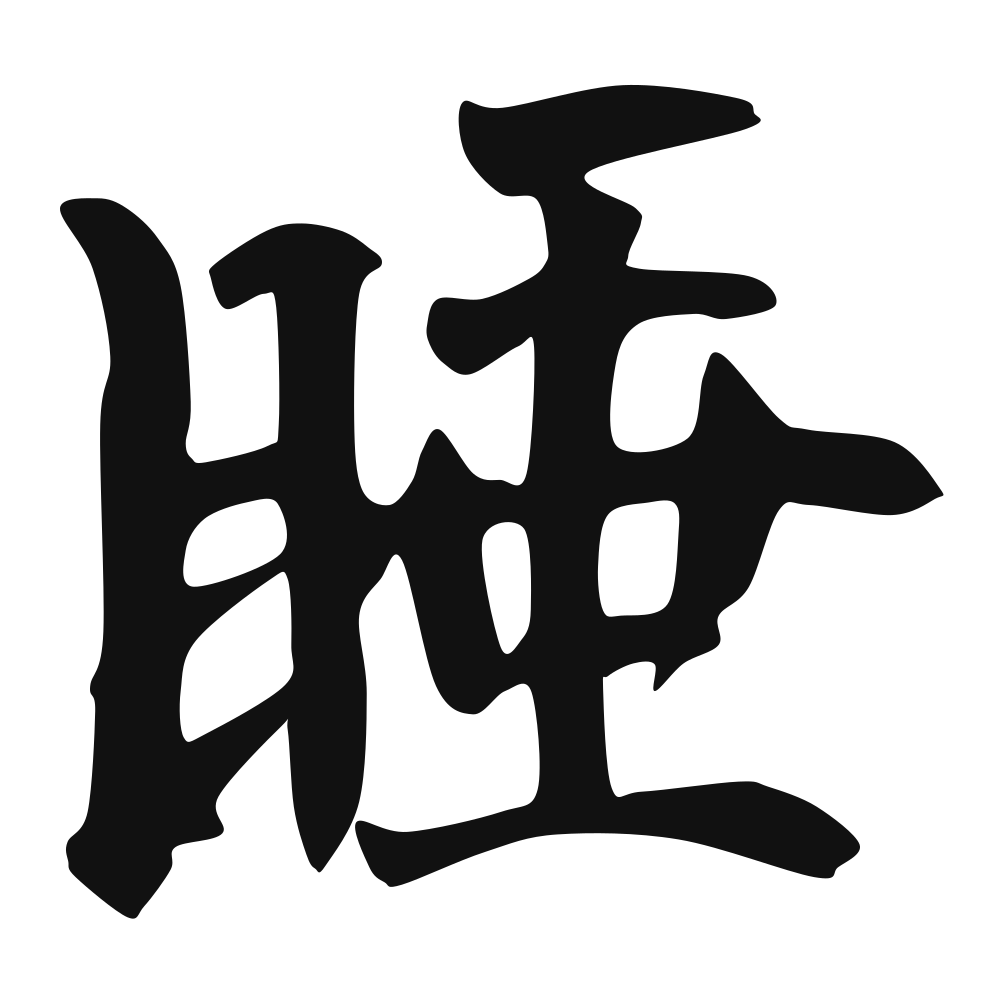
The Calligrapher — Wáng Qià 王洽
Eastern Jin calligrapher of running script, a leading figure among the Wang family masters.
Eastern Jin calligrapher (), master of running script — known for 王导族子. Eastern Jin dynasty
Cultural Story
The Shuowen defines 睡 as a sitting doze, eyelids drooping — full night sleep was 寝 or 眠, and poets dozed upright through the long heat of afternoons. Over the centuries the little word widened its reach until it owned all of sleep from dusk to dawn.
Common words & phrases
- 睡觉 sleep
- 睡眠 sleep
- 睡着 fall asleep
- 午睡 nap · siesta
- 睡梦 dream · slumber
- 沉睡 deep sleep
Read the story behind the character
睡 is now the whole business: the 睡觉 schedule against the night shift, the lunch 午睡 defended like a right, babies finally 睡着 in the stroller, horror films haunting the 睡梦, and midnight scrollers failing at 沉睡. Mattress ads promise deeper 睡眠 by Friday.
Why this character belongs on skin
Sleep is the nightly rehearsal of death, the old philosophers said, and the daily rehearsal of rebirth. 睡 shows the body surrendering beneath an eyelid radical — consciousness laid down like a tool after work. We resist sleep as we resist everything we cannot control, and yet it is the only state in which the body fully repairs itself, in which the mind sorts what the day gave it. The monasteries knew this: monks rise before dawn because sleep, rightly kept, is not laziness but discipline — the acceptance that you are a creature, not a machine. There is a sensual honesty in it too. In sleep no one performs. The face goes slack and true. To wear this character is to honor the third of your life spent in darkness, to say you are at peace with laying yourself down and trusting the world to hold you until morning returns.
Own this character
Purchase delivers the original SVG of this glyph, brushed by Wáng Qià 王洽, ready to place on skin, paper, or screen.