
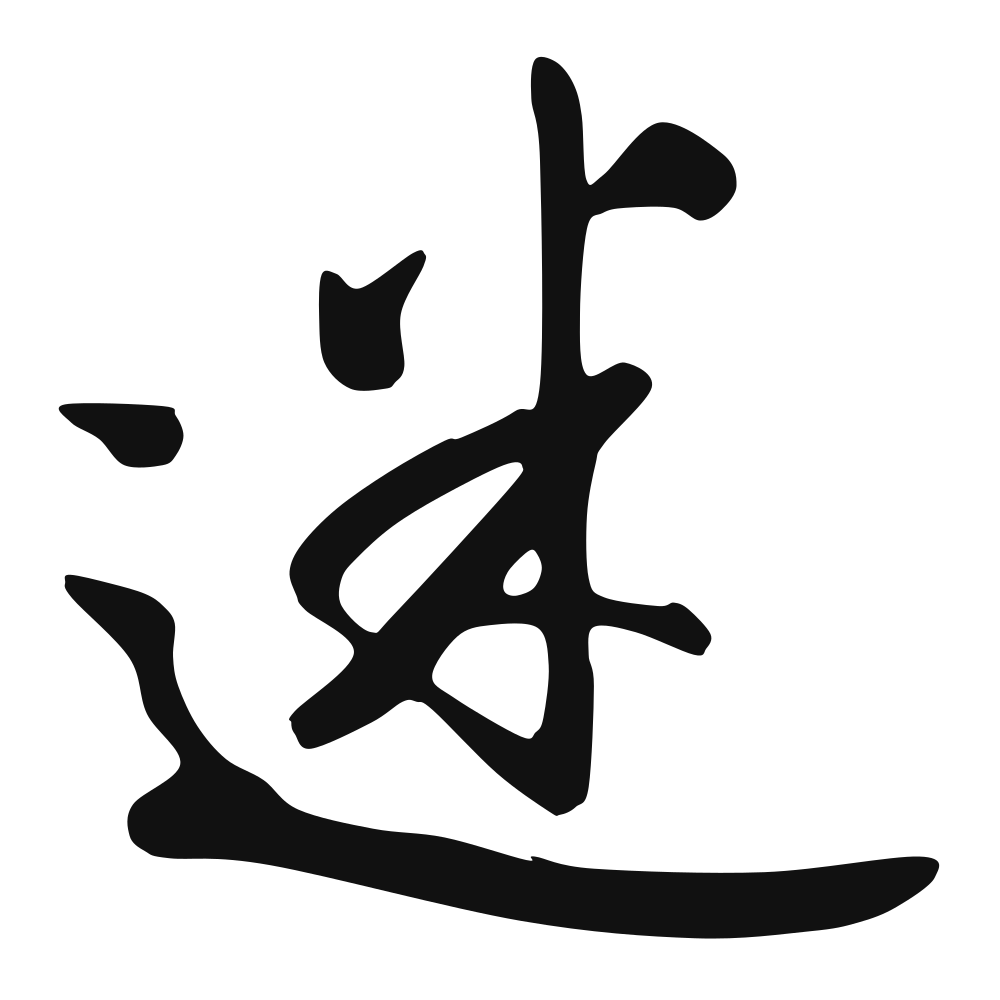
迷
to bewilder; crazy about; fan; enthusiast; lost; confused
Closest English meanings
confused·fascinated·lost
The Calligrapher — Wáng Qià 王洽
Eastern Jin calligrapher of running script, a leading figure among the Wang family masters.
Eastern Jin calligrapher (), master of running script — known for 王导族子. Eastern Jin dynasty
Cultural Story
Mi is a foot that has lost the road. Chu ci laments poets who 'in confusion know not where to go,' and Buddhist preachers warned of the lost who need only wake: delusion and enlightenment, the phrase says, are one step apart.
Common words & phrases
- 迷路 lost · lose way
- 迷人 charming · fascinating
- 着迷 obsessed · fascinated
- 迷信 superstition
- 迷宫 maze · labyrinth
Read the story behind the character
Modern mi splits charmingly: milu (lose your way) in the old town's alleys, miren (charming) a smile that hooks you, zhemi (fascinated) by a K-drama at 2 a.m., migong (labyrinth) escape rooms on Friday night. Only mixin (superstition) keeps the dark sense — the fortune-teller your grandmother still calls.
Why this character belongs on skin
Being lost is not the opposite of finding your way; sometimes it is the way. 迷 sets rice beside to walk, the wanderer who stops for food and loses the path, or the mind seduced and led astray. The Buddhist calls the world delusion, the state we are born into; the lover calls it enchantment. To be lost is to be both confused and captivated, lost in a city, lost in a face. The West fears the lost man; the East trusts that the maze has a center if you stop running. Wear this if you have ever found something true only after losing the map. Let it rest where your own wandering began, the chest, the hip. Let it say you are not ashamed of the wrong turns, that the detour was the point, and that you would rather be beautifully lost than safely arrived. The ink itself is a small straying, permanent on purpose.
Own this character
Purchase delivers the original SVG of this glyph, brushed by Wáng Qià 王洽, ready to place on skin, paper, or screen.