
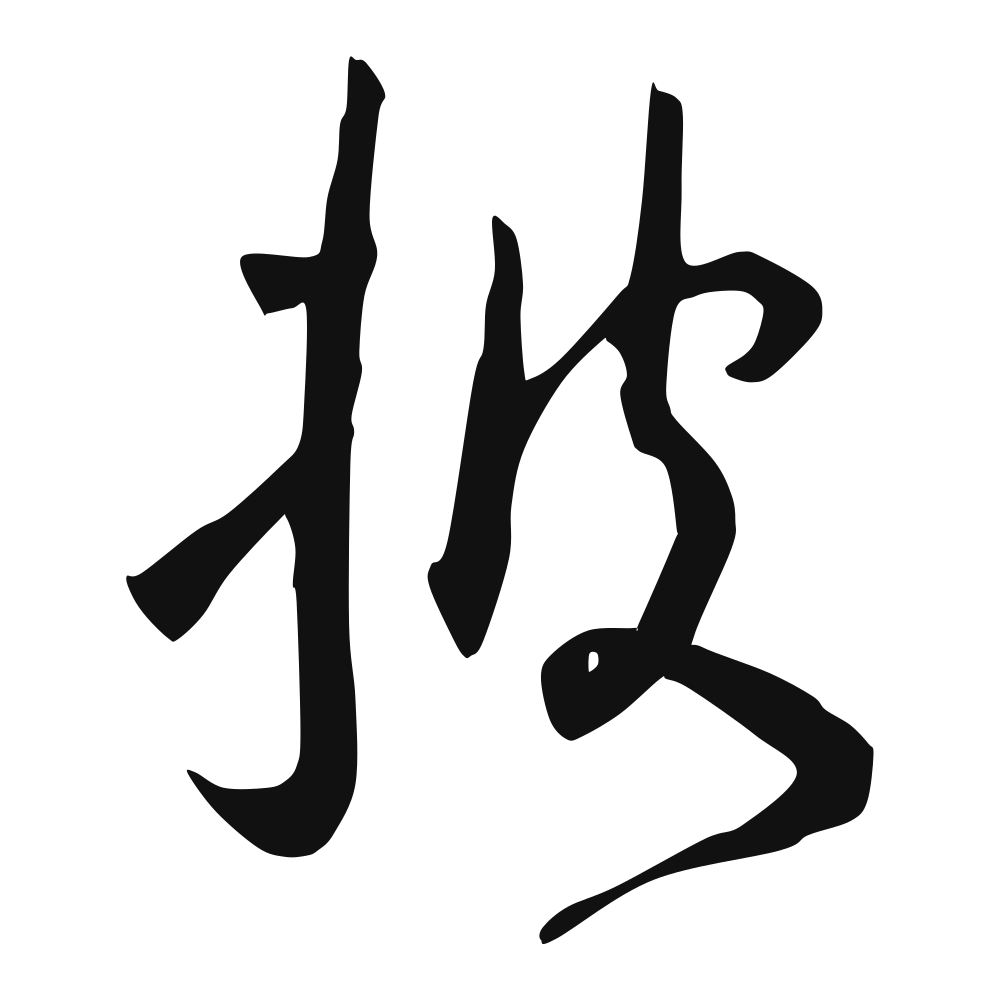
披
to drape over one's shoulders; to open; to unroll; to split open; to spread out
Closest English meanings
drape·spread·open
The Calligrapher — Wáng Sēngqián 王僧虔
Southern Qi calligrapher and theorist; author of the Encomium on Brush Intention (Biyi Zan).
南朝齐 calligrapher (), master of regular script/running script — known for 《太子舍人帖》. Southern Qi dynasty (Southern Dynasties)
Cultural Story
披 is to drape and to spread open. The 赤壁赋 has the guests 披襟 when the wind comes, baring the chest to the river, and 披发 is the unfastened hair of mourning or ecstasy. The hand with 皮, a hide, is the cloak thrown on. It is the covering and the unveiling.
Common words & phrases
- 披风 cloak · cape
- 披露 reveal · disclose · publish
- 披肩 shawl · cape
- 披散 hang loose · let down (hair)
Read the story behind the character
披 is the cloak and the reveal: 披风 the cape on the stage, 披露 the leak in the paper, 披肩 the shawl, 披散 the hair let down. It names the thing draped on the shoulders and the thing laid open for view, the cover and the exposure.
Why this character belongs on skin
Before armor, before titles, there is the cloak—pī is the movement of cloth finding the shoulders, the shoulders accepting the weight. To pī the stars and the moon is to walk all night under heaven's own mantle; to pī a robe is to let the world's cold meet fabric instead of skin. The character is a hand laying something across the body, an act of self-protection that is also self-definition: this is what I choose to wear. We pī our grief like shrouds and our dignity like silk. There is ceremony in it, the daily coronation of getting dressed. Let it rest across your back, where a cape would fall—a reminder that you are allowed to cover yourself, to choose your own weather, to walk out draped in whatever light you can gather.
Own this character
Purchase delivers the original SVG of this glyph, brushed by Wáng Sēngqián 王僧虔, ready to place on skin, paper, or screen.