
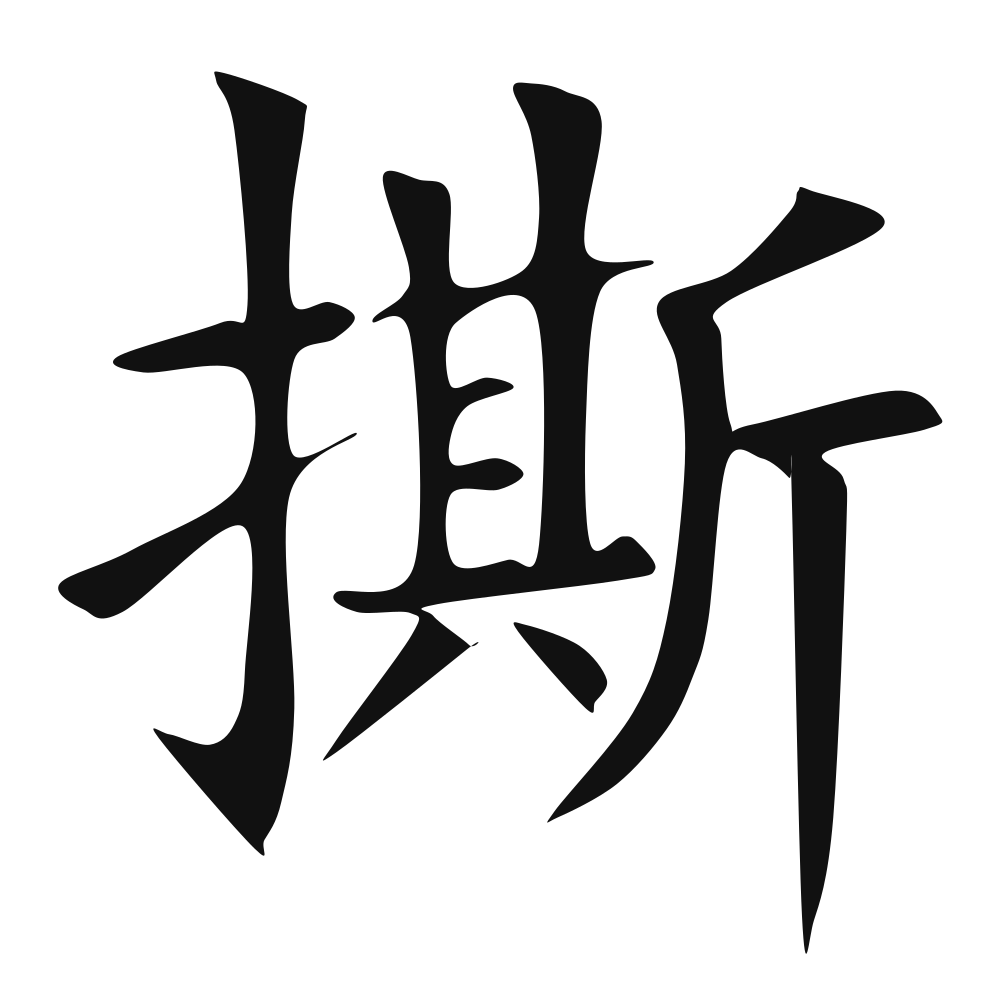
The Calligrapher — Wáng Sēngqián 王僧虔
Southern Qi calligrapher and theorist; author of the Encomium on Brush Intention (Biyi Zan).
南朝齐 calligrapher (), master of regular script/running script — known for 《太子舍人帖》. Southern Qi dynasty (Southern Dynasties)
Cultural Story
A spoken character, 撕 is the rending of cloth by two hands, the letter 撕ed in rage, the banner 撕ed from the pole. The books said 裂 or 絕; 撕 is the plainer tear, the one the body performs before the meaning arrives, and the letter torn in rage was usually from the very person the rager had been pretending, all morning, to forgive.
Common words & phrases
- 撕开 tear open
- 撕毁 tear up · annul
- 撕裂 tear apart
- 撕破 tear
- 撕掉 tear off
Read the story behind the character
You 撕開 the packet; a trader 撕毀s the pact; a seam is 撕裂d; a note is 撕掉. The letter is a treaty now. The two-handed rend is the same, whether it opens a wrapper, ends an alliance, or merely destroys the proof a person no longer wishes to have read aloud, and the treaty is only the letter, signed by more hands before the tear.
Why this character belongs on skin
Hands know one alphabet of endings: grip, pull, rip. 撕 is to tear—the letter torn in half, the sheet ripped from the calendar, the dress's hem surrendering with a sound like a whispered yes. There is violence in it, but also ceremony. We tear what we are finished with: the contract, the photograph, the page that had us all wrong. Buddhism counts even destruction as impermanence doing its paperwork. And some tearing is midwifery—the seed coat splitting so the root can leave, the cocoon rendered useless on purpose. Do not tear carelessly; paper remembers. But do not cling either. When something in your life is clearly over, honor it with the oldest rite of passage: both hands, one sound, freedom. Then let the pieces go.
Own this character
Purchase delivers the original SVG of this glyph, brushed by Wáng Sēngqián 王僧虔, ready to place on skin, paper, or screen.