
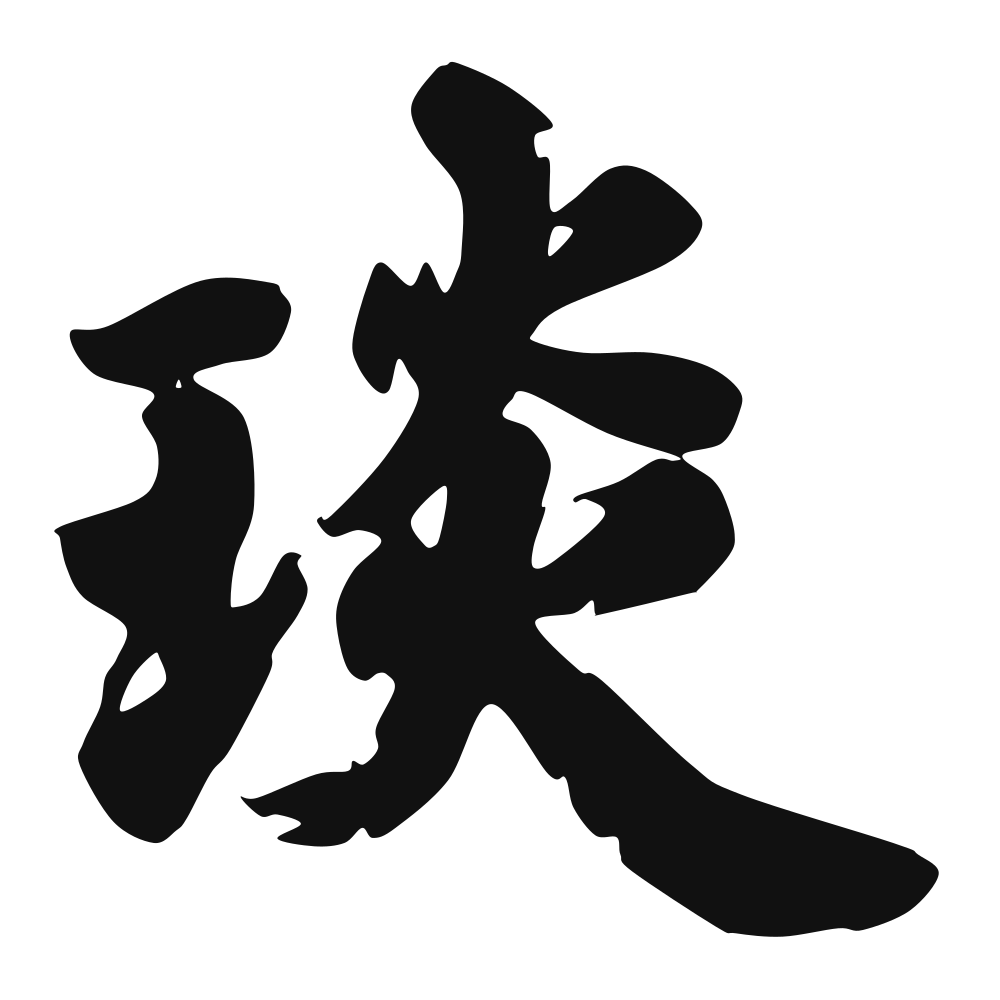
琰
gem; glitter of gems
Closest English meanings
jade·precious jade
The Calligrapher — Wáng Sēngqián 王僧虔
Southern Qi calligrapher and theorist; author of the Encomium on Brush Intention (Biyi Zan).
南朝齐 calligrapher (), master of regular script/running script — known for 《太子舍人帖》. Southern Qi dynasty (Southern Dynasties)
Cultural Story
Yan means precious jade, especially the gleaming tablets nobles exchanged in ceremony. The 琰圭 was a pointed ceremonial jade whose sharp tip symbolized censure delivered with courtesy, while 琬琰 — flawless jade tablets — became a metaphor for writing so fine it deserved carving in jade.
Common words & phrases
- 琰圭 ceremonial jade tablet
- 琬琰 fine jade · jade tablet
- 翠琰 green jade
Read the story behind the character
Modern usage is elegant and sparing. Descriptions of green stone steles may speak of 翠琰, green jade, and inscriptions praised as 琬琰 still imply words worth engraving forever. Otherwise 琰 lives on chiefly in given names, where it promises its bearer a gem-like character.
Why this character belongs on skin
Some jade glows soft; 琰 gleams like an edge. The character names jade with a pointed, piercing luster—stone cut to a tip, polished to a flame. Ancient lore tells of 琬琰, the two perfect discs a virtuous lord received from heaven's favor, and of jade tablets so bright they seemed lit from within. Edge and brilliance: the qualities that make a person dangerous in the best sense. A mind that cuts clean. A presence that catches every eye in the room whether it wants to or not. But edge implies discipline—no blade ever sharpened itself, and no brilliance burns without cost. The samurai polished the sword as meditation; the carver shapes the gem by surrendering everything that isn't the gem. 琰 is for the one who did that work. Wear the gleam. You earned the edge.
Own this character
Purchase delivers the original SVG of this glyph, brushed by Wáng Sēngqián 王僧虔, ready to place on skin, paper, or screen.