
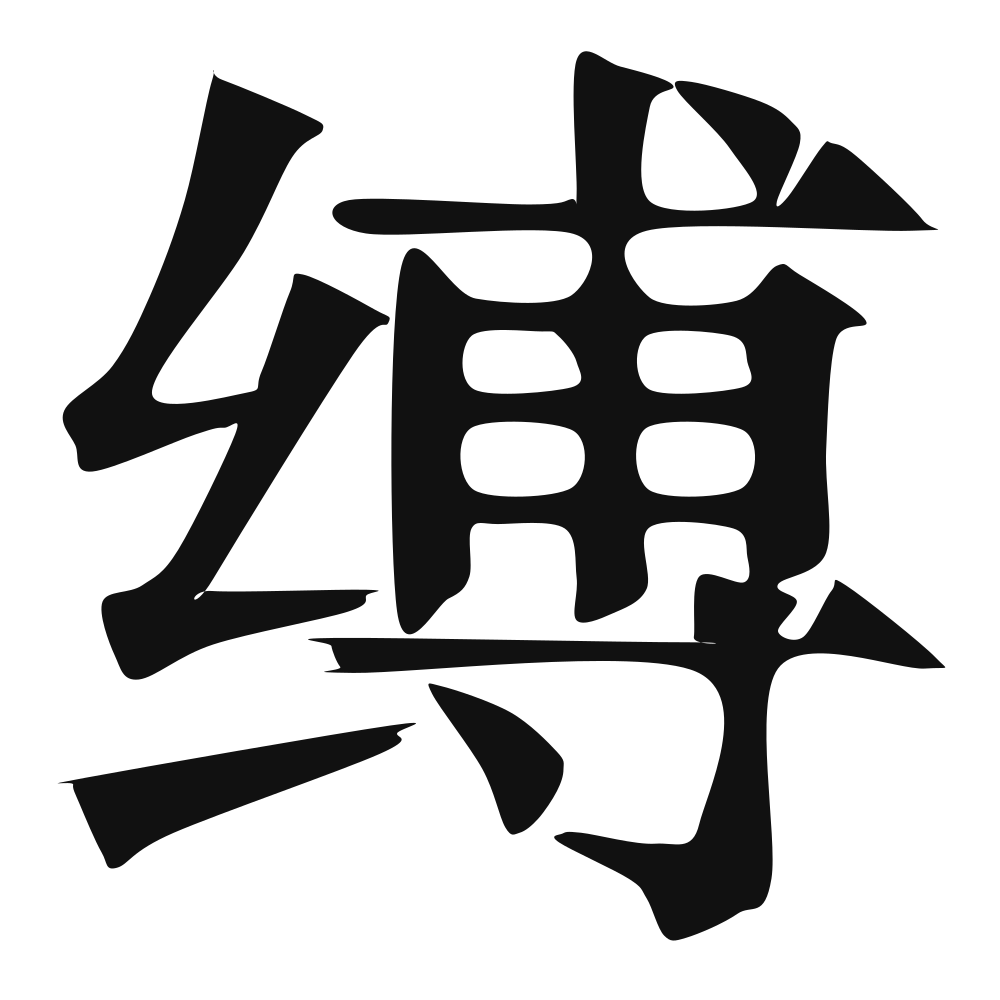
缚
to bind; to tie; Taiwan pr. [fu2]
Closest English meanings
tie·bind·bound·fetter
The Calligrapher — Wáng Sēngqián 王僧虔
Southern Qi calligrapher and theorist; author of the Encomium on Brush Intention (Biyi Zan).
南朝齐 calligrapher (), master of regular script/running script — known for 《太子舍人帖》. Southern Qi dynasty (Southern Dynasties)
Cultural Story
缚 tied things down with cord and rope: prisoners bound, bundles trussed, and — in the silkworm's most famous image — the worm that 作茧自缚, spinning its own prison. Martial tales mocked the scholar with 手无缚鸡之力, arms too weak to truss a chicken. To bind was both punishment and self-made trap.
Common words & phrases
- 束缚 bind · restrain · fetter · tie down
- 绑缚 tie up · bind · fasten
- 系缚 tie · bind · fetter
- 捆缚 tie up · bind · truss
- 拘缚 restrain · bind · fetter
Read the story behind the character
Most bindings are metaphorical now. People quit stable jobs to escape 束缚 (restraint, fetters); crime news reports suspects 绑缚 (tied up, bound) and led away; movers 捆缚 (tie up, truss) the sofa before the truck rolls. And the silkworm's warning still stings: procrastinators 作茧自缚, trapped in deadlines of their own spinning.
Why this character belongs on skin
The Bodhisattva's vow binds him to the world until every being is saved—缚, binding, is not always a villain. The character shows silk twisted into rope:束缚, restraint, the ties that hold and the ties that hold you back. Freedom, the mystics insist, is not the absence of bonds but the choice of them. The sameness of the rope depends entirely on the hand that tied it. To wear 缚 is to own your fetters as commitments—a marriage, an art, a promise to the dead—that you could cut and will not. Or it marks a binding already broken, the scar where the rope was. Either way, the skin understands: what binds us, examined closely, tells us who we chose to be.
Own this character
Purchase delivers the original SVG of this glyph, brushed by Wáng Sēngqián 王僧虔, ready to place on skin, paper, or screen.