
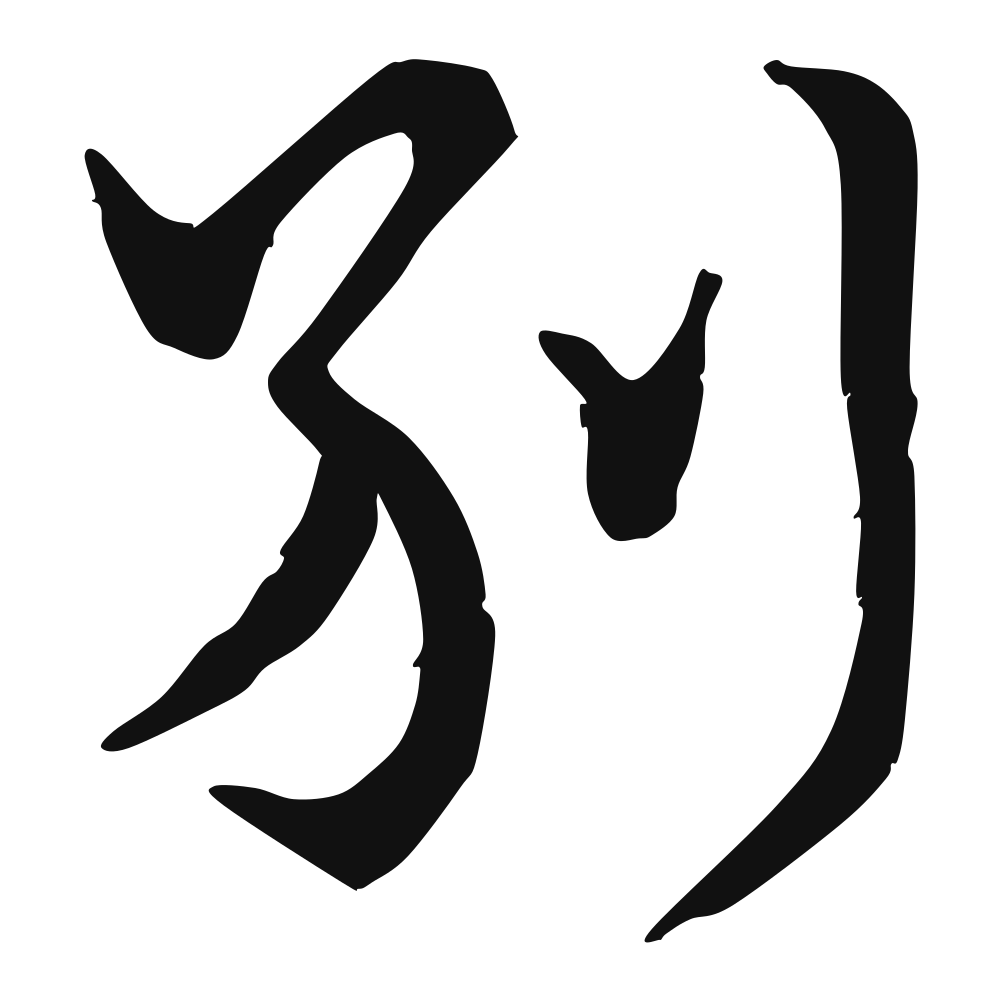
别
surname Bie; to leave; to part (from); (literary) to differentiate; to distinguish; (dialect) to turn away; to turn aside; to avert (one's face, gaze etc); (bound form) other; another; different; don't ...!; to fasten with a pin or clip; to stick in; to insert (in order to hinder movement); (noun suffix) category (as in 性別|性别[xing4 bie2], 派別|派别[pai4 bie2]); to make sb change their ways, opinions etc
Closest English meanings
separate·leave·don't·other·difference
The Calligrapher — Wáng Xiànzhī 王献之
Son of Wang Xizhi and pioneer of wild cursive who pushed brush freedom further.
Eastern Jin calligrapher (344–386), master of running script/cursive script — seventh son of Wang Xizhi who broke his father's rules for a more fluent, emotional running script; together they are 'the Two Wangs'. Eastern Jin dynasty
Cultural Story
(Wang Wei sent Yuan Er west with 劝君更尽一杯酒,西出阳关无故人 — drink one more cup, beyond Yangguan there are no old friends. The line is sung at every 送别 still. The character 别 sets the knife that separates, and the poem fixes it to the cup raised at the gate before the road takes the friend.
Common words & phrases
- 别人 others · other people · other person
- 分别 separate · part · respectively · difference
- 特别 special · especially · particular · unusual
- 区别 difference · distinguish · differentiate
- 告别 farewell · say goodbye · leave
Read the story behind the character
别人 pass on the stairs without a glance. The plan is 特别, set apart from the rest. They 告别 at the pier and the horn sounds. He 区别 the two models by the hinge. The word names the other, the leave-taking, and the mark that sets one thing apart.
Own this character
Purchase delivers the original SVG of this glyph, brushed by Wáng Xiànzhī 王献之, ready to place on skin, paper, or screen.