
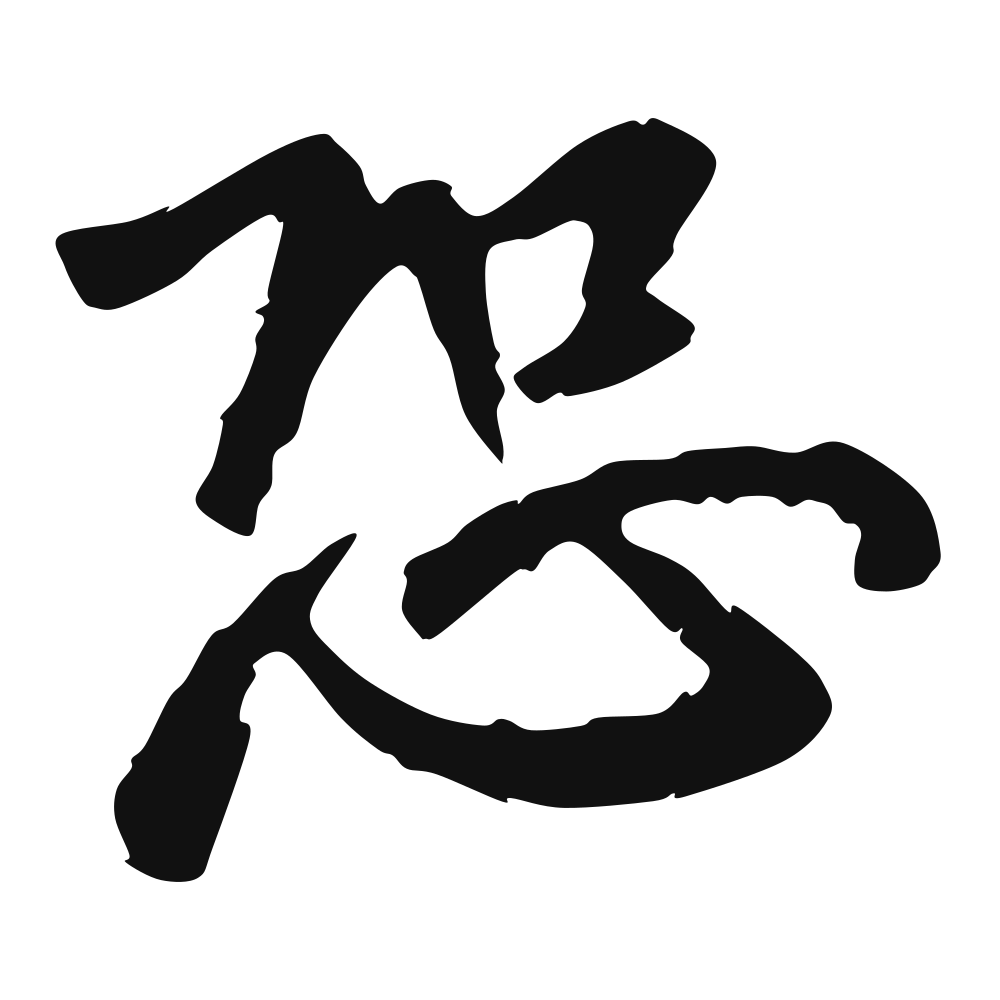
恐
afraid; frightened; to fear
Closest English meanings
fear·perhaps·dread·terrified
The Calligrapher — Wáng Xiànzhī 王献之
Son of Wang Xizhi and pioneer of wild cursive who pushed brush freedom further.
Eastern Jin calligrapher (344–386), master of running script/cursive script — seventh son of Wang Xizhi who broke his father's rules for a more fluent, emotional running script; together they are 'the Two Wangs'. Eastern Jin dynasty
Cultural Story
恐 is the fear that looks ahead — 說文 gives it as the dread of what comes. The word carried the anticipation, not the present shock: the mind sent out to meet the bad thing before it arrives, and the body braced by a story not yet happened.
Common words & phrases
- 恐怕 fear · perhaps · I'm afraid
- 恐怖 terror · horror · terrifying
- 恐惧 fear · dread · terror
- 恐吓 threaten · intimidate · menace
- 恐慌 panic · alarmed · scared
Read the story behind the character
恐怕 is the softener before bad news, 恐怖 the genre and the act, 恐惧 the dread a verdict names, 恐吓 the threat a message carries, 恐慌 the run on the bank. The bad thing is a headline now; the brace is real. We still send the mind ahead, and call the bracing caution, which the old word already sent walking.
Why this character belongs on skin
There is a cold room inside every brave man, and he visits it alone. Kǒng is the heart shrinking from what it cannot master — the dark at the foot of the stairs, the debt of time, the love that might not be returned. The character places dread right at the center of feeling, as if the ancients knew fear was not the opposite of courage but its ground. The Buddhist meets kǒng without flinching, naming it, and so steals its teeth. A warrior does not lack the cold; he walks forward inside it. To wear this is not to confess weakness but to honor the thing you felt and crossed anyway. Let it rest where your hand presses when the night thins — a quiet tally of the terror you refused to let decide you.
Own this character
Purchase delivers the original SVG of this glyph, brushed by Wáng Xiànzhī 王献之, ready to place on skin, paper, or screen.