
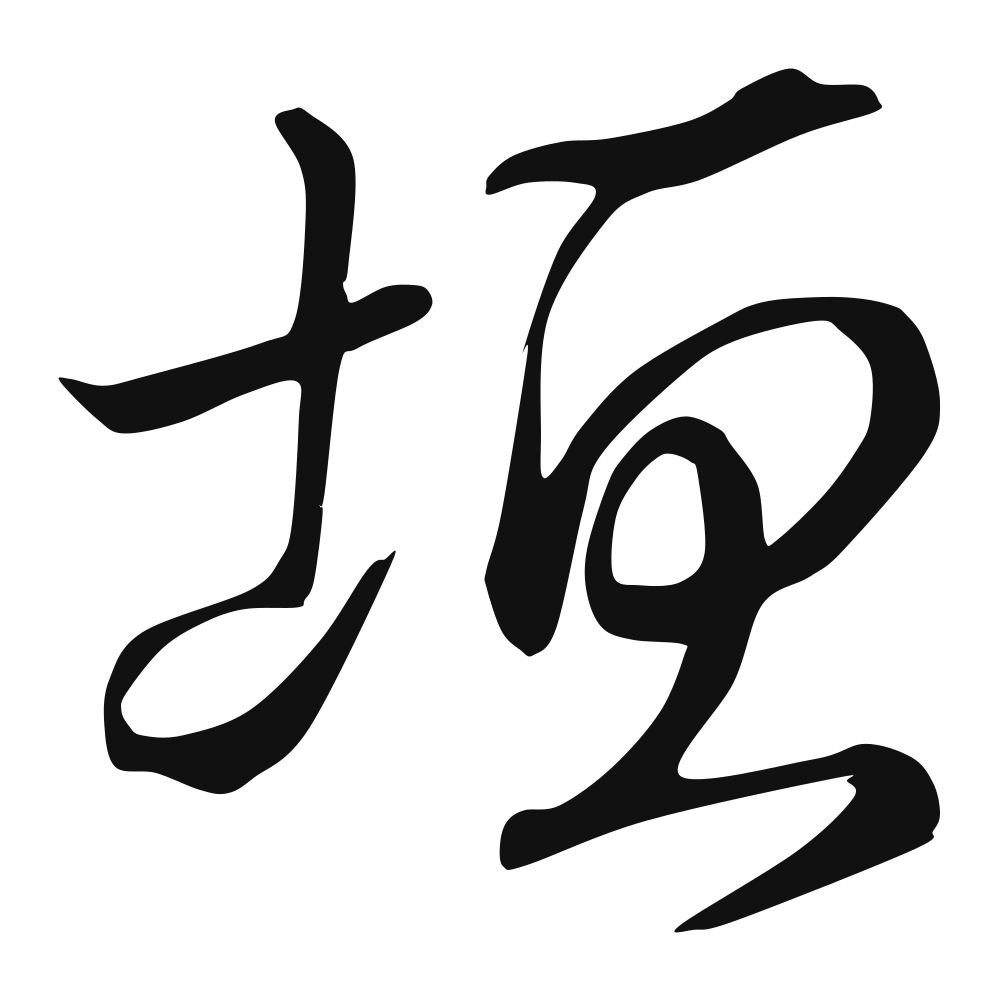
The Calligrapher — Wáng Xīzhī 王羲之
The 'Sage of Calligraphy'; his running script has set the standard for 1,700 years.
Eastern Jin calligrapher (303–361), master of running script/cursive script/regular script — the Sage of Calligraphy; his Orchid Pavilion Preface is the most celebrated work in the tradition, and nearly every later master traces lineage to his hand. Eastern Jin dynasty
Cultural Story
:The Rites of Zhou measured the city by its 垣 — the outer wall that held the realm in. The 城垣 of Chang'an ran miles, and the 省垣 was the provincial capital behind its rampart. The character is earth and a long wall, the enclosure that defined a place worth defending.
Common words & phrases
- 城垣 city wall
- 墙垣 wall · fence
- 垣墙 wall · enclosure
- 省垣 provincial capital
Read the story behind the character
The 城垣 of the old town is a park path now. The 墙垣 around the estate is high. The 垣墙 leans after the quake. The 省垣 hosts the new museum. A gardener trims the 垣 along the lane. The broken 垣 still marks where the courtyard once stood.
Why this character belongs on skin
垣 is not the Great Wall. It is the humble wall — the courtyard enclosure, the low brick boundary around a garden, over which the neighbor's plum branch famously leaned. 一枝红杏出墙来: a branch of red apricot escapes the wall, and a thousand years of poetry follows. 垣 marks the edge between inside and outside, private and shared, restraint and the thing that will not be restrained. The Confucians loved walls because limits make a home; the poets loved the branch because walls are always slightly too short. Ink this and choose both truths: you have boundaries, and you are the branch. Put 垣 where the wrist bends — the body's own narrow wall — and let the blossom be whatever you do next.
Own this character
Purchase delivers the original SVG of this glyph, brushed by Wáng Xīzhī 王羲之, ready to place on skin, paper, or screen.