
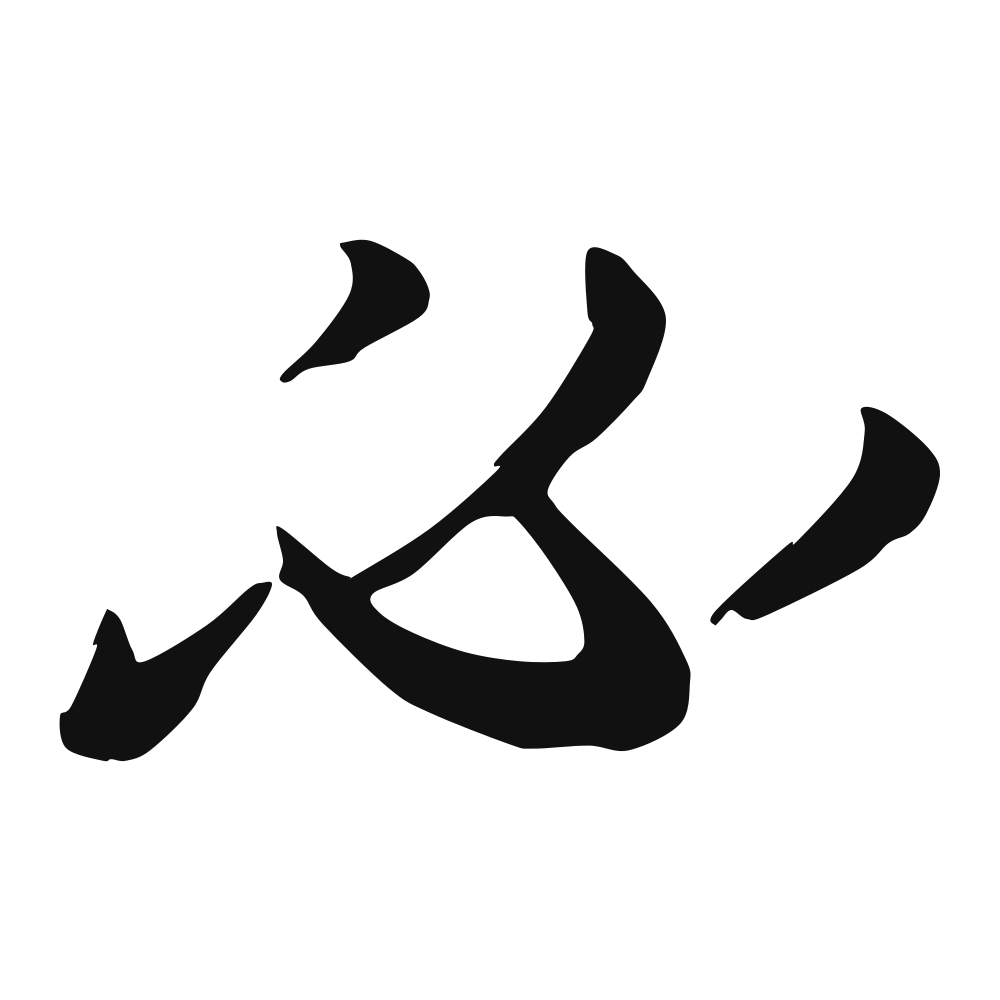
必
certainly; must; will; necessarily
Closest English meanings
must·certainly
The Calligrapher — Wáng Xīzhī 王羲之
The 'Sage of Calligraphy'; his running script has set the standard for 1,700 years.
Eastern Jin calligrapher (303–361), master of running script/cursive script/regular script — the Sage of Calligraphy; his Orchid Pavilion Preface is the most celebrated work in the tradition, and nearly every later master traces lineage to his hand. Eastern Jin dynasty
Cultural Story
必 is the certain, the must. 論語 has Confucius say 必也正名乎 — first set the names right, no evading it — and the word carried that unyielding edge: what will be, what you are bound to. A character with no room for maybe, carved straight.
Common words & phrases
- 必须 must · have to
- 必然 inevitable · certain
- 必要 necessary · essential
- 必定 certainly · surely
- 何必 why bother
- 未必 not necessarily
Read the story behind the character
必须 is the line on the form, 必然 the outcome a chart insists on, 未必 the doubt a wise man keeps, 何必 the shrug at a fuss. The edge is a rule now; the maybe survives only as its denial. We still speak in musts, and still rescue ourselves with the not-necessarily, which the sage allowed.
Why this character belongs on skin
There is a line in each of us that will not bend — not from pride, but from recognition. 必 is that line: must, certainly, without doubt. The character once showed a spear dividing a heart, the moment of decision made absolute. We soften our language to please, to keep doors open we should close. But 必 is the door slammed, the vow spoken, the thing you will do because not doing it would unmake you. To carry it is to name yourself decided. It is a dangerous mark to wear, because it asks you to mean it for life. Yet that is its grace — the ink holds the promise your mouth might break. Some will read it as stubbornness. The ones who matter will read it as the one word no storm could take from you. 必. It is the smallest sentence: I will.
Own this character
Purchase delivers the original SVG of this glyph, brushed by Wáng Xīzhī 王羲之, ready to place on skin, paper, or screen.