
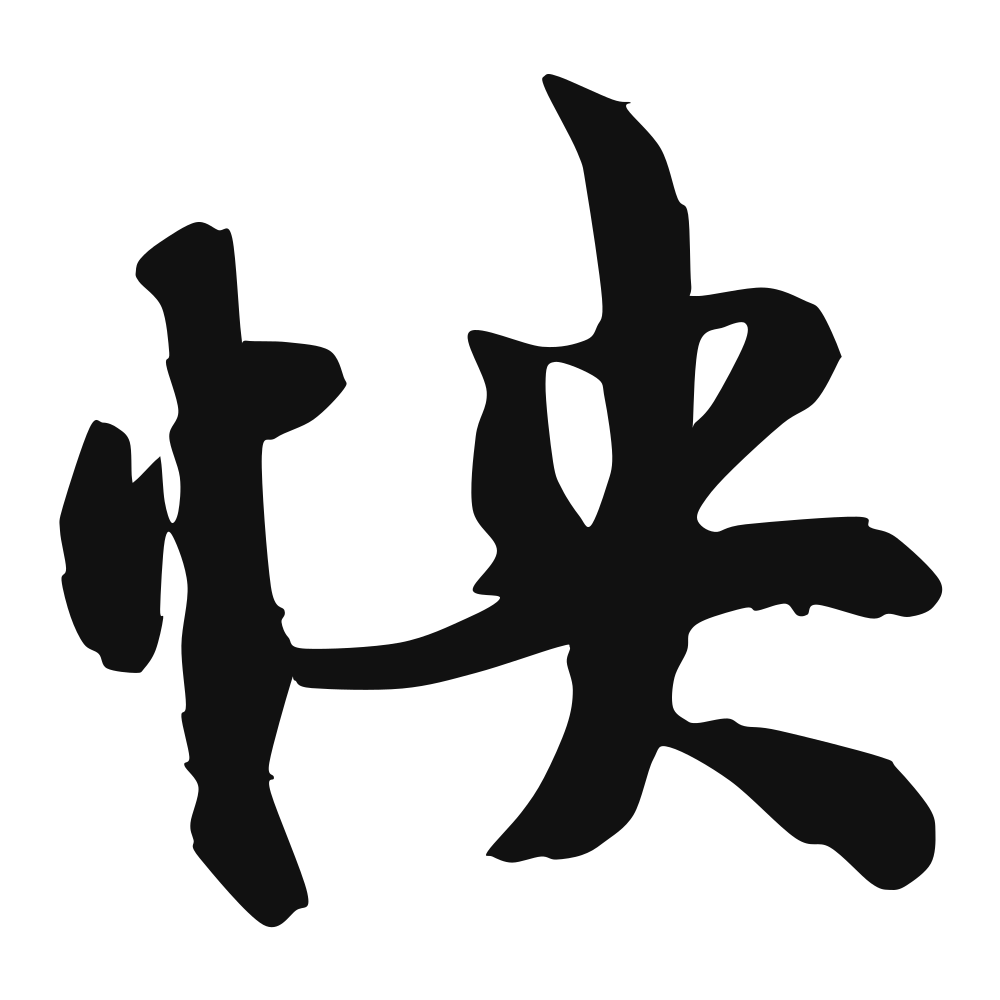
The Calligrapher — Wáng Xīzhī 王羲之
The 'Sage of Calligraphy'; his running script has set the standard for 1,700 years.
Eastern Jin calligrapher (303–361), master of running script/cursive script/regular script — the Sage of Calligraphy; his Orchid Pavilion Preface is the most celebrated work in the tradition, and nearly every later master traces lineage to his hand. Eastern Jin dynasty
Cultural Story
怏 is the discontent that will not cheer. 史記 leaves 韓信 怏怏不樂, the general who won the wars and got the lesser seat, nursing a slight no rank could soothe. The word kept that sour peace — not angry enough to act, too proud to pretend it was fine.
Common words & phrases
- 怏怏 discontentedly
- 怏然 unhappy
Read the story behind the character
怏怏 is the mood a passed-over man wears, 怏然 the unhappiness a fine essay still reaches for. The general is a colleague now; the slight is a promotion. We still sit in the sour peace, and the character waits in its one phrase to name the pride that would not let us smile.
Why this character belongs on skin
The mood that has no villain—low weather of the soul, discontent without a target. 怏 pairs the heart radical with the character for center, as if the heart itself sat off-center, tilted. Classical Chinese used it for listless resentment, 怏怏, the sullenness of a general passed over, a lover unanswered. Everyone knows this gray hour; few admit it. The Daoists would smile at it—at the futility of demanding life justify itself to your mood. Water does not sulk when it meets a stone; it finds another way down. Wearing 怏 is a confession of humanity, not a celebration of gloom: a small dark note in the margins of a life, proof you feel everything, even the moods that go nowhere. Some inks are honest that way.
Own this character
Purchase delivers the original SVG of this glyph, brushed by Wáng Xīzhī 王羲之, ready to place on skin, paper, or screen.