
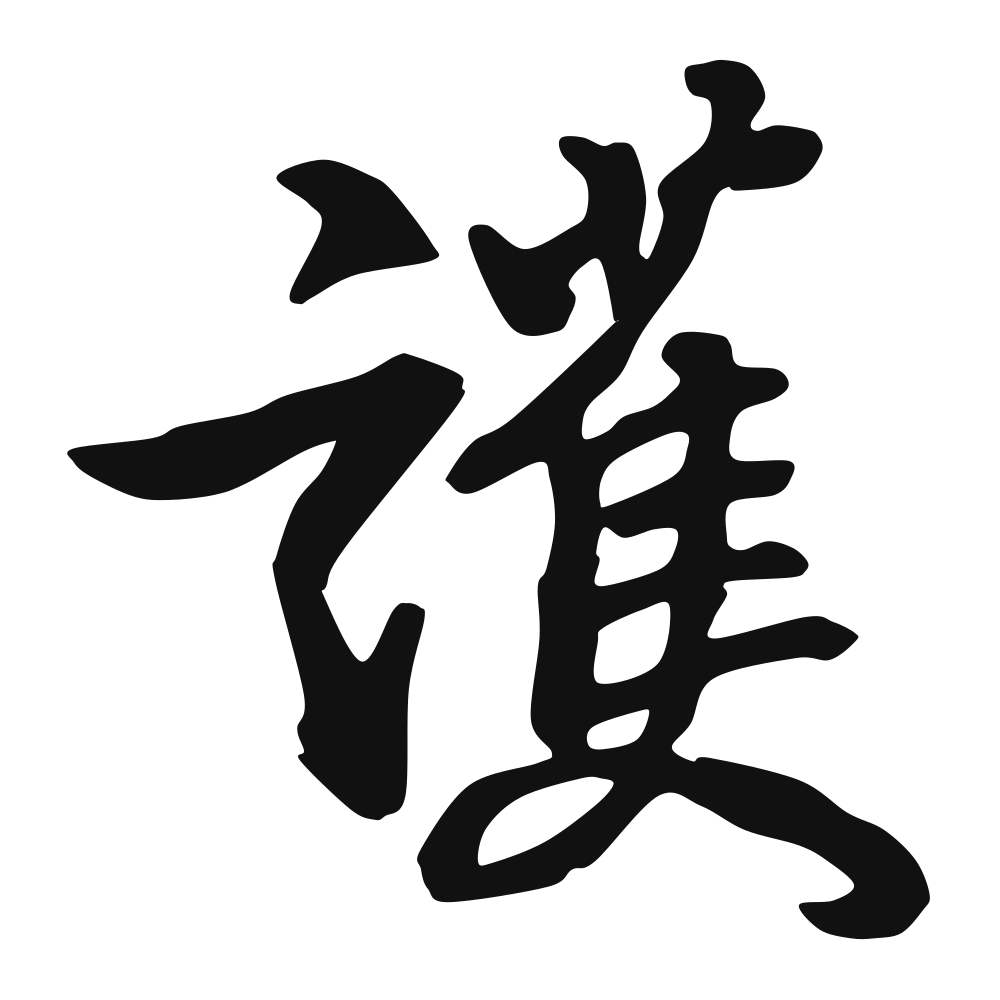
护
to protect
Closest English meanings
protect·guard·defend·shield
The Calligrapher — Wáng Xīzhī 王羲之
The 'Sage of Calligraphy'; his running script has set the standard for 1,700 years.
Eastern Jin calligrapher (303–361), master of running script/cursive script/regular script — the Sage of Calligraphy; his Orchid Pavilion Preface is the most celebrated work in the tradition, and nearly every later master traces lineage to his hand. Eastern Jin dynasty
Cultural Story
护 is to shield, and the old manuals of rule used it for the prince who 爱护 his people as he would a wound. The character pairs a hand with 户, the door, as if to stand in the gateway. It is the guarding that is also a keeping.
Common words & phrases
- 保护 protect · safeguard · preserve
- 护士 nurse · sick-room attendant
- 爱护 care for · cherish · protect
- 守护 guard · watch over · protect
- 护照 passport · papers
- 维护 maintain · uphold · defend
Read the story behind the character
护 is the care and the paper: 保护 the wrapper, 护士 the nurse, 爱护 the plant, 守护 the night watch, 护照 the passport. 维护 is the system kept running. It names the shielding from the body to the border, the hand at the door and the stamp in the booklet.
Why this character belongs on skin
There is a love that stands in front. 护 is that standing—to protect, to guard, to shield what is precious from the weather of the world. Its old form set the eye upon the hand, watching over, keeping safe. We know it in the parent's body between child and harm, the friend who answers the phone at three, the dog that will not leave the door. 护 is not control; it is the willing vulnerability of the guardian, the one who takes the blow. To ink it is to name someone you would block the storm for, or to mark the one who shielded you when you could not stand. The character is a quiet sentinel on the skin, facing outward. It says: this, I keep. Not possession, but devotion. Wear it as a small armor worn for another, or for the self you are learning to defend.
Own this character
Purchase delivers the original SVG of this glyph, brushed by Wáng Xīzhī 王羲之, ready to place on skin, paper, or screen.