
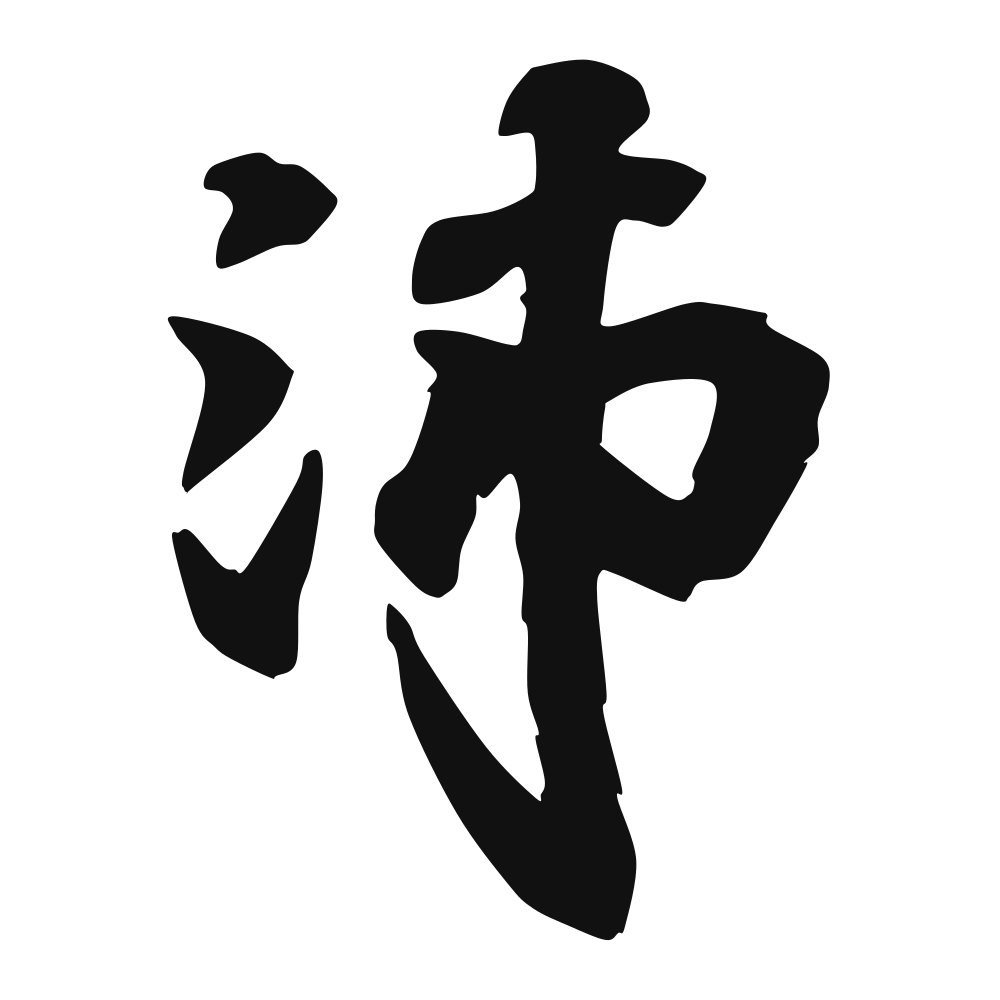
The Calligrapher — Wáng Xīzhī 王羲之
The 'Sage of Calligraphy'; his running script has set the standard for 1,700 years.
Eastern Jin calligrapher (303–361), master of running script/cursive script/regular script — the Sage of Calligraphy; his Orchid Pavilion Preface is the most celebrated work in the tradition, and nearly every later master traces lineage to his hand. Eastern Jin dynasty
Cultural Story
沛 joins water and 巿, read as both a place and a flood-like fullness; the 說文 says watery abundance. Mencius spoke of 沛然 rain falling from heaven. 沛县 was the homeland of Liu Bang, the founding emperor of the Han dynasty.
Common words & phrases
- 充沛 abundant · plentiful
- 丰沛 plentiful · abundant
- 沛然 copious · gushing
- 沛县 Pei County
Read the story behind the character
A marathon runner needs 充沛 (abundant, plentiful) energy and 丰沛 (plentiful, abundant) stamina to finish. After rain the fields drink 沛然 (copious, gushing) water. A tourist visiting 沛县 (Pei County) explores the Han ancestor temples and eats the local noodles.
Why this character belongs on skin
Rain has fallen for days and the river is 沛—full to the banks, surging, alive with more than it can hold. This is abundance not as comfort but as force: a vigor that spills, a life that will not be contained. The classical sense is water copious and rapid; the modern one, an energy that fills a person to the brim. To wear 沛 is to refuse the small, the cautious, the half-measured. It is a warrior's word, a lover's word—the body at full tide, the spirit that overflows its banks and floods the dry fields of others. Let this mark be your declaration that you are not meant to be rationed. You are the swollen river. You are the storm that brings the green. Carry it where your strength shows, and let the world learn: what flows from you cannot be dammed, and was never meant to be.
Own this character
Purchase delivers the original SVG of this glyph, brushed by Wáng Xīzhī 王羲之, ready to place on skin, paper, or screen.