
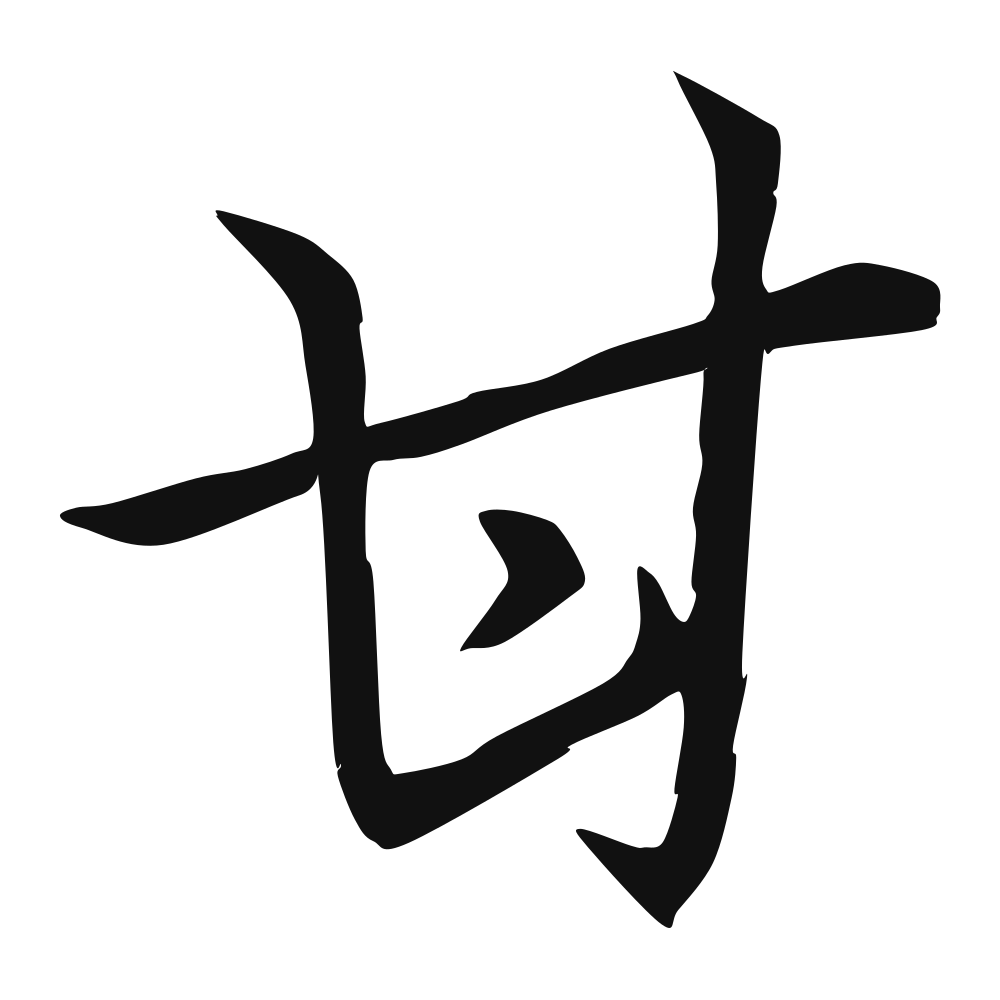
甘
甘 (gān) — sweet, pleasant, willing. Shuowen: 美也。从口含一 — a mouth holding one; a picture of satisfaction. Classical life: 《易·节卦》九五 甘节,吉,往有尚; 苦尽甘来 — bitterness ends, sweetness comes. Grammar: free morpheme — also: surname Gan; short name for Gansu 甘肅|甘肃[Gan1 su4]; (bound form) sweet; pleasant (contrasted with 苦[ku3]: bitter, unpleasant); to be willing (to do sth)
Closest English meanings
sweet·willing·pleasant
The Calligrapher — Wáng Xīzhī 王羲之
The 'Sage of Calligraphy'; his running script has set the standard for 1,700 years.
Eastern Jin calligrapher (303–361), master of running script/cursive script/regular script — the Sage of Calligraphy; his Orchid Pavilion Preface is the most celebrated work in the tradition, and nearly every later master traces lineage to his hand. Eastern Jin dynasty
Cultural Story
Gan is sweetness, tasted and then meant. Classical texts made it moral: rulers were urged to share their people's 同甘共苦, the sweet and the bitter alike, and 甘露, sweet dew, was the auspicious rain heaven sent to confirm a virtuous reign. Physicians prized 甘草, licorice, the great harmonizer of prescriptions.
Energy Reading
Wood (木)
Comparative symbology, not fortune-telling.
Common words & phrases
- 甘心 willing · content
- 甘甜 sweet · luscious
- 甘露 sweet dew · nectar
- 不甘 unwilling · not reconciled
- 甘草 licorice · licorice root
Read the story behind the character
The character keeps its two jobs. On the tongue: 甘甜, sweetness in tea and fruit. In the will: 不甘, unwilling to accept a loss, or 甘心 content at last. A dessert blog and a revenge drama both reach for the same small character.
Why this character belongs on skin
甘 is sweet — not merely the taste but the willing heart, the palate that says yes. Its shape is a mouth above the sign of flavor, and the ancients used it for anything pleasurable, anything chosen without regret. There is a sensual honesty in 甘: to call a thing sweet is to admit you desire it, that you receive the world gladly. The Daoist finds 甘 in plain water; the lover finds it in a single touch. To wear it is to refuse the ascetic's pride, to declare that you came here to taste. Place it where breath enters or where pleasure lands. Let it mean you have said yes — to the meal, the body, the unbidden joy — and that you would do it again. Life is bitter often. You chose, on purpose, the part that is sweet.
Own this character
Purchase delivers the original SVG of this glyph, brushed by Wáng Xīzhī 王羲之, ready to place on skin, paper, or screen.