
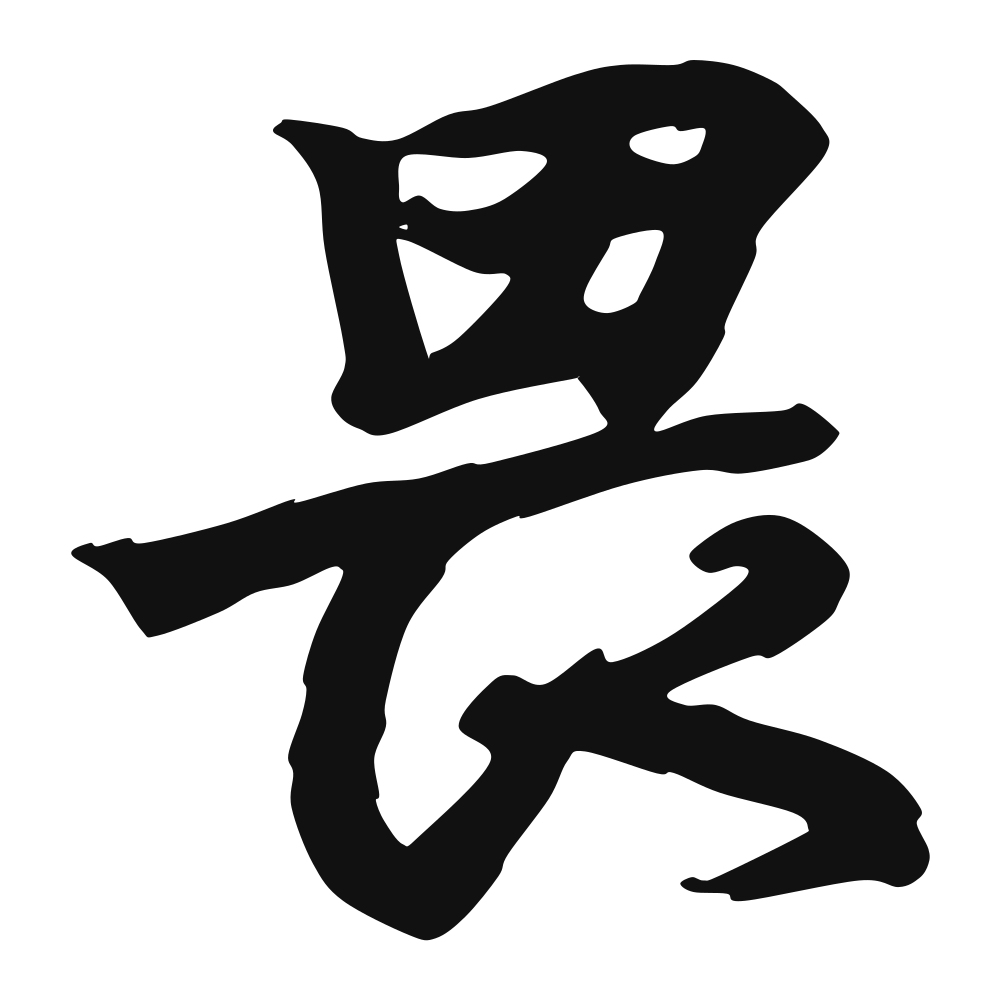
The Calligrapher — Wáng Xīzhī 王羲之
The 'Sage of Calligraphy'; his running script has set the standard for 1,700 years.
Eastern Jin calligrapher (303–361), master of running script/cursive script/regular script — the Sage of Calligraphy; his Orchid Pavilion Preface is the most celebrated work in the tradition, and nearly every later master traces lineage to his hand. Eastern Jin dynasty
Cultural Story
The graph shows a hand raised before something fearsome, and the classics taught that such fear was partly virtue: the Analects' gentleman holds three fears — Heaven's decree, great men, the words of sages. Awe, not terror, kept ritual and conscience standing.
Common words & phrases
- 畏惧 fear · dread · be afraid
- 敬畏 revere · respect and fear · awe
- 无畏 fearless · dauntless · bold
- 畏缩 shrink · cower · recoil
- 畏难 fear difficulty · shrink from difficulty
Read the story behind the character
Modern usage splits the old word neatly: 畏惧, dread, before exams or spiders; 敬畏, reverence — for nature, for the sea, for the universe — a favorite of graduation speeches; 无畏, fearless, emblazoned on rescue crews; and 畏缩, cringing back, the shyness teachers gently try to cure.
Why this character belongs on skin
There is a coldness at the nape when the forest goes silent. That is 畏 — not the small terror of a child in the dark, but the vast, reverent dread you feel standing beneath a cliff that does not know your name. The Daoists understood this: the sage fears not death but the forgetting of the Way. Before the altar, before the storm, before the lover who could undo you, 畏 is the body's bow. It is respect worn as armor. To carry this on your skin is to admit you are not the tallest thing in the room. Let it sit where your pulse is fastest, a quiet warning and a benediction both — the kind of fear that makes a man gentle. Some marks shout. This one simply hums. Wear it where only you can read it, and let the world wonder what you answer to.
Own this character
Purchase delivers the original SVG of this glyph, brushed by Wáng Xīzhī 王羲之, ready to place on skin, paper, or screen.