
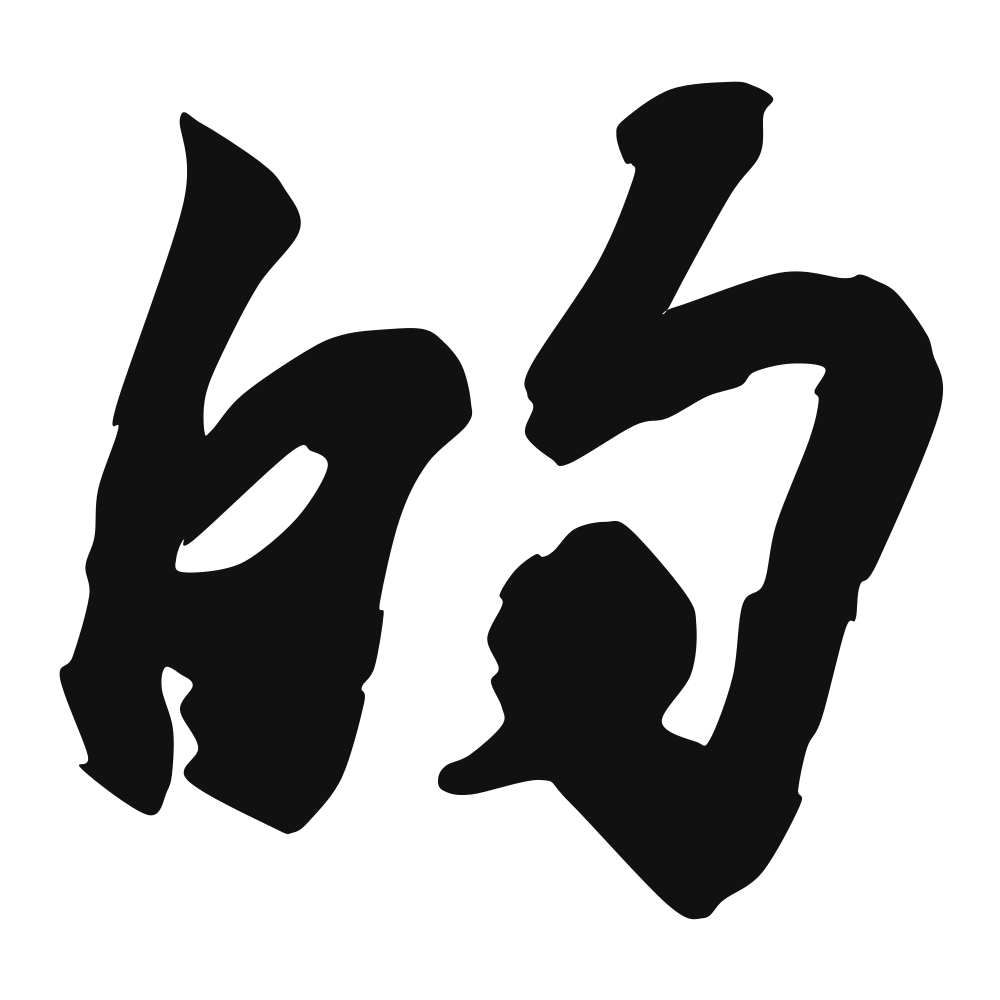
的
of; ~'s (possessive particle); (used after an attribute when it modifies a noun); (used at the end of a declarative sentence for emphasis); (used after a noun, verb or adjective to form a nominal expression, as in 皮革的[pi2 ge2 de5] "one made of leather" or 跑堂兒的|跑堂儿的[pao3 tang2 r5 de5] "a waiter (literally, one who runs back and forth in a restaurant)" or 新的[xin1 de5] "new one"); (bound form) a taxi; a cab (abbr. for 的士[di1 shi4]); really and truly; (bound form) bull's-eye; target
Closest English meanings
(particle)·true·target
The Calligrapher — Wáng Xīzhī 王羲之
The 'Sage of Calligraphy'; his running script has set the standard for 1,700 years.
Eastern Jin calligrapher (303–361), master of running script/cursive script/regular script — the Sage of Calligraphy; his Orchid Pavilion Preface is the most celebrated work in the tradition, and nearly every later master traces lineage to his hand. Eastern Jin dynasty
Cultural Story
The character 的 originally meant bright: the Shuowen Jiezi explains it as shining whiteness, built from 白 with a phonetic. Classical writers praised the sun's brilliance with it, and archers called the painted center of the target the 的 — 一发中的, one shot striking the mark, the ancestor of our word for goal.
Common words & phrases
- 目的 goal · purpose
- 的确 indeed · really
- 我的 mine · my
- 有的 some · there are
- 中的 hit the target
Read the story behind the character
Today 的 is the busiest character in the language: nearly every sentence carries one. You text 我的手机到了, browse listings 有的便宜有的贵, nod 的确 at a good review, and chase a 目的 on your to-do list — grammar glue, indeed, and purpose all in one.
Own this character
Purchase delivers the original SVG of this glyph, brushed by Wáng Xīzhī 王羲之, ready to place on skin, paper, or screen.