
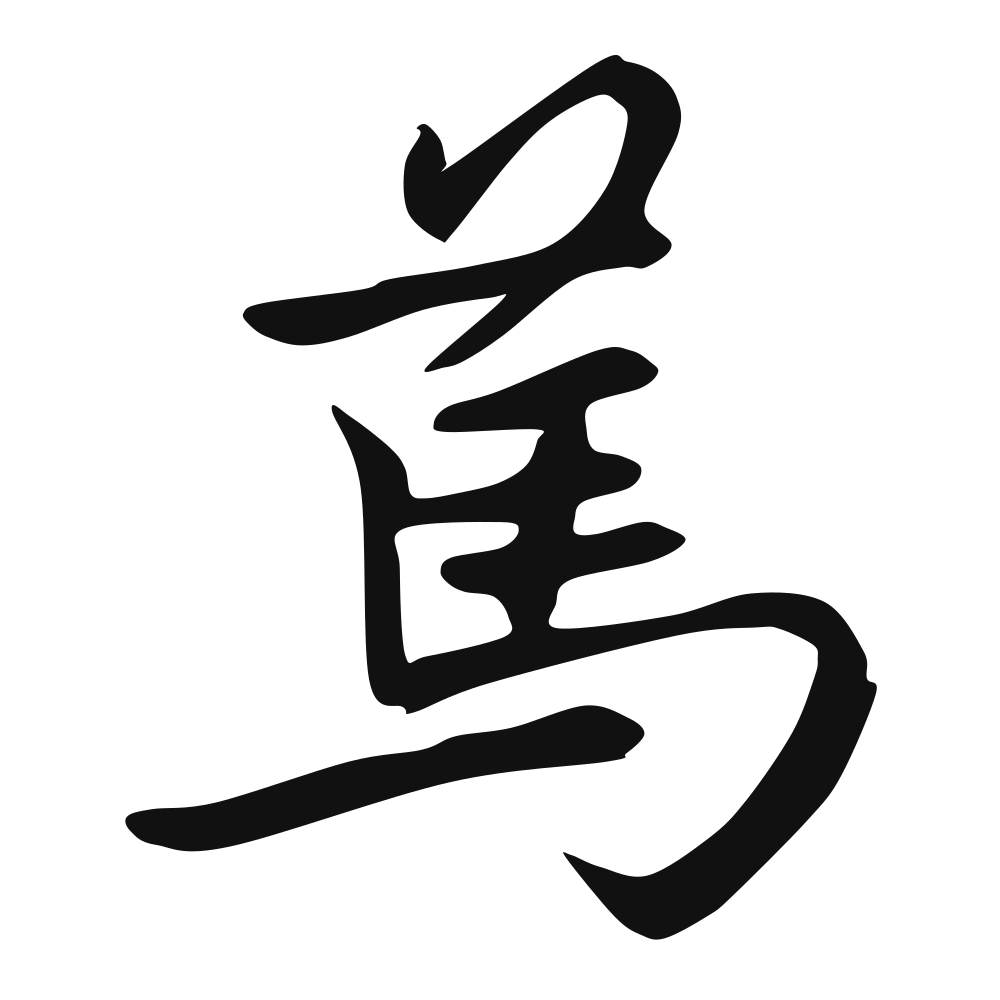
笃
(bound form) sincere; genuine; (bound form) (of an illness) serious
Closest English meanings
sincere·earnest·serious
The Calligrapher — Wáng Xīzhī 王羲之
The 'Sage of Calligraphy'; his running script has set the standard for 1,700 years.
Eastern Jin calligrapher (303–361), master of running script/cursive script/regular script — the Sage of Calligraphy; his Orchid Pavilion Preface is the most celebrated work in the tradition, and nearly every later master traces lineage to his hand. Eastern Jin dynasty
Cultural Story
笃 began as the sound of a horse's steady, deliberate trot, then settled into 'thick, solid, sincere.' The Analects urges 笃信好学 — hold belief firmly and love learning. A scholar's 笃志, his settled resolve, and a friend's 笃实 honesty were among the highest praise one character could carry.
Common words & phrases
- 笃信 firmly believe
- 笃实 honest · sincere
- 病笃 seriously ill
- 笃厚 sincere · honest
Read the story behind the character
Doctors' notes say 病笃 (critically ill) when a relative is failing, and families gather quietly. Elsewhere 笃 stays warm: a 笃信 (devout) believer keeps daily practice, HR praises a candidate's 笃实 (honest, steady) manner, and neighbors call a 笃厚 (kind, sincere) uncle the block's most reliable man.
Why this character belongs on skin
笃 is devotion with a spine—the sound of a horse's steady hoofbeats hardened into a character meaning sincere, devoted, deep-going, beyond doubt. The Confucians loved it: 笃行, to practice what you have learned with unglamorous consistency; 笃志, a will that does not renegotiate itself on bad days. It is not enthusiasm—enthusiasm is weather. It is the animal under the weather: the same gait on the good road and the bad one, the promise kept mostly when no one is checking. Every culture has canonized this quality under different names—the faithful servant, the one who shows up—and every culture knows how rare it is, because most virtue is seasonal and 笃 refuses to be. Ink it if steadiness is the thing you are proudest of, or the thing you are still becoming. Inside the forearm works: visible to you in the middle of ordinary days, which is precisely when the character speaks. Not loud. Not fast. The hoofbeat does not need to be either. It needs to continue.
Own this character
Purchase delivers the original SVG of this glyph, brushed by Wáng Xīzhī 王羲之, ready to place on skin, paper, or screen.