
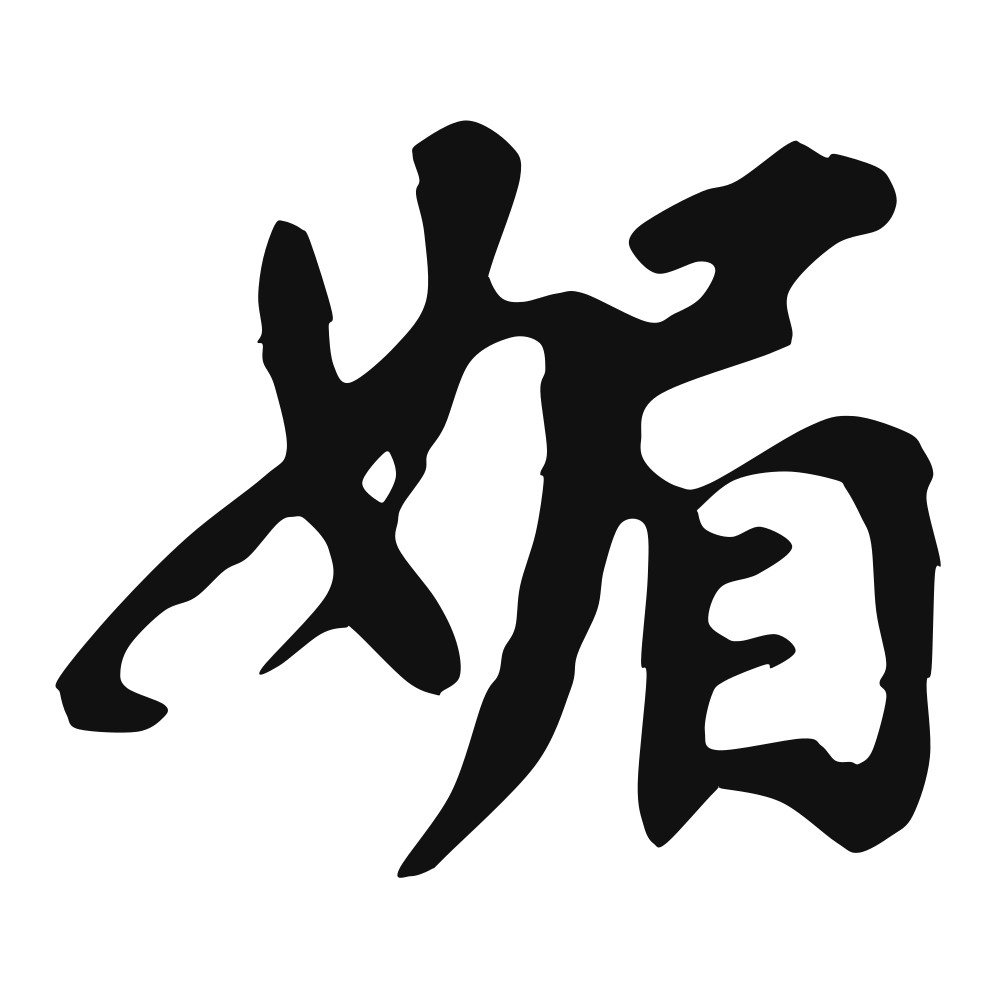
媚
(bound form) to flatter; (bound form) charming
Closest English meanings
to flatter·charming·coquettish
The Calligrapher — Bāo Shìchén 包世臣
Qing theorist whose 'Art Boat' (艺舟双楫) championed the stele school.
Qing calligrapher (), master of running script — known for 《艺舟双楫》. Qing dynasty
Cultural Story
In the classical tradition 媚 meant to please and to flatter — 妩媚 for natural charm, 谄媚 for servile pandering, and 明媚 for bright, lovely scenery. The 楚辭 warns against 媚俗, catering to vulgar taste, marking the line between true grace and bought approval.
Common words & phrases
- 妩媚 charming
- 谄媚 to flatter
- 媚眼 coquettish eyes
- 明媚 bright and beautiful
- 媚俗 cater to vulgar taste
Read the story behind the character
In the modern world 媚 travels between charm and flattery. A lover's 妩媚 smile disarms; a courtier's 谄媚 is mocked, and a 媚眼 glance flirts across a room. We call spring 明媚 and scold art that 媚俗 for cheap applause. The word judges whether allure serves feeling or mere approval.
Why this character belongs on skin
媚 was once dismissed as 媚俗, pandering to the crowd — but we are reclaiming it as pure magnetic grace, the gaze that knows its worth. Picture the courtesan in the old scroll, not diminished but radiant with self-possession, her charm a weapon she wields with a smile. You have been told your allure was too much, too queer, too unruly to be respectable. Good. 媚 is the seductive power that answers to no one's comfort but your own. It is the sway in your walk, the eye contact that doesn't break first, the body that takes up its full, glorious room. To ink it is to declare your seduction is yours alone to give. Some of us were made to bewitch, and we owe no one an apology for the spell.
Own this character
Purchase delivers the original SVG of this glyph, brushed by Bāo Shìchén 包世臣, ready to place on skin, paper, or screen.