
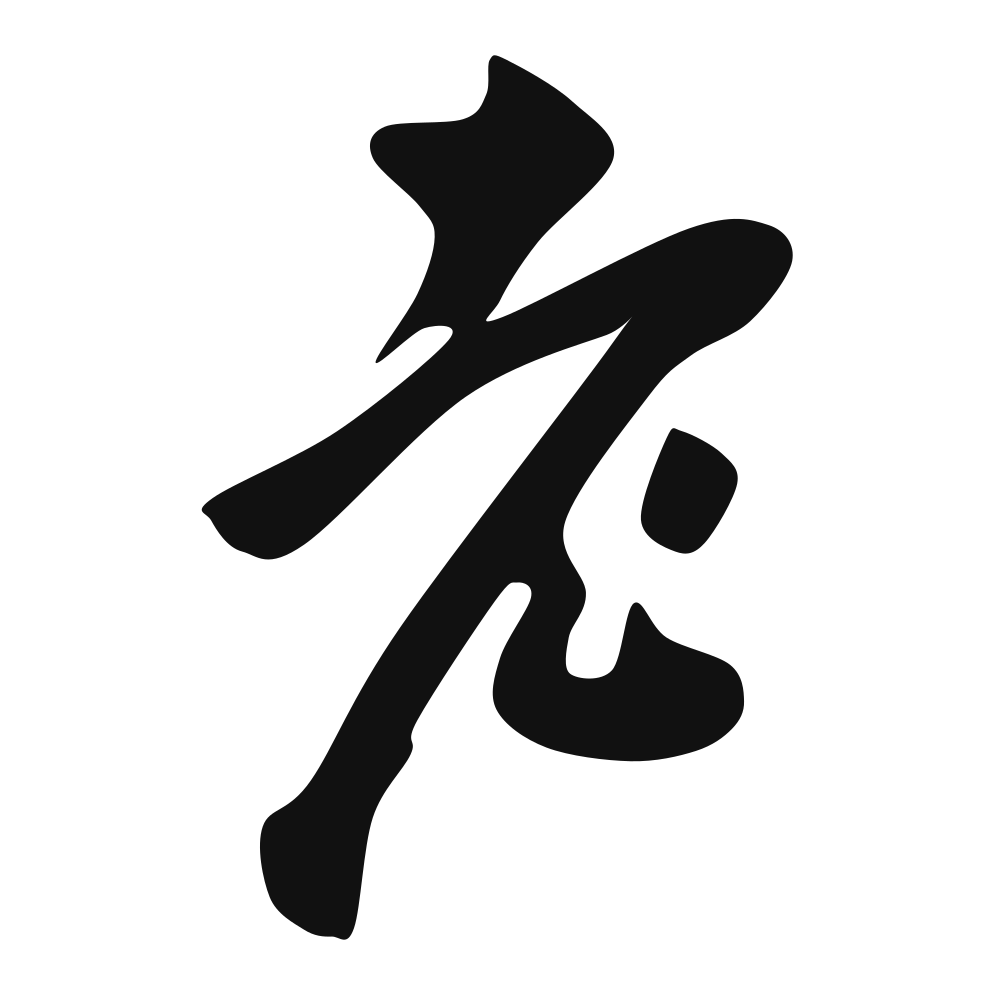
老
prefix used before the surname of a person or a numeral indicating the order of birth of the children in a family or to indicate affection or familiarity; venerable (person); experienced; of long standing; always; all the time; of the past; very; outdated; (of meat etc) tough
Closest English meanings
old·aged·veteran
The Calligrapher — Bāo Shìchén 包世臣
Qing theorist whose 'Art Boat' (艺舟双楫) championed the stele school.
Qing calligrapher (), master of running script — known for 《艺舟双楫》. Qing dynasty
Etymology & Meaning · 字义溯源
2 · The Character: 老 Lǎo (3rd tone). 老 is old age, venerable elderhood. 《說文解字》 draws it tenderly: 『老,考也。七十曰老。从人毛匕,言須髮變白也』 — 『to examine; seventy is called old; from 人, hair, and 匕, meaning the beard and hair turn white』. The Chinese valence is warm, not grim: 《詩經·鄭風·女曰雞鳴》 pledges 『與子偕老』 (『grow old together』), and 《楚辭·離騷》 sighs 『老冉冉其將至兮』 (『old age comes on, step by step』). 《論語·公冶長》 would 『安』 the old (老者安之). Honest disclosure: to a western eye 老 simply means 『old』 and can read as frailty; it is also a familiar prefix (老師, 老闆) and a polite term for death (老了). As a tattoo it can mean 『veneration, endurance, growing old with grace』, but pair with 莊 (老當益壯) or 敬 to steer the reading.
Cultural Story
Oracle-bone scribes drew a stooped figure with long hair leaning on a cane — unmistakably an elder. The character headed compounds for centuries: villages deferred to their elders, temples honored ancient masters, and the character spread to weathered objects, veteran craftsmen, old friends, and finally the affectionate prefix set before any surname at all.
Where a Western reader can stand: Where a Western reader can stand: 老 is Latin 'senex' — old age as dignity, not decay. The graph is a little portrait: a person with long hair, stooping, leaning on a staff. The Book of Odes makes it a marriage vow — 與子偕老, 'I will grow old with you' — and 老當益壯, 'the old are stronger still', turns the years into a boast. (The honest trap: to a modern reader 老 can read as frailty, and in Chinese it is also a casual prefix — 老師, 老闆 — and a soft euphemism for death, 老了.) Bao Shichen is the living proof. He was active into his eighties and died at eighty-nine, the very picture of the elder who kept his hand. His stele-school theory prized the 'bone' that comes with disciplined age over the pretty fluency of youth. So 老 from Bao is not nostalgia for lost youth but the claim that strength deepens — the staff is support, not surrender. The catch to disclose: pair it with 莊 or 敬 to signal veneration rather than mere age.
Common words & phrases
- 老师 teacher
- 老人 old person · elder
- 古老 ancient · old
- 老婆 wife
- 老实 honest · frank
- 老练 experienced · versed
Read the story behind the character
The prefix does daily work: a child greets the 老师 (teacher) at the school gate; office groups chat about 老实 (honest, frank) colleagues and 老练 (experienced, versed) managers; a tired husband texts 老婆 (wife) that he is on the train. Museums label their 古老 (ancient, old) bronzes, and families video-call the 老人 (old person, elder) back home before Sunday dinner.
Why this character belongs on skin
White hair, bent back, the long road visible in the face — lǎo is old, but not as we fear it. In the old world the aged were the library, the ones who had been everywhere and could therefore be trusted with the map. To grow old was to accrue, not to lose. We tattoo youth because we are afraid; the marked elder tattoos time. To carry lǎo is to make peace with the accumulating years, to wear your winters as credentials. It is the quiet confidence of the one who has survived his own mistakes. Let this character rest where the lines have begun to show, not concealed but claimed — the place that proves you were here, that the life was long, and that the longness was the point.
Own this character
Purchase delivers the original SVG of this glyph, brushed by Bāo Shìchén 包世臣, ready to place on skin, paper, or screen.