
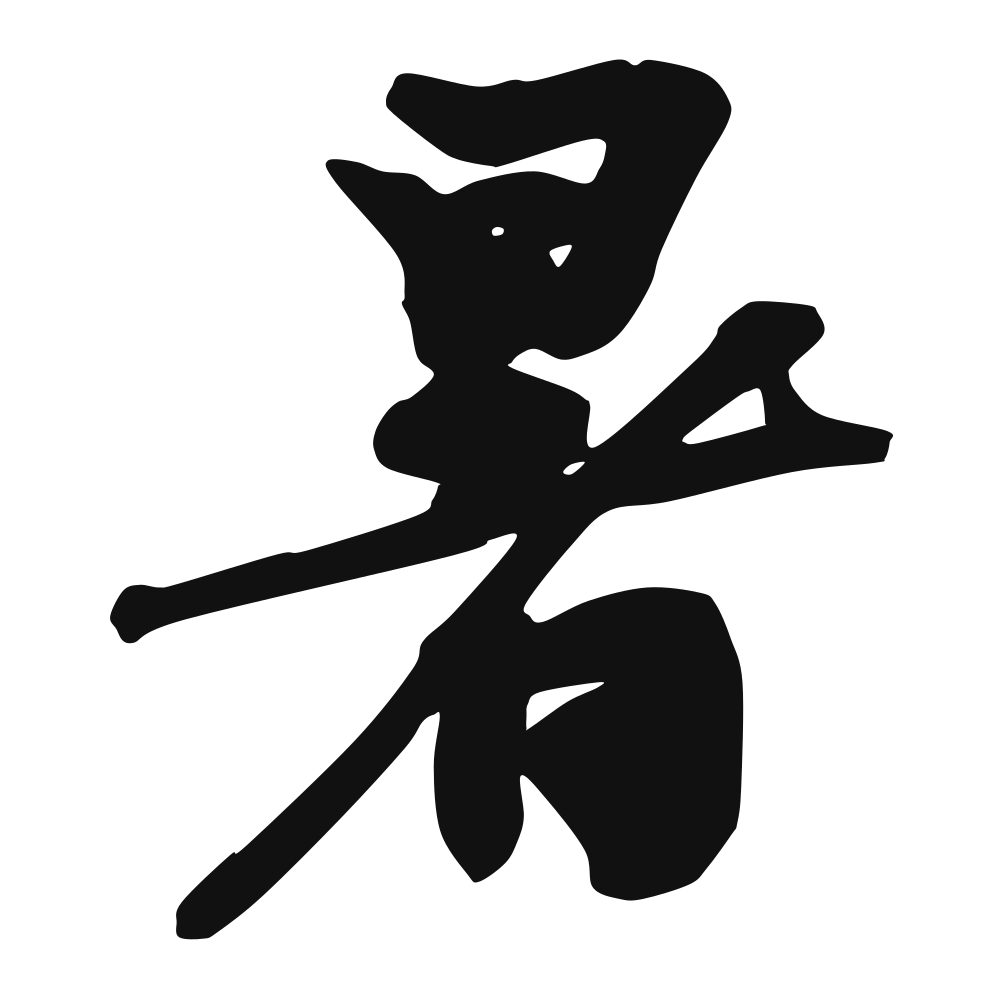
暑
heat; hot weather; summer heat
Closest English meanings
heat·summer heat·hot weather·warmth
The Calligrapher — Cài Xiāng 蔡襄
One of the Four Song masters, known for graceful regular and running script.
Song calligrapher (1012–1067), master of regular script/running script — Song master of warm, disciplined regular script, the most 'proper' of the Song Four. Song dynasty
Etymology & Meaning · 字义溯源
2 · The Character: 暑 Shǔ (3rd tone). The Shuowen Jiezi defines 暑 as 「热也」 — 'heat,' from 日 (sun) and 者 (sound). It is the dog-days warmth, the opposite of 寒. The Changes name the pair directly: 「一寒一暑」 — 'one cold and one heat,' the turning seasons. The Shi Jing's 七月 tracks the year by its heat: 「六月徂暑」, 'by the sixth month the heat comes on.' 暑 is a season-word, the fullness of summer's fire. Mistranslation risk: a Western reader meets 'summer heat' and thinks 'vacation' — pleasant enough — but in Chinese 暑 alone can shade toward 中暑 (heatstroke) or sheer swelter, not a virtue. It is a weather morpheme, not a moral one. Element tables assign Fire (火), the season's own element (a few outlier tables say Metal 金; the sensible reading is Fire). Best paired (寒暑, 暑往寒来).
Cultural Story
暑 is the deep heat. 暑假 the summer break; 中暑 the stroke of the sun. 酷暑 the scorch; 避暑 the retreat to the cool. 寒暑 the turning year. The word is the season's fever — the field that bakes, the body that fails. The Shuowen sees the sun and the ripe. A single character for the hot that governs the calendar and the constitution.
Where a Western reader can stand: Where a Western reader can stand: 暑 is high summer's fire — the dog-days, not a vacation (that is 暑假). In Cai Xiang's restrained hand it becomes the Mediterranean 'canicula,' the season at its peak yet composed, the Roman 'aestas' worn as a stance. Stand with it as the fullness of the year's fire. A Westerner might call it 'midsummer' — but never 'strength' or 'virtue,' and never near the sick, where 中暑 (heatstroke) turns the joke sour.
Common words & phrases
- 暑假 summer vacation · summer holiday · summer break
- 中暑 heatstroke · sunstroke · suffer heat
- 酷暑 intense heat · extreme heat · scorching heat
- 避暑 escape the heat · summer retreat · cool off
- 寒暑 cold and heat · the seasons · the year
- 暑气 summer heat · sultriness · summer sultriness
Read the story behind the character
暑假 is the trip; 中暑 the warning. 酷暑 the headline; 避暑 the getaway. 寒暑 the years; 暑气 the air. The word runs the school and the news — the break, the burn. From the timetable to the forecast, 暑 is the heat that closes the class and fills the ER, the summer's fever we flee or endure, the weather that decides the day.
Why this character belongs on skin
August at three in the afternoon: the air goes visible, cicadas stitch the silence shut, and time itself seems to sweat. 暑 is exactly that heat—the sun radical doubled with insistence, the heat of high summer, 暑假 the long school freedom, 消暑 the ancient art of escaping it with cold melon, river water, shade. The old calendar counted 三暑, the three stages of swelter, and poets complained gorgeously for twenty centuries. But heat is also ripeness. Nothing sweet comes from weather that never tested the fruit; the peach is summer's argument for suffering. There is languor in this character too—the loosened collar, the nap in the dark of noon, bare skin and iced wine and the slow involuntary honesty of hot days. To wear 暑 is to carry high summer permanently: its heat, its ripeness, its permission to want things. Ink it and let the season live under your skin, close enough to warm you in any winter.
Own this character
Purchase delivers the original SVG of this glyph, brushed by Cài Xiāng 蔡襄, ready to place on skin, paper, or screen.