
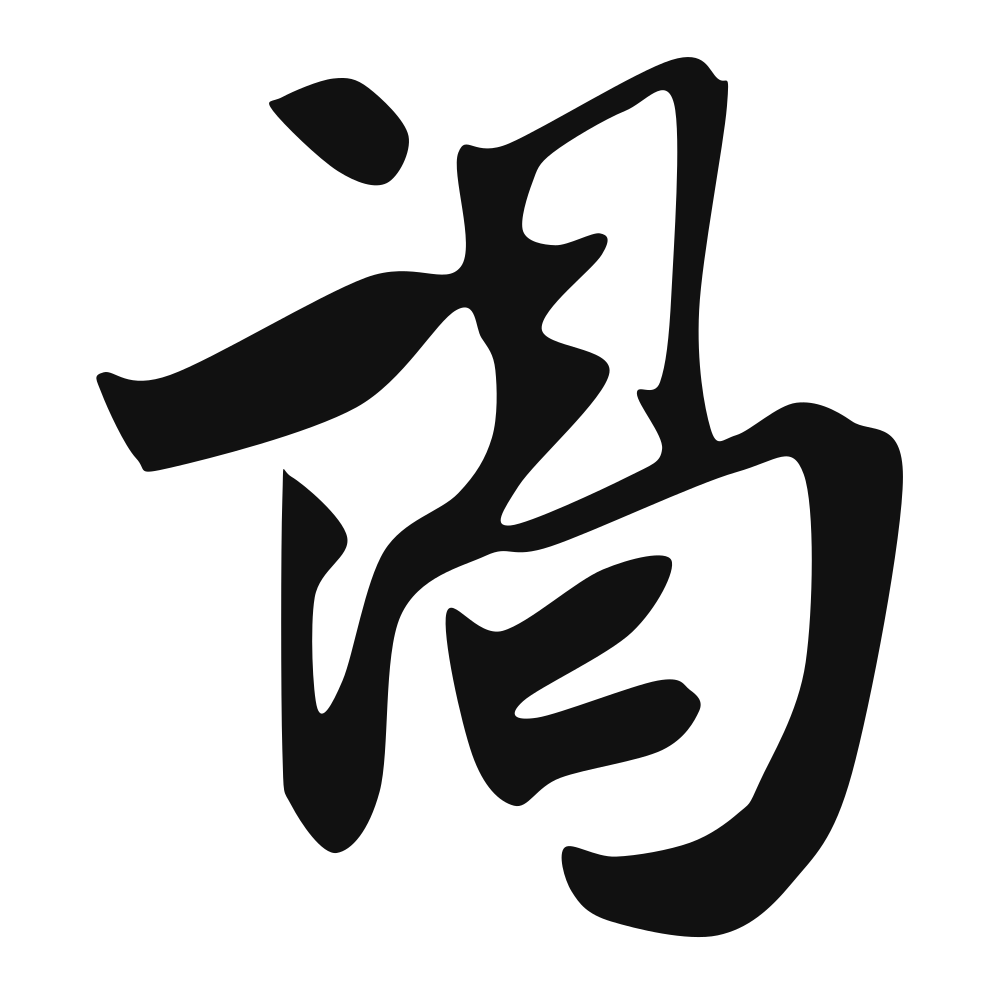
谒
to visit (a superior)
Closest English meanings
visit·pay respects·call on·audience
The Calligrapher — Cài Xiāng 蔡襄
One of the Four Song masters, known for graceful regular and running script.
Song calligrapher (1012–1067), master of regular script/running script — Song master of warm, disciplined regular script, the most 'proper' of the Song Four. Song dynasty
Etymology & Meaning · 字义溯源
2 · The Character: 谒 Yè (4th tone). The Shuowen Jiezi defines 谒 as 『白也。從言曷聲』 — 'to state, to announce; from speech (言) and the sound 曷.' It means a formal visit or audience, to pay respects: 謁見 (to have an audience), 拜谒 (to pay a respectful visit), 謁陵 (to visit a tomb/mausoleum). The 史記 records envoys '謁天子' — presenting themselves to the Son of Heaven. Honest disclosure: 谒 is a literary, ceremonial word; a modern casual reader may never meet it alone, and it shades toward 墓谒 (a visit to a grave). It is not negative, but it is solemn. As a lone glyph it reads as 'a respectful approach' — fitting for an official or a pilgrim, less so as a casual tattoo; pair with 見 (謁見) to fix the sense.
Cultural Story
In Chengdu the Wuhou Shrine stands among cypresses where visitors come to bai ye Zhuge Liang, bowing at the tomb of the strategist who gave a kingdom his whole mind. The character ye is that act of approach with respect, the audience sought at a grave or a gate. Du Fu's poem finds the worshiper already at the path's end, drawn by awe more than by errand.
Where a Western reader can stand: Where a Western reader can stand: 谒 is an audience with a king — the moment of being announced and approaching the throne, the Latin 'adire.' In Cai Xiang's deferential hand it is the dignity of being received, the ceremonial step forward, not a casual meeting or a prayer. Stand with it as homage. A Westerner might call it 'to be presented' — and note the honest shade: 谒 also means a grave-visit (墓谒), so pair it with 見 (谒见) and keep it on the living, never the grieving.
Common words & phrases
- 谒见 have an audience · call on
- 拜谒 pay a formal visit · visit grave
- 参谒 pay respects to · interview
Read the story behind the character
A tour group lines up to bai ye the martyrs' monument, heads bowed in the morning light, while a delegate ye jian the minister after the long wait. The word can ye still names any formal approach to a person or a memory held higher than oneself. The character ye keeps its bow.
Why this character belongs on skin
谒 is the formal bow of language: to call on a superior, to present oneself before a shrine, to pay respects. The character carries the speech radical because such visits were made in words — the carefully chosen opening line, the announcement of a name at a gate. Pilgrims 谒 temples. Ministers 谒 thrones. The young poet 谒 the old master, bringing nothing but his hunger and his poems. There is humility in it, but also strategy; and beneath both, something the modern world has nearly lost — the sense that showing up before what you revere is itself an act, a whole grammar of the body inclined forward. We browse now; we no longer 谒. But everyone keeps a list of thresholds they would cross barefoot if permitted: a grave, a teacher, a mountain, a lover's door. This character is that door-knock made permanent. Ink it over the heart, facing inward — a standing appointment with whatever you consider holy, and the willingness to arrive.
Own this character
Purchase delivers the original SVG of this glyph, brushed by Cài Xiāng 蔡襄, ready to place on skin, paper, or screen.