
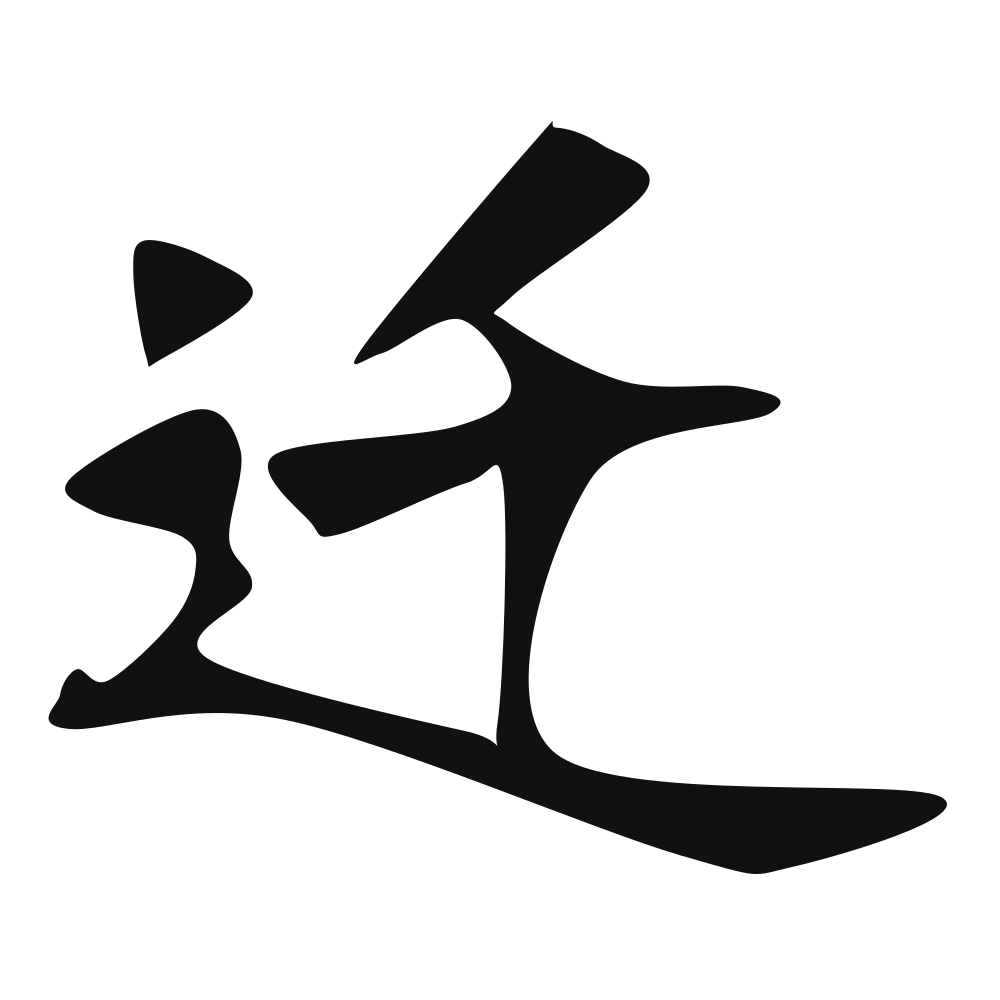
迁
to move; to shift; to change (a position or location etc); to promote
Closest English meanings
move·migrate·shift
The Calligrapher — Cáo Xǐ 曹喜
Han seal-script master credited with the hanging-needle (xuanzhen) style.
Han calligrapher (), master of seal script — known for 悬针篆. Han dynasty
Cultural Story
The historian Sima Qian bore the character 迁, but its deepest scene is the moving of a capital — 迁都. When the Yongle Emperor shifted the seat to Beijing in 1421, the whole administration 迁 with it, a city packed onto the road for a season. 迁移 is the migrant's crossing; 迁居 the family's move; 变迁 the slow change of a place across the generations that pass through it and leave.
Common words & phrases
- 迁移 migrate · move
- 搬迁 move · relocate
- 迁就 accommodate · yield to
- 变迁 changes · vicissitudes
- 迁居 move house · resettle
Read the story behind the character
A couple 搬迁 to a cheaper flat and a village 迁移 for the new dam, their 迁居 logged by the county. The city's 变迁 shows in the old photos — fields where towers stand. To 迁就 a difficult neighbor is to yield, the character bending from moving house to moving oneself aside. The historian's name now names every removal, from a dynasty's capital to a tenant's couch for the summer.
Why this character belongs on skin
To move is to become someone else a little. 迁 is the shift, the migration, the relocation of a life from one ground to another — not the vacation but the uprooting, the cart loaded, the door closed behind you for good. The character walks a footstep toward a new place, as if movement itself were a kind of walking forward into unknown soil. We in the West call it reinvention and sell it as glory, but 迁 knows the grief in it too, the field you leave fallow. To carry it is to honor both the leaving and the arrival. It is the tattoo for the exile, the immigrant, the one who has crossed and not returned, who wears the journey as a second skin. You are not the place you started. You are the moving.
Own this character
Purchase delivers the original SVG of this glyph, brushed by Cáo Xǐ 曹喜, ready to place on skin, paper, or screen.