
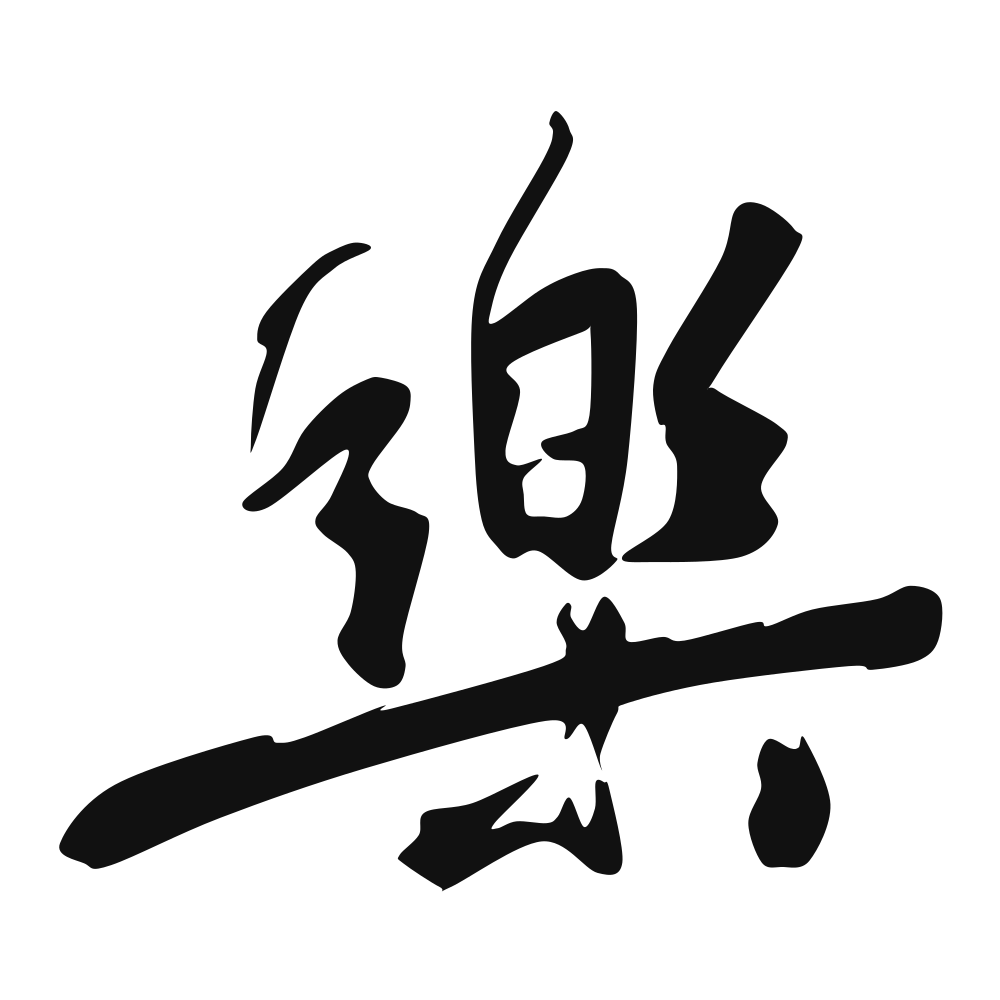
乐
乐 (lè / yuè) — joy, happiness; (yuè) music. Silk 丝 over wood — original sense 'music', extended to joy. Classical life: 知足常乐 — contentment is constant joy. Grammar: free morpheme — also: surname Le; surname Yue; happy; cheerful; to laugh; music
Closest English meanings
happy·music·joy·glad·pleasure
The Calligrapher — Chén Hóngshòu 陈鸿寿
Qing 'Eight Masters of Xiling' known for clerical and running script.
Qing calligrapher (), master of clerical script/running script — known for 曼生. Qing dynasty
Etymology & Meaning · 字义溯源
2 · The Character: 乐 乐 (lè / yuè, 4th tone; traditional 樂) is, in Xu Shen, sound made whole: 五聲八音之總名 — 'the general name for the five sounds and eight tones' — i.e., music. The form (樂) shows drums and wood, the instruments of rite. The classics enshrine it: the Shujing (舜典) '命女典樂,敎胄子' (you are charged with music, to teach the youth); the Yijing (豫卦) '先王作樂崇德,殷薦之上帝' (the kings made music to honour virtue); the Liji (乐记) '大樂與天地同和' (great music harmonises with heaven and earth); the Yizhuan '樂天知命' and Mengzi '與民同樂.' As a free morpheme 乐 means 'joy, music, to delight in,' and is wholly auspicious — 快乐, 乐观, 乐天. Honest disclosure: 乐 has two readings — yuè (music) and lè (joy); on skin it is clean and happy. Pair it with 天 (乐天) or 观 if you want the 'content with fate' sense explicit; in Japanese it is raku / gaku. The Wuxing attribution is confident: 乐 is Fire (火), the warmth of joy.
Cultural Story
樂 showed drums and bells under a roof, music, and from music, joy. Confucius said 樂 soothes where 禮 restrains; the 詩經 was sung, not read. 莊子 laughed at the 至樂, the highest pleasure being no-pleasure. The character is sound become feeling, the hall where the instruments play and the guests forget their worries. Happiness, in the old picture, had a beat.
Where a Western reader can stand: Where a Western reader can stand: picture a Roman intaglio or a wax seal stamped on a letter of good cheer — joy not spoken but pressed, crisp and permanent. Chen Hongshou was the Qing master who founded the Xiling seal tradition and designed the famous Mansheng teapots, and his 乐 is that joy cut with a carver's discipline. So a 乐 from his hand is happiness with a metal-and-stone edge: warm, but squared and antique, the delight of a connoisseur rather than a crowd. For the Western wearer it is the word 'jubilate' rendered as a seal — compact, graphic, and quietly proud, joy that has been made into an object.
Energy Reading
Fire (火)
Comparative symbology, not fortune-telling.
Common words & phrases
- 快乐 happy · joyful · cheerful · glad
- 音乐 music · melody · tune
- 欢乐 joyful · merry · joyous · gay
- 乐园 paradise · amusement park · haven
- 乐观 optimistic · hopeful · sanguine
- 娱乐 entertainment · recreation · amusement
Read the story behind the character
快乐 is the birthday wish and the app slogan; 音乐 the stream in your earbuds. 欢乐 is the holiday crowd; 乐园 the amusement park and the dead child's paradise. 乐观 is the investor's mood; 娱乐 the gossip feed. The drums-and-bells have become a playlist and a theme park. The character still marries sound and gladness, you cannot say happy in Chinese without hearing the echo of the bell.
Why this character belongs on skin
Where 喜 is the spark, 乐 is the steady fire — contentment as a climate rather than a weather. Confucius, asked about the good life, pointed not to power or wealth but to the man who could sing after a simple meal and a quiet sleep. 乐 is that singing. It is the deep yes beneath circumstance, the refusal to let the world dictate one's temperature. We mistake it for the smile in the photograph; the Chinese knew it as something quieter and far harder — a settledness that survives the photograph's fading. To carry it on the skin is to make a vow against the tyranny of mood, a daily reminder that joy is a posture, not a prize. The West sells happiness as arrival. This character whispers that it was always a way of walking.
Own this character
Purchase delivers the original SVG of this glyph, brushed by Chén Hóngshòu 陈鸿寿, ready to place on skin, paper, or screen.