
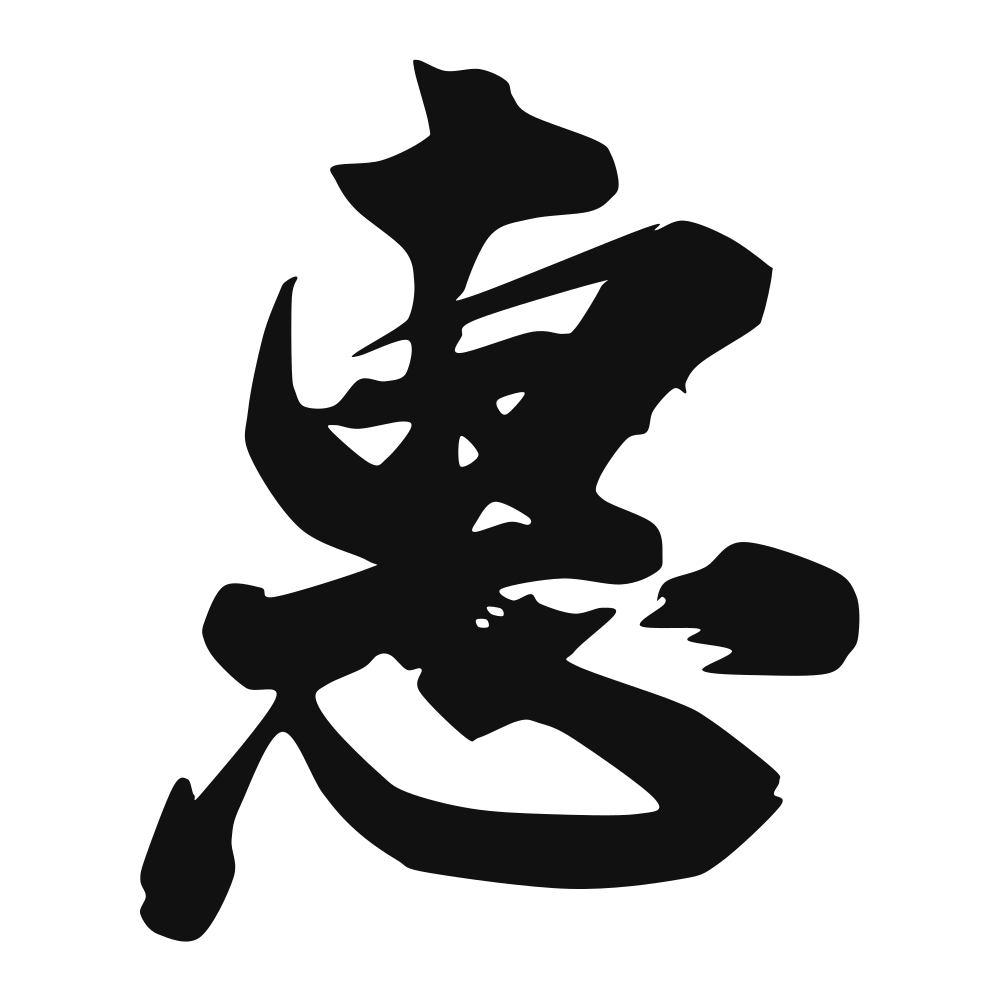
惠
surname Hui; (bound form) act of kindness (from a superior); (honorific prefix) kind (as in 惠顧|惠顾[hui4 gu4])
Closest English meanings
favor·benefit·kind
The Calligrapher — Chén Jī 陈基
Yuan poet and calligrapher of free running script.
Yuan calligrapher (), master of running script — known for 《相见帖》. Yuan dynasty
Etymology & Meaning · 字义溯源
2 · The Character: 惠 Huì (4th tone). Shuowen Jiezi reads 惠 as 仁也 — 'benevolence, kindness', built from 心 (heart) and 叀 (to turn the mind to others). The Shi Jing (邶風·燕燕) praises 終溫且惠,淑慎其身 — 'gentle and gracious, virtuous and prudent in conduct'. The Analects (公冶長) says of a good ruler 其養民也惠 — 'he nourished the people with bounty'. In 尚書 the graph also stands in for 慧 ('wise'). Kangxi counts twelve strokes (some schools list Wood, verify). Honest disclosure: 惠 means 'favour / benefit' and lives in modern compounds like 優惠 (discount) and the surname Huì; it never carries a negative or funeral sense. As a tattoo it reads as grace, kindness, and good governance — a warm, safe standalone. Pair it with 風 (惠風, a gentle breeze) or 質 if you want the classical 'gentle-and-prudent' frame.
Cultural Story
惠 is a benefit given with grace. The 論語 calls a person 惠 who is generous to the people below him, one of the good ruler's marks. The heart with 叀, a spindle, is kindness that keeps producing. It is the favor that costs the giver something and is meant to.
Where a Western reader can stand: Where a Western reader can stand: 惠 is 'grace / kindness / bounty' — a warm, safe standalone, the Chinese for favour freely given (as 惠風, a gentle breeze). It never carries a negative or funeral sense and is also a common surname. Honest caveat: a modern reader may first meet 惠 at a sale (優惠, 'discount') or as the surname Huì, so pair it with 風 or 質 for the classical 'gentle-and-prudent' frame (終溫且惠) rather than the commercial one. Chen Ji's orderly Yuan–Ming court regular gives the word a clean, formal dignity — grace as good governance, not as a slogan.
Common words & phrases
- 优惠 discount
- 实惠 real benefit
- 惠民 benefit the people
- 惠顾 patronize
- 贤惠 virtuous
- 惠赠 graciously gift
Read the story behind the character
惠 is the commerce of kindness: 优惠 the discount, 实惠 the meal that fills you, 惠民 the policy that lowers the bus fare. 惠顾 is what the shopkeeper prints on the wall. It has become the polite language of the transaction, favor translated into the small print of a sale.
Why this character belongs on skin
Kindness is often mistaken for softness, but hui was never weak. The ancients used it for the wise ruler's favor — the grain sent to the starving, the debt quietly forgiven — benefaction that expects nothing back because it knows its own worth. There is a Confucian gravity in the word: grace given is grace multiplied. To wear hui is to declare yourself a source rather than a trough, one who gives before being asked and asks before taking. It is the most subversive confidence there is — to be generous and unashamed of it. Let this character settle near the wrist, the giving hand, a quiet vow that your mercy will not be negotiated, your favor not counted. The world keeps ledgers; you, having inked this, have chosen to close yours.
Own this character
Purchase delivers the original SVG of this glyph, brushed by Chén Jī 陈基, ready to place on skin, paper, or screen.