
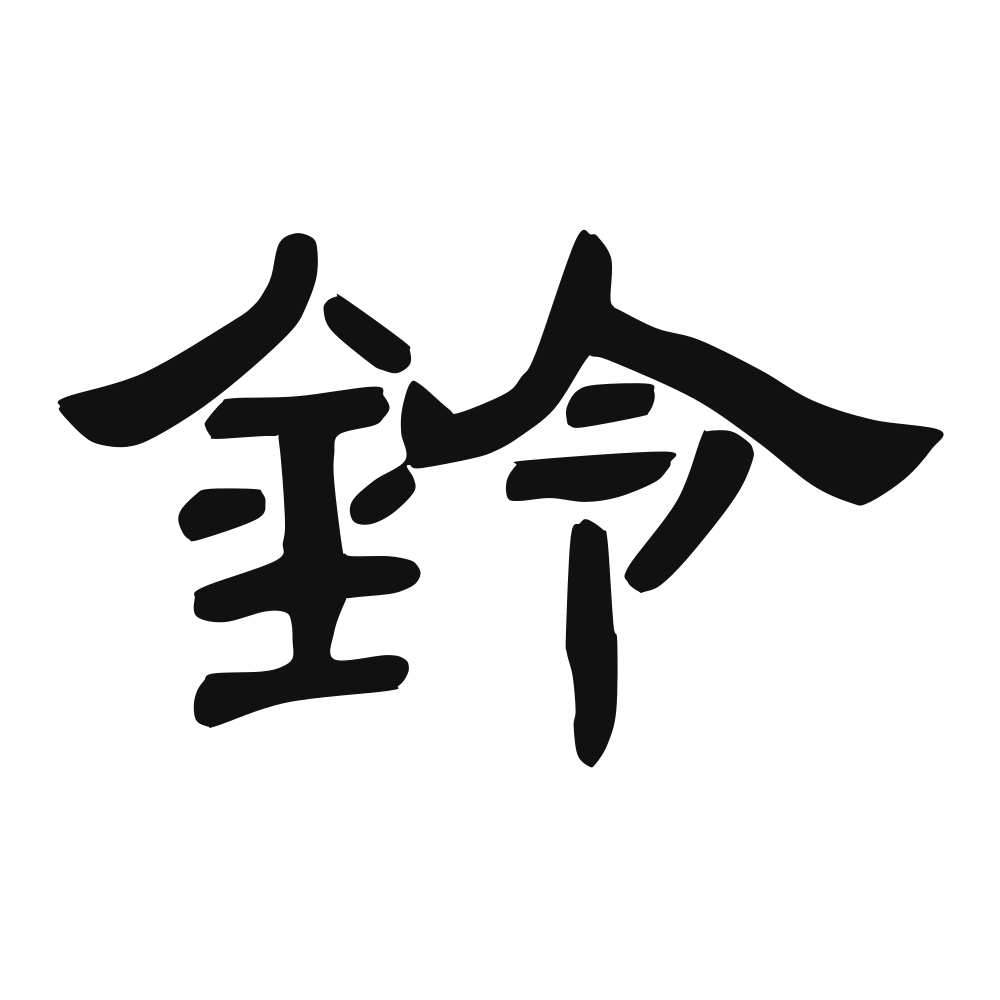
The Calligrapher — Chéng Miǎo 程邈
Qin official credited with systematizing clerical script (lishu), a pivotal step in Chinese writing.
Qin-Han calligrapher (生卒年不详(秦)), master of clerical script — known for 隶书(相传整理八分). Qin–Han era
Cultural Story
铃 is the bell with its clapper free — the small voice of wind and movement. Temples hung them from eave corners to chime in the breeze, camel caravans crossed deserts to the sound of harness bells, and street vendors rang their wares through the lanes. 铃铛, doorbell, alarm — the character collects small awakenings.
Common words & phrases
- 铃声 bell sound
- 铃铛 small bell
- 门铃 doorbell
- 风铃 wind chime
- 哑铃 dumbbell
Read the story behind the character
Modern bells ring in pockets and doorways: your phone 铃声 announces callers, the 门铃 chimes for deliveries, 风铃 sing on balconies, and gym-goers heft 哑铃 instead of bells. Ringtone culture came and went, but the wind chime on the old balcony still catches the same breeze the temple eaves once did.
Why this character belongs on skin
There is a sound that announces nothing and means everything — the small bell at the temple door, the harness bell on a horse at midnight, the faint ring that says someone you love has come into the room. 铃 is that bell, iron and a command, as if to ring were also to order the silence to listen. The Buddhist bell calls the wandering mind home; the Christian one announced the birth in the stable. Ink this as the moment you heard your own life begin — a small, clear sound under all the noise. Let it mark the ear that stays open, the part of you tuned to the gentle signal others miss. A bell on the skin is not loud; it is the opposite, a private music, the reminder that the most important things arrive quietly and you, of all people, were listening. Wear it where your pulse is, so the ring and the blood keep the same time.
Own this character
Purchase delivers the original SVG of this glyph, brushed by Chéng Miǎo 程邈, ready to place on skin, paper, or screen.