
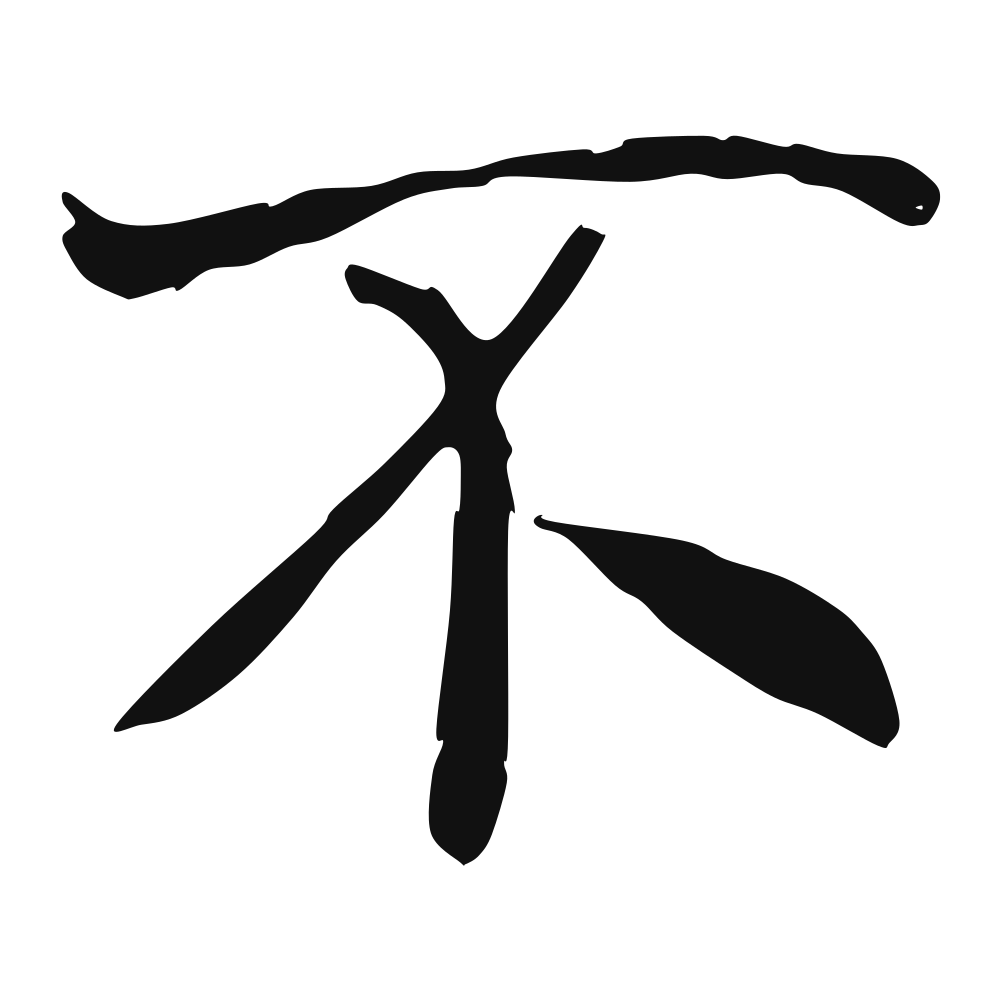
不
不 (bù) — not (negative). Pictograph of a bird or a sprout negated. Classical life: 不屈 — unyielding; 不 is the great negator. Grammar: bound negative (needs a verb) — also: no; not so; (bound form) not; un-
Closest English meanings
not·no·without·un-·non-
The Calligrapher — Chǔ Suíliáng 褚遂良
Tang chancellor and regular-script master of elegant, balanced strokes.
Tang calligrapher (596–658), master of regular script — Tang master of graceful, tensile regular script favored by the imperial court. Tang dynasty
Cultural Story
不 is an old pictograph of a sprig or a bird, borrowed early for the flat negative no. The 論語 is built on it: 学而时习之, and 不亦说乎, is it not a pleasure. The 道德經 loves 不, 无为, 不争, the power of not doing. A single stroke flips a sentence. Before Confucius and Laozi it was just a mark; after them it framed half of Chinese thought.
Energy Reading
Water (水)
Comparative symbology, not fortune-telling.
Common words & phrases
- 不是 not · no · isn't · is not
- 不能 cannot · unable · can't · incapable
- 不同 different · not same · unlike · diverse
- 不好 not good · bad · poor · unwell
- 不要 don't · do not · stop · refrain
- 不变 unchanged · unvarying · constant · invariant
Read the story behind the character
不 is the brake pedal of every sentence: 不是 this, 不能 that, 不要 touch. A toddler's first rebellion is 不要. 不同 brands your phone case; 不好 is the weather and your mood. 不变 is the promise couples make and break. The word is so common it is nearly invisible, the small wall between yes and the world, uttered a hundred times before noon, usually without thinking.
Own this character
Purchase delivers the original SVG of this glyph, brushed by Chǔ Suíliáng 褚遂良, ready to place on skin, paper, or screen.