
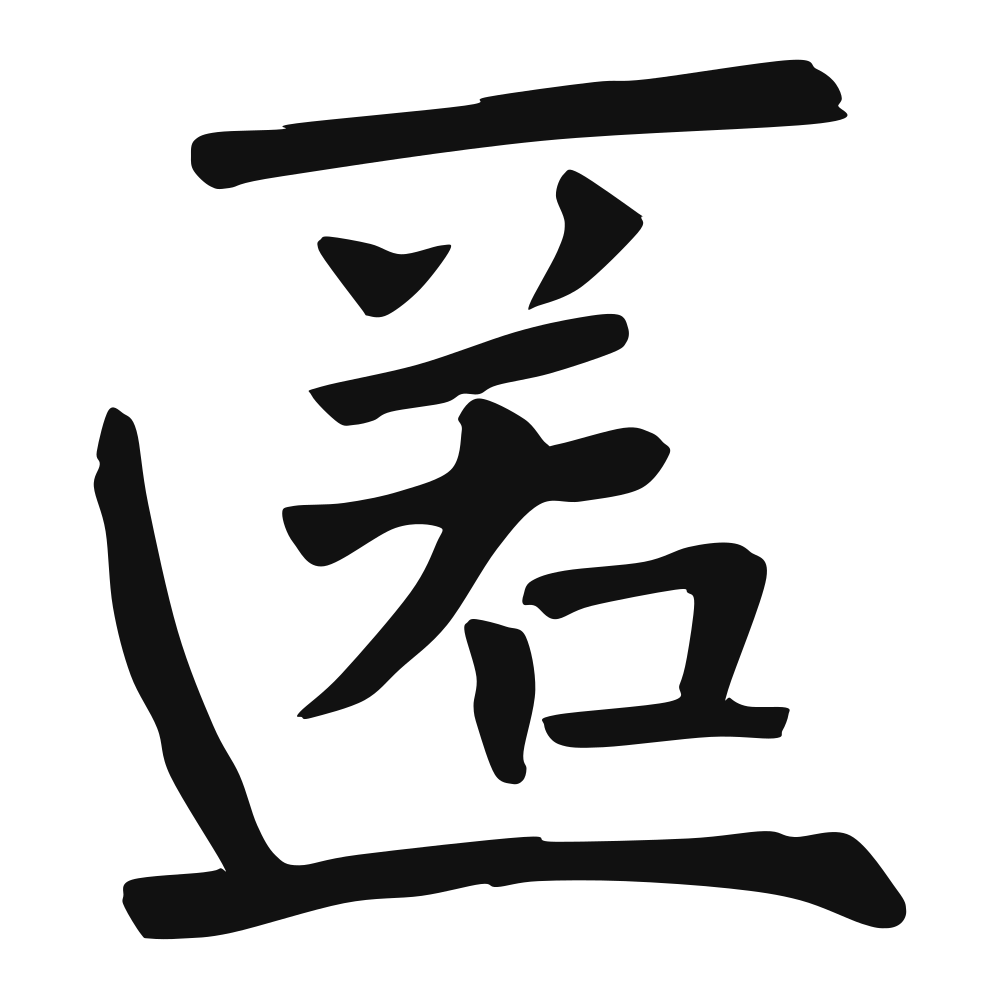
The Calligrapher — Chǔ Suíliáng 褚遂良
Tang chancellor and regular-script master of elegant, balanced strokes.
Tang calligrapher (596–658), master of regular script — Tang master of graceful, tensile regular script favored by the imperial court. Tang dynasty
Cultural Story
The Han law feared the 匿 name — the anonymous accusation slipped under a yamen door to ruin a man unseen. 隐匿 is what a hoarder of grain did in a bad year, and 逃匿 the bandit who slipped the patrol. The graph sets a blade over what it means to cover, to put a thing out of sight.
Common words & phrases
- 隐匿 to conceal · to hide · to cover up
- 匿名 anonymous
- 藏匿 to hide · to conceal
- 逃匿 to flee and hide
Read the story behind the character
A user posts 匿名 to ask a clinic a shy question; 藏匿 is the charge when a fugitive is found. 隐匿 the assets a fraud hid, and 逃匿 the pet a child hides from a landlord who bans them. The word now lives in the blank sender field and the small deceits a city runs on.
Why this character belongs on skin
The thing is there and is not there; the rebel hides in the marsh, the feeling hides behind a smile, the truth hides in the spaces between the words. Nì is to conceal, to withdraw from sight — not in cowardice always, but in the wisdom that some things survive only in shadow. The Daoist hid his light under a bushel so the world would not consume it; the lover hid her tenderness until the right hand found it. To carry nì is to honor the hidden self, the part you keep from the crowd because it is too tender or too dangerous to show. We are all nì in some chamber of our lives. Ink it where only you can see it — the inner wrist, the ribcage turned to the wall — a mark of the keeper of secrets, the one who knows that not everything true must be displayed, and that the deepest things you carry are precisely the ones no one else has been permitted to find.
Own this character
Purchase delivers the original SVG of this glyph, brushed by Chǔ Suíliáng 褚遂良, ready to place on skin, paper, or screen.