
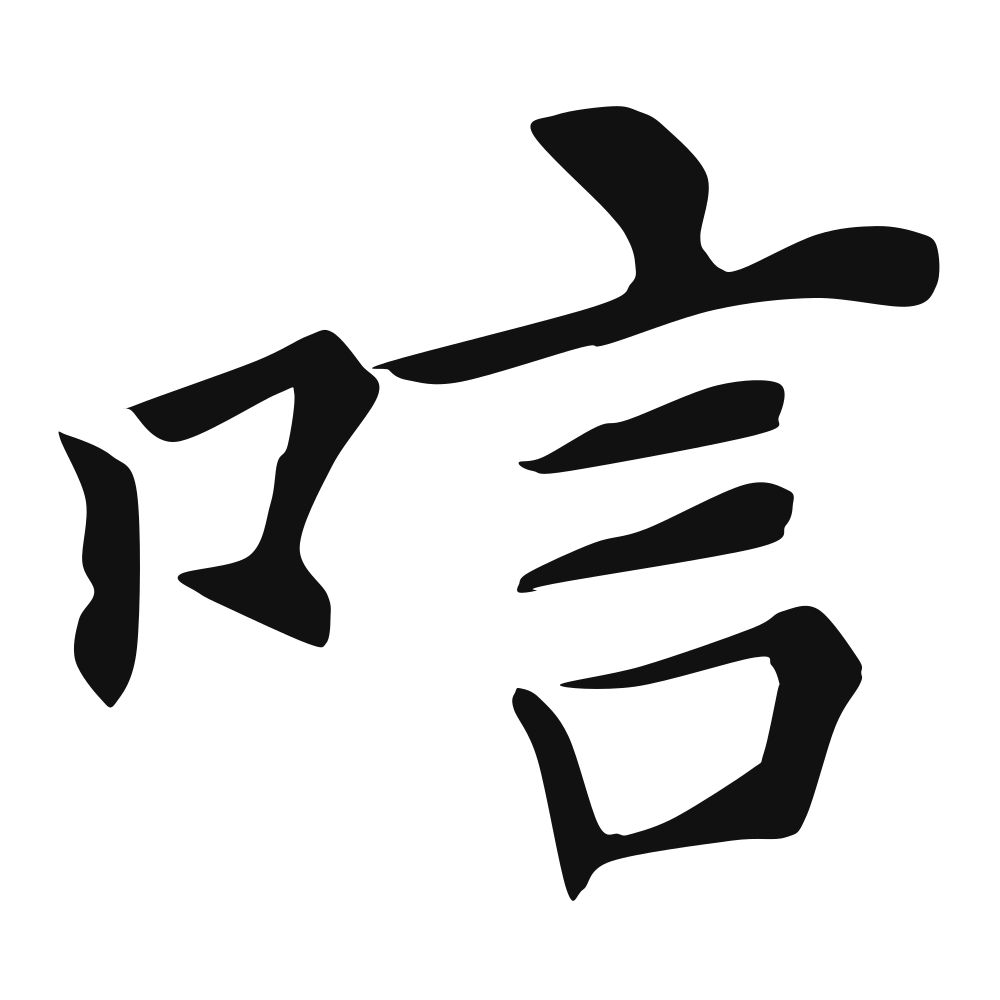
唁
to extend condolences
Closest English meanings
condole·express sympathy
The Calligrapher — Chǔ Suíliáng 褚遂良
Tang chancellor and regular-script master of elegant, balanced strokes.
Tang calligrapher (596–658), master of regular script — Tang master of graceful, tensile regular script favored by the imperial court. Tang dynasty
Cultural Story
In the classical tradition: 唁 pairs 口 with 言 and means to condole, to express sympathy with the bereaved. The 禮記 set rites of 吊唁, visiting to offer condolences, and a 唁電, condolence telegram, or 唁函, condolence letter, carried words across distance when one could not attend. To 唁 was a duty of friendship and rank; the right phrase eased a household's grief and honored the dead with proper, measured respect.
Common words & phrases
- 吊唁 condole · offer condolences
- 唁电 condolence telegram
- 唁函 condolence letter
Read the story behind the character
In the modern world: After a colleague's father dies, the office sends a 唁電 — condolence telegram — and you write a 唁函, a condolence letter, by hand. Friends 吊唁, offer condolences, at the wake, bowing before the portrait. We post 唁 words online for a lost star, and a neighbor 唁s the family with a pot of soup. 唁 is how Chinese civility wraps grief in careful, kind words.
Why this character belongs on skin
To stand at the edge of another's grief and simply stay — that is 唁. The character joins the mouth radical with a word for the mourning rite, the act of offering words across the threshold of loss, 吊唁, the visit to the bereaved that asks for nothing back. The rites of condolence are among the oldest Confucian duties; to show up when someone dies is to prove the bond was real. To carry 唁 is to honor the friend who sat with you in the worst hour, or the stranger you became by showing up. We flee from death's door; this mark is for the one who knocked and entered. It is the tattoo of the present, the person whose love looks like attendance. Some of us learned that words at a funeral are not hollow; inking 唁 keeps that lesson. Let it rest where your own hand reaches, a quiet vow to keep coming, to keep saying the inadequate thing, because the bereaved do not need eloquence — they need the mouth that opened to say I am here, and meant it.
Own this character
Purchase delivers the original SVG of this glyph, brushed by Chǔ Suíliáng 褚遂良, ready to place on skin, paper, or screen.