
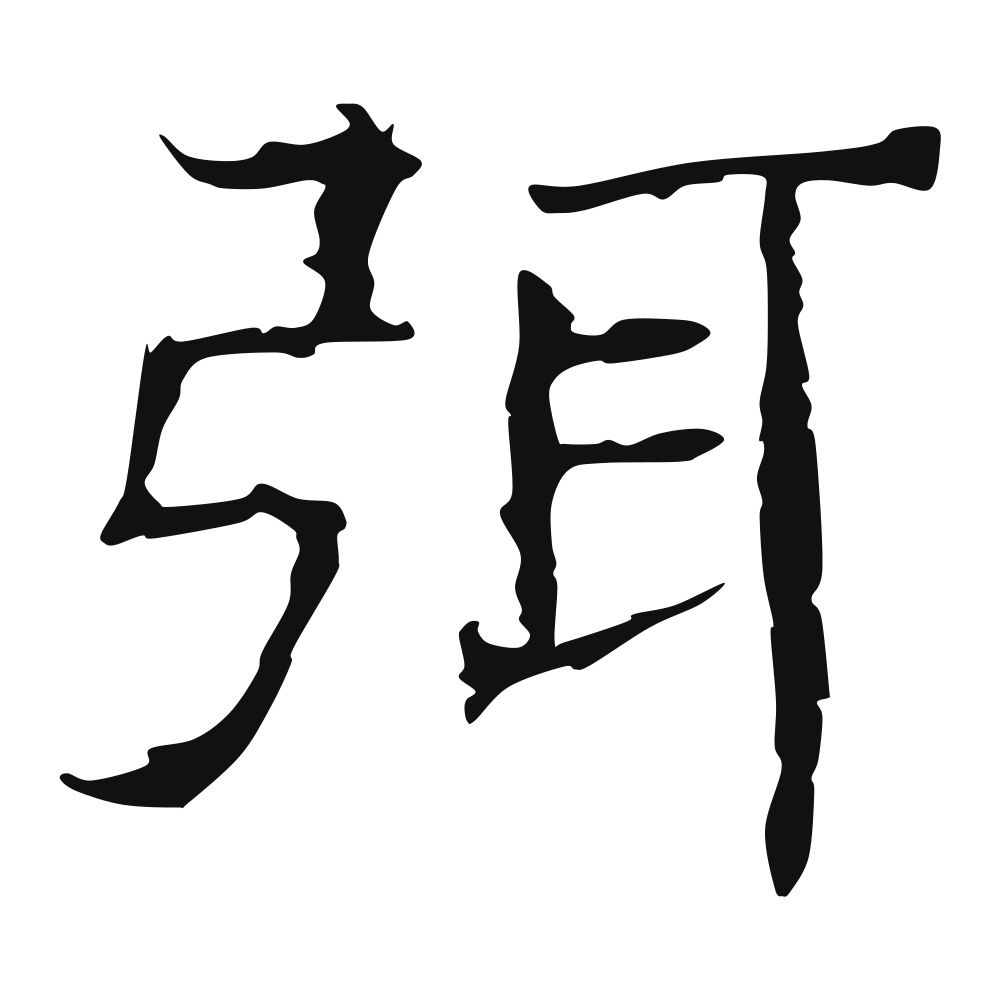
弭
to stop; repress
Closest English meanings
stop·eliminate·quell
The Calligrapher — Chǔ Suíliáng 褚遂良
Tang chancellor and regular-script master of elegant, balanced strokes.
Tang calligrapher (596–658), master of regular script — Tang master of graceful, tensile regular script favored by the imperial court. Tang dynasty
Cultural Story
弭 means to end a thing at its root — to loosen the bow before the arrow flies. In the Spring and Autumn period, rival states convened the 弭兵之会, a congress to lay their weapons down. To 弭患 was to avert a calamity before it ever struck. The character is prevention with both hands already on the string.
Common words & phrases
- 消弭 eliminate · avert · prevent
- 弭患 prevent disaster
- 弭兵 cease war · disarmament
- 弭乱 stop rebellion
Read the story behind the character
消弭 (xiāomǐ) is the verb officials reach for when a crisis is headed off; 弭兵 and 弭乱 survive mostly in the language of treaties and proclamations no one signs anymore. The word stays formal, even literary — we still hope to stop the fire early, yet more often we name the meeting than make the peace.
Why this character belongs on skin
It begins with a bow unstrung— the tips of the instrument of war eased, the sinew allowed to rest. 弭 originally meant exactly that: the bone ends of a bow, and then, by the world's oldest dream, to still it. 消弭, to extinguish conflict before it flames; 弭兵, the ancient truce-conferences where rival states actually laid arms down, and for a season the plain between armies grew quiet. The character holds a warrior's peace, not a pacifist's— the calm of one who could fight and chooses, this hour, not to. It is the peace of the sabbath, earned rather than granted. Everyone carries an internal war they would love to end; 弭 is the verb for the ending. To wear it is to declare ceasefire over your own chest— a small, strong word for letting the bow rest. Ink near the heart or along the collarbone, where the string would lie.
Own this character
Purchase delivers the original SVG of this glyph, brushed by Chǔ Suíliáng 褚遂良, ready to place on skin, paper, or screen.