
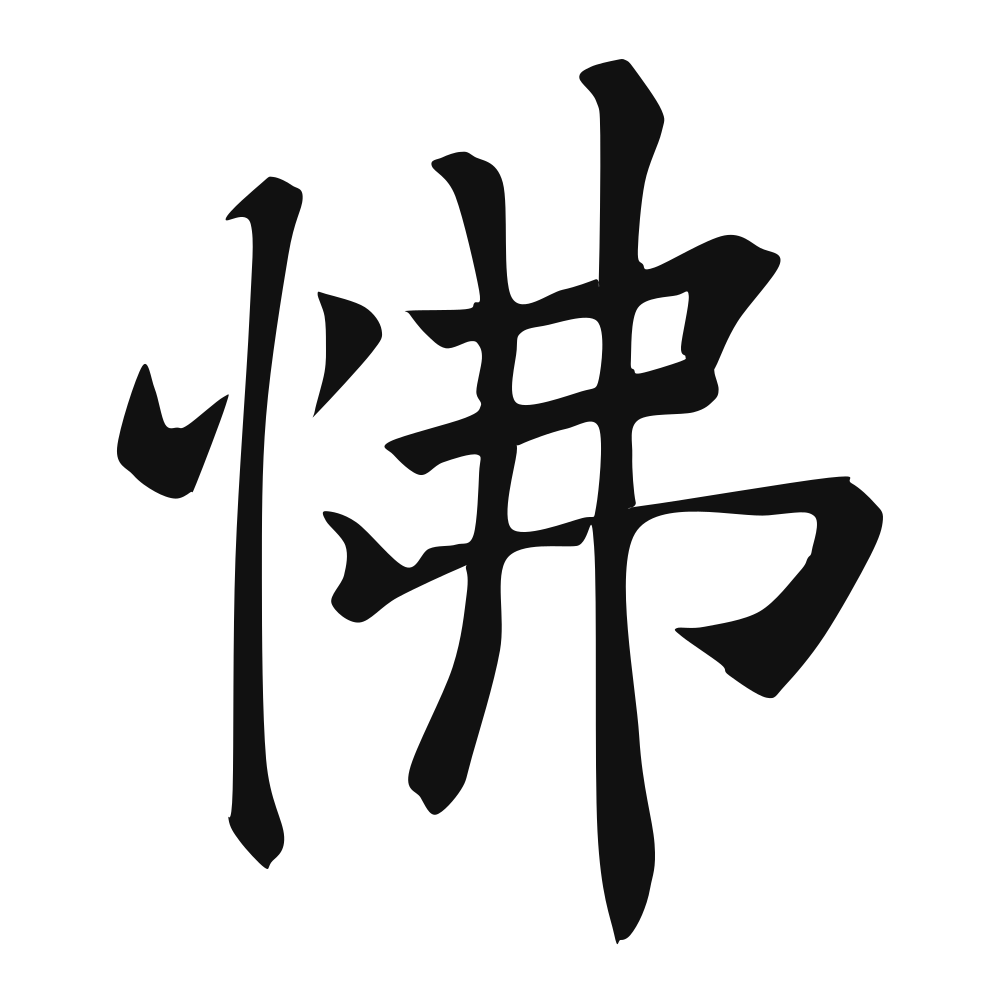
The Calligrapher — Chǔ Suíliáng 褚遂良
Tang chancellor and regular-script master of elegant, balanced strokes.
Tang calligrapher (596–658), master of regular script — Tang master of graceful, tensile regular script favored by the imperial court. Tang dynasty
Cultural Story
怫 is the anger that sits and swells. 史記 shows a man 怫然不悦, his face going dark at the slight, and the word kept that inward press — not the shout but the gathering, the displeasure that fills the chest before it finds a door. A storm held behind the ribs.
Common words & phrases
- 怫然 angrily · resentfully
- 怫郁 depressed · sullen
- 怫恚 resentful · irritated
Read the story behind the character
怫然 survives in refined prose and the quoting of the histories; you will not hear it at the market. The dark face is a screenshot now; the swell is the same. We still gather the inward anger, and the character waits in its one phrase to name the press before the door, unused but exact.
Why this character belongs on skin
Anger with the lid on—the heart radical pressed by a character meaning to bend against, 怫 is rage that will not speak its name, the jaw set at the dinner table, the fists quiet in the pockets. Classical prose used it for pent-up indignation, 怫郁, emotion dammed until the chest aches. Every patient person knows this country: the border between composure and eruption. The warrior traditions respected it—true control is not the absence of fire but the command of it, the sword sheathed because the hand is strong, not because it is empty. 怫 names the pressure honestly. Inked, it becomes a badge of discipline: I carry fire and choose its hour. Some temperaments are best written in a single, smoldering character.
Own this character
Purchase delivers the original SVG of this glyph, brushed by Chǔ Suíliáng 褚遂良, ready to place on skin, paper, or screen.