
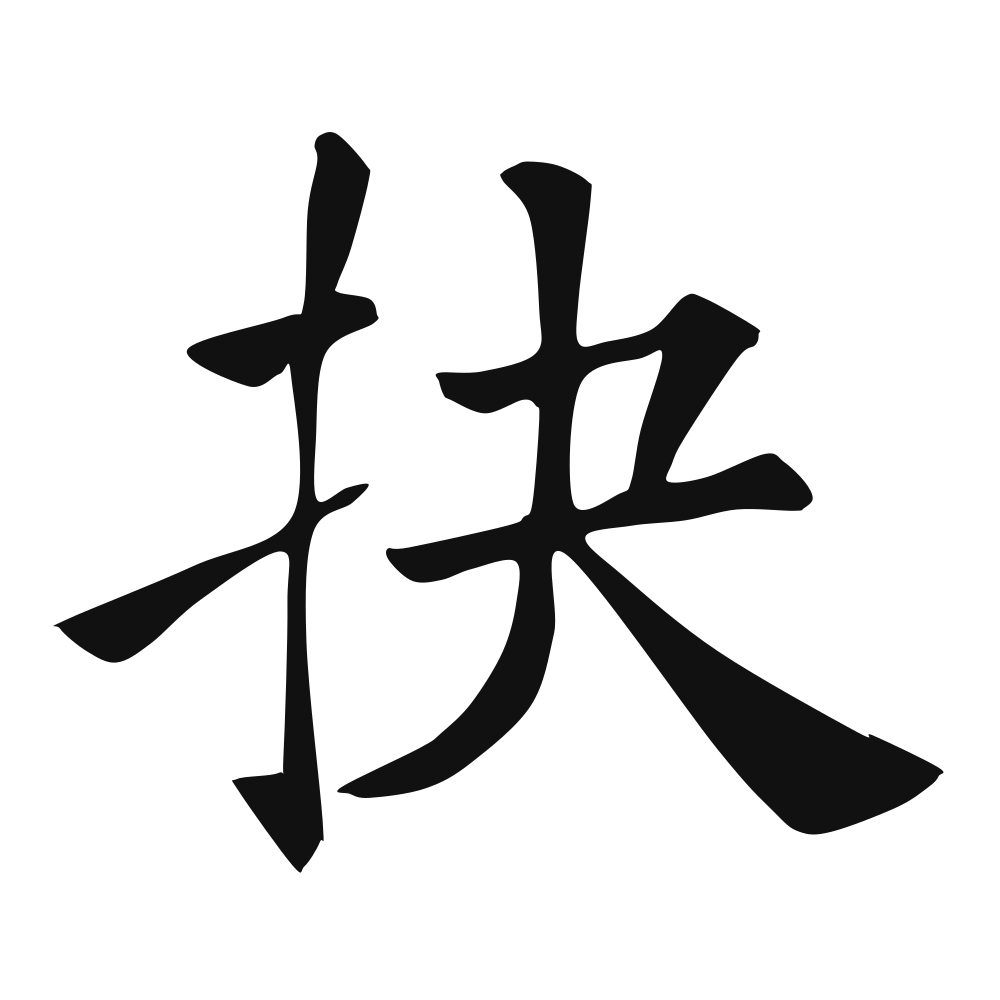
抉
to pick out; to single out
Closest English meanings
pick out·choose
The Calligrapher — Chǔ Suíliáng 褚遂良
Tang chancellor and regular-script master of elegant, balanced strokes.
Tang calligrapher (596–658), master of regular script — Tang master of graceful, tensile regular script favored by the imperial court. Tang dynasty
Cultural Story
抉 is to pick out, often with force. The 史記's 伍子胥, betrayed and condemned, asked that his eyes be 抉 and hung on the gate so he could watch his enemy fall. The hand with 夬, to decide, is the wrenching of a thing from its place. It is the choice made with a blade.
Common words & phrases
- 抉择 choose · make a choice
- 抉摘 select and expose
- 抉目 gouge out eyes
Read the story behind the character
抉 lives in 抉择, the weighty choice the commencement speaker invokes, and 抉摘 the selecting-and-exposing a critic does. 抉目 is the ancient horror, now only a historical footnote. It names the decision that costs, the picking that is closer to tearing than to choosing.
Why this character belongs on skin
A hand and something buried: jue is the act of digging out, of selecting with intent — plucking the one thing from the many, extracting truth from concealment. The same word came to mean choice itself, the decisive picking. There is violence in it, honestly drawn. Truth does not volunteer; it is excavated. The detective's breakthrough, the surgeon's finding, the therapist's question that opens the locked room — all of it is jue, the hand that goes in after what everyone else let lie. Myth loves this gesture: Arthur draws the sword that ten thousand hands could not, and the drawing is the choosing is the kingship. Fate, said the Stoics, is not what happens to us but what we elect to do with it — and election is this character exactly. Wear jue and you wear the moment of decision made permanent: no more pretending the truth was hidden too deep. You went in. You took hold. What you pulled out is yours now, and so is what it cost.
Own this character
Purchase delivers the original SVG of this glyph, brushed by Chǔ Suíliáng 褚遂良, ready to place on skin, paper, or screen.