
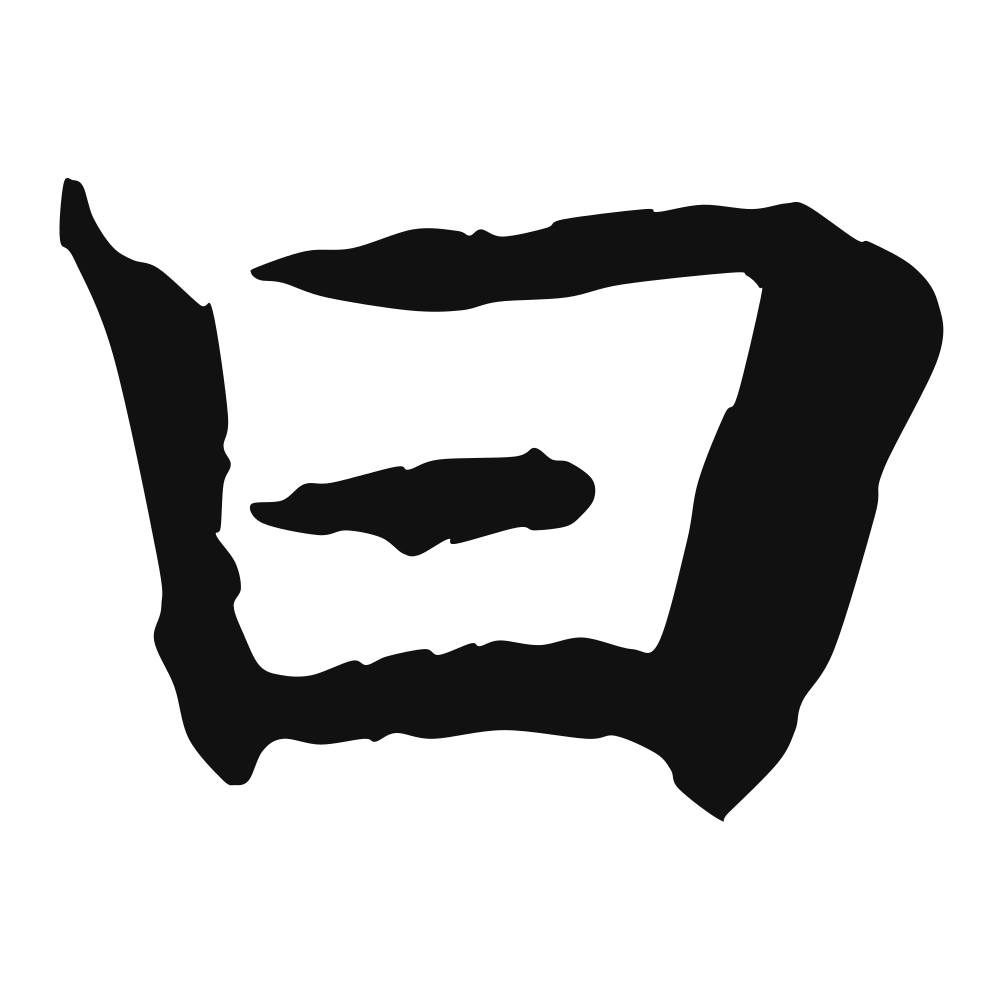
The Calligrapher — Chǔ Suíliáng 褚遂良
Tang chancellor and regular-script master of elegant, balanced strokes.
Tang calligrapher (596–658), master of regular script — Tang master of graceful, tensile regular script favored by the imperial court. Tang dynasty
Cultural Story
曰 is the old 'says.' 子曰 'the Master said' opens a thousand lines; 或曰 'or it is said' the debater's dodge. 美其名曰 is to 'call it by a fine name' — usually a worse thing. The word is speech marked as speech, the ancient verb that introduces every quotation in the classics. The Shuowen sees the mouth and the word.
Common words & phrases
- 子曰 the Master said
- 或曰 or it is said
- 美其名曰 call it by a fine name
Read the story behind the character
子曰 is the quote; 或曰 the hedge. 美其名曰 the jab. The word lives in the classic and the jab — the 'he said,' the 'call it.' From the Analects to the sarcasm, 曰 is the saying marked as said, the Master's word and the spin doctor's 'call it,' the old verb that still frames every quotation we pretend is someone else's.
Why this character belongs on skin
曰 is to speak, to say — the classical word that opens every ancient utterance, the mark placed before a sage's words so we know someone is talking. It is the mouth, framed, deliberate. To carry 曰 is to honor the spoken truth, the vow made aloud, the sentence that changes a life because it was said and not merely thought. The classics are built on 曰: thus spoke the master, thus the Dao. Words matter; the mouth that forms them shapes fate. Wear it as a mark of voice, the pledge to say what must be said rather than swallow it. Let it rest where your own mouth can feel it and remember: silence keeps you safe and small. 曰 is the courage to declare. Some marks whisper. This one speaks. Let it be the first word of the story you are still writing on your skin.
Own this character
Purchase delivers the original SVG of this glyph, brushed by Chǔ Suíliáng 褚遂良, ready to place on skin, paper, or screen.