
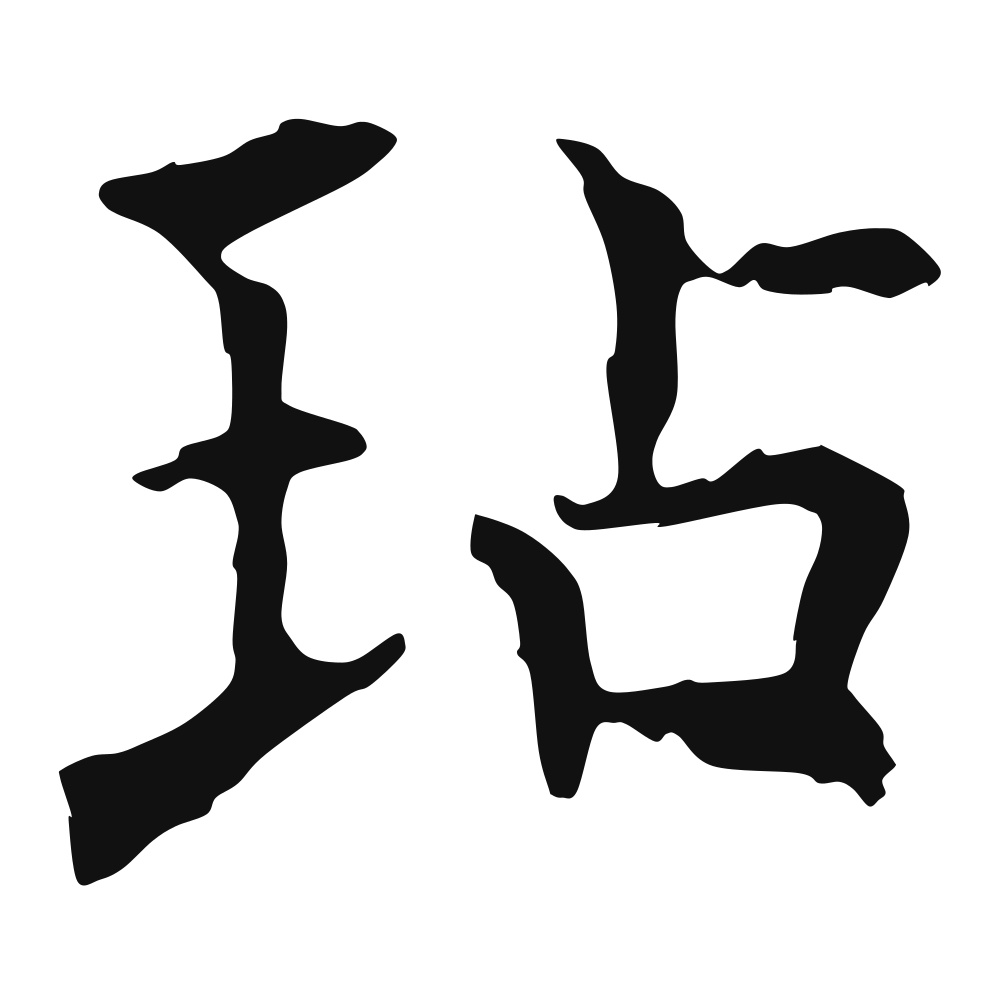
玷
blemish; disgrace; flaw in jade
Closest English meanings
flaw·blemish·to disgrace
The Calligrapher — Chǔ Suíliáng 褚遂良
Tang chancellor and regular-script master of elegant, balanced strokes.
Tang calligrapher (596–658), master of regular script — Tang master of graceful, tensile regular script favored by the imperial court. Tang dynasty
Cultural Story
玷 is a flaw or stain on jade; the 說文 gives '玉瑕.' A single dark speck could ruin a precious stone, so 玷 became the metaphor for any disgrace. The 詩經 warns against 玷污 of name and ritual, a blemish on honor no washing easily removes from a life.
Common words & phrases
- 玷汙 to disgrace · to tarnish · to stain
- 玷辱 to dishonor · to bring shame to
Read the story behind the character
We say a scandal 玷污 (disgraces, tarnishes) a hero's name, and a lie 玷辱 (dishonors) a family. A cheat 玷污 the fair game, and we guard our reputation from any 玷. The word turns a tiny jade flaw into the lasting stain of shame on a person or a cause.
Why this character belongs on skin
Even jade is not perfect. Held to the light, a stone the color of moonlight shows a thin dark seam, a blemish the merchants call diàn. The flaw does not cheapen the jade; it proves it real, that it was cut from the earth and not dreamed. We spend our lives hiding the seams in ourselves, the mistakes that taught us the shape of mercy. A Christian might say the crack is where the light enters. To carry this character is to stop apologizing for the marks you earned. Let it lie on your skin as a quiet honor, the record of a wound that became wisdom. And when you are ready, let the artist set the flaw in ink — beautiful precisely because it is not whole.
Own this character
Purchase delivers the original SVG of this glyph, brushed by Chǔ Suíliáng 褚遂良, ready to place on skin, paper, or screen.