
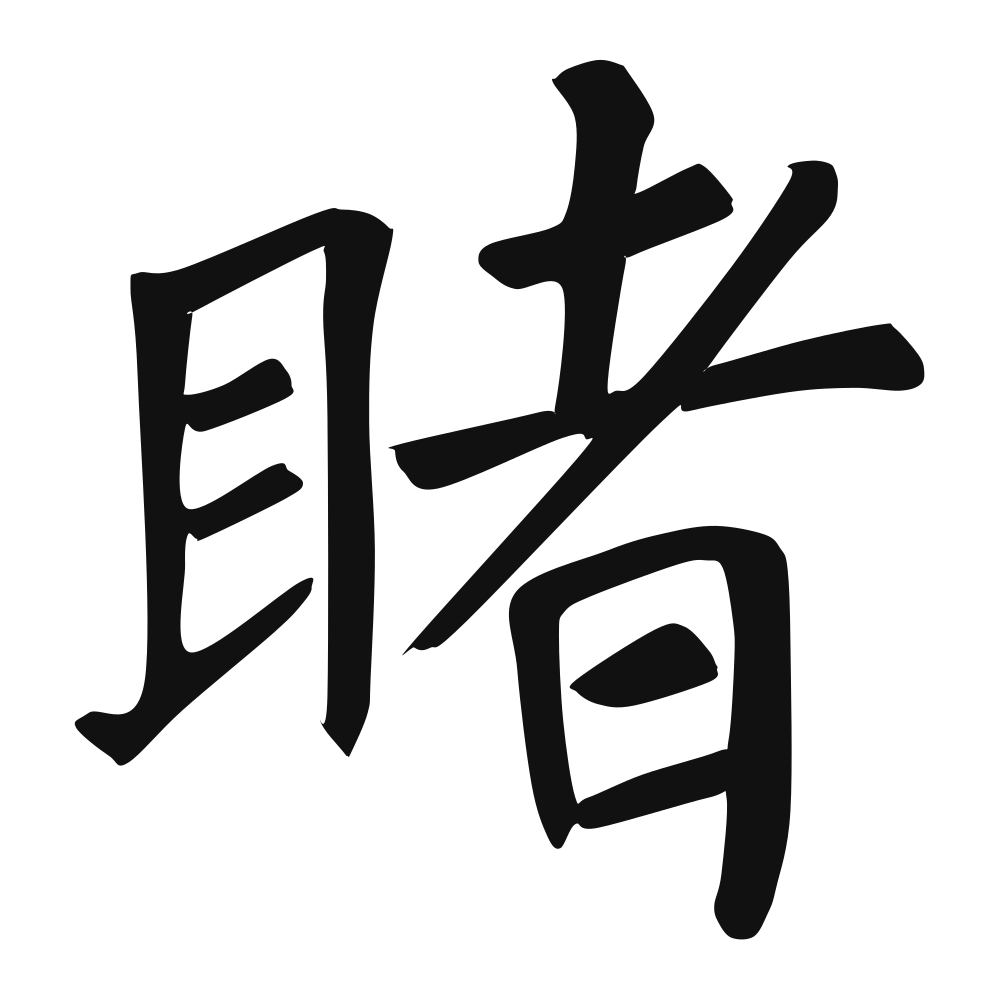
睹
to observe; to see
Closest English meanings
to see·witness·to behold
The Calligrapher — Chǔ Suíliáng 褚遂良
Tang chancellor and regular-script master of elegant, balanced strokes.
Tang calligrapher (596–658), master of regular script — Tang master of graceful, tensile regular script favored by the imperial court. Tang dynasty
Cultural Story
睹 is to see with one's own eyes. Classical prose loved the certainty it implies: 耳闻目睹, what ears heard and eyes witnessed, outweighed any rumor, and sage kings were said to 睹 an omen and amend their policy before the season turned.
Common words & phrases
- 目睹 to witness · to see with one's own eyes
- 先睹为快 eager to see (something first)
- 熟视无睹 to turn a blind eye · to ignore
Read the story behind the character
目睹 powers the news cycle: bystanders 目睹 the rescue on their phones, midnight screenings let fans 先睹为快, and op-eds scold officials for 熟视无睹 the broken crossing. Court witnesses state exactly what they 目睹, with a timestamp and a location.
Why this character belongs on skin
There is a difference between looking and witnessing. You can glance at a thousand things a day and retain nothing, and then one sight — a lover's face in lamplight, the sea going gray before a storm — settles into you permanently, like a stone dropped into deep water. The character 睛 carries the eye itself, 睹 means to see with the whole self, to take something in until it becomes memory. The Stoics said we do not possess things, only our impressions of them; the Buddhists go further — right seeing is the beginning of right living. To witness is to be changed by what passes before you. Some people drift through the world unseeing. You are not one of them, and this mark says so: I looked, and I did not look away. It is worn by those who understand that a life is only the sum of what it truly saw.
Own this character
Purchase delivers the original SVG of this glyph, brushed by Chǔ Suíliáng 褚遂良, ready to place on skin, paper, or screen.