
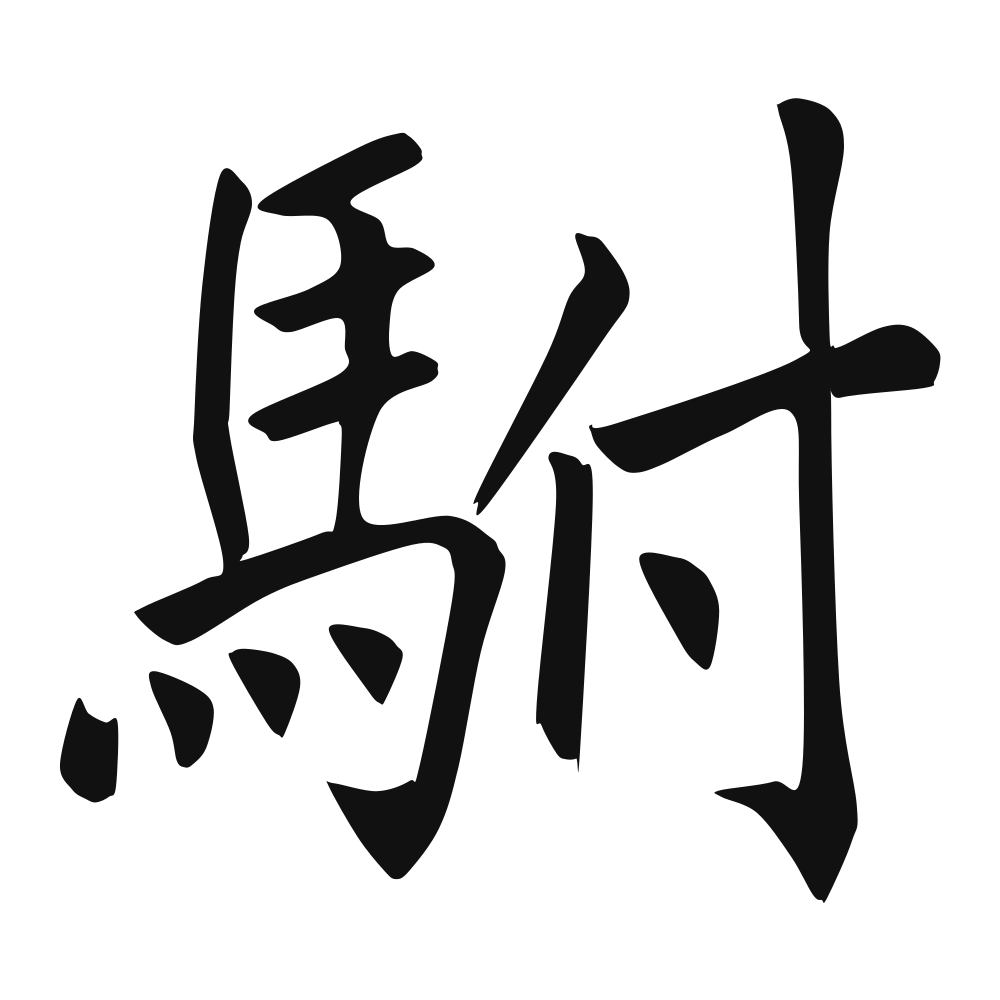
The Calligrapher — Chǔ Suíliáng 褚遂良
Tang chancellor and regular-script master of elegant, balanced strokes.
Tang calligrapher (596–658), master of regular script — Tang master of graceful, tensile regular script favored by the imperial court. Tang dynasty
Cultural Story
驸 (fù) sets 馬 beside the phonetic 付, an extra horse hitched beside the imperial carriage. The post of 驸马, the officer who rode it, became the title for the emperor’s son-in-law.
Common words & phrases
- 驸马 emperor's son-in-law
Read the story behind the character
驸 survives in one title. A 驸马 (emperor’s son-in-law) is a figure of old courts and costume dramas, the man who married a princess. The character now mainly evokes that royal, marital honor.
Why this character belongs on skin
To marry into power — that is the old sense of 驸, the side-horse, the horse that runs beside the carriage rather than in its shafts. The 驸马 was the man who wed an emperor's daughter: honored, wealthy, and forever second. There is a meditation here for anyone who has ever loved someone larger than life. You learn the grace of the flanking position — close, steady, indispensable, not the one the crowd watches but the one without whom the carriage tips. Ink this and you claim that role as chosen, not assigned: the loyal rider, the shadow-strength, the man whose devotion is its own kind of throne. Let it sit small, where only the person beside you knows it exists.
Own this character
Purchase delivers the original SVG of this glyph, brushed by Chǔ Suíliáng 褚遂良, ready to place on skin, paper, or screen.