
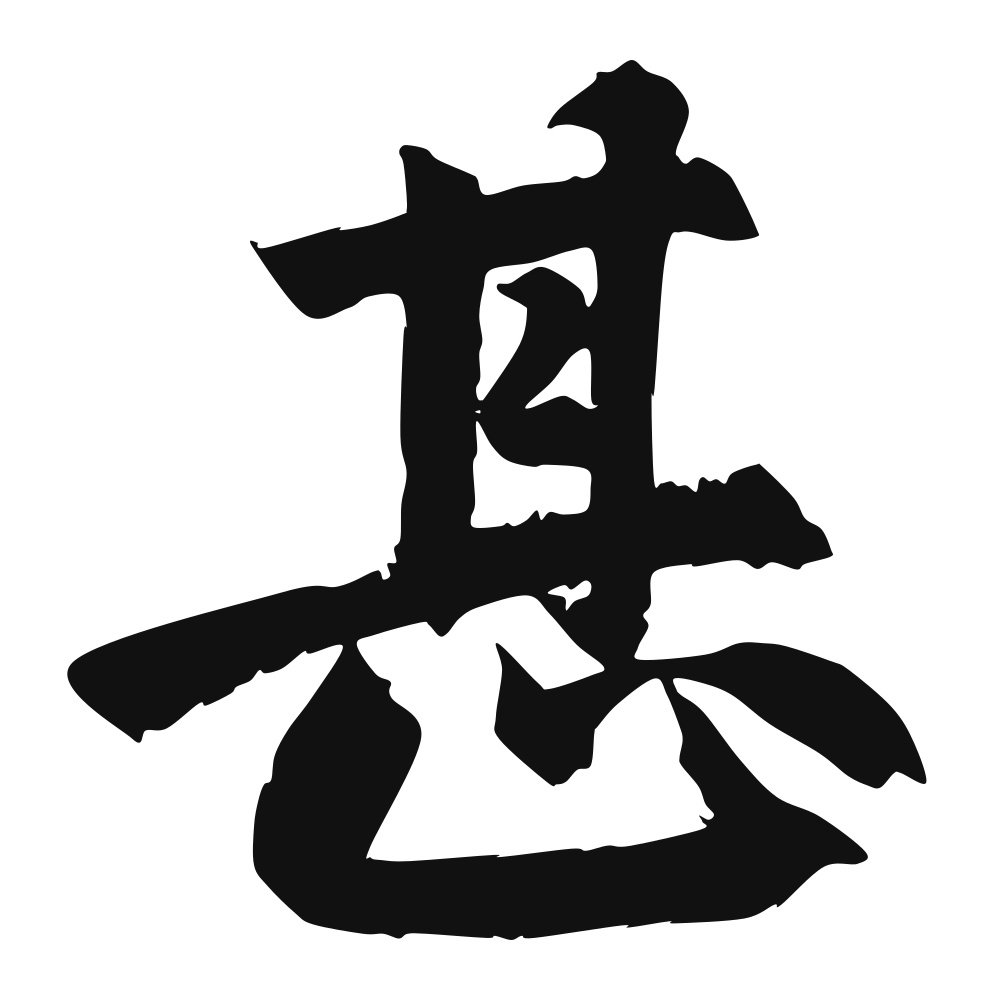
甚
excessive; undue; to exceed; to be more than; very; extremely; (dialect) what; whatever (Taiwan pr. [shen2])
Closest English meanings
very·excessive·what·quite
The Calligrapher — Cuī Yuàn 崔瑗
Han pioneer of cursive script and author of an early cursive treatise.
Han calligrapher (77–142), master of cursive script/clerical cursive — known for 《贤女帖》. Han dynasty
Cultural Story
Shen marks excess and degree. The Daoist texts warn against 甚 — going too far; Liezi's tale of the fool moved to move mountains opens '甚矣,汝之不惠', 'Extreme is your lack of wit!' — the word flung to the front of the sentence for full force.
Common words & phrases
- 甚至 even · so much so that
- 甚么 what · whatever
- 过甚 excessive · overstated
- 甚为 very · quite · rather
- 不甚 not very · not quite
- 甚好 very good · quite fine
Read the story behind the character
Modern Chinese uses it as gearshift: 甚至, even, to escalate a point; 甚为, very, in formal letters; 不甚了解, not quite clear on something, in polite hedging. Exam papers still reward the student who knows 甚 is more than 很 and knows when to show it.
Why this character belongs on skin
There is a love that tips past reason into excess, and the ancients had a word for that too — not mere affection but the deep, almost dangerous devotion that overflows its banks. The character means very, extreme, and in the old tongue it named a ruler's profound care for his people, a love so total it bordered on ruin. We fear intensity now, prize the moderate heart. But some of us are built to love past the safe line, to care until it hurts, to mean everything we feel. The mystics called it fervor; the lover calls it simply the truth. Let 甚 rest where your feeling runs deepest — the chest, the throat that confesses. The ink is the proof you did not half-love. You loved to the very end.
Own this character
Purchase delivers the original SVG of this glyph, brushed by Cuī Yuàn 崔瑗, ready to place on skin, paper, or screen.