
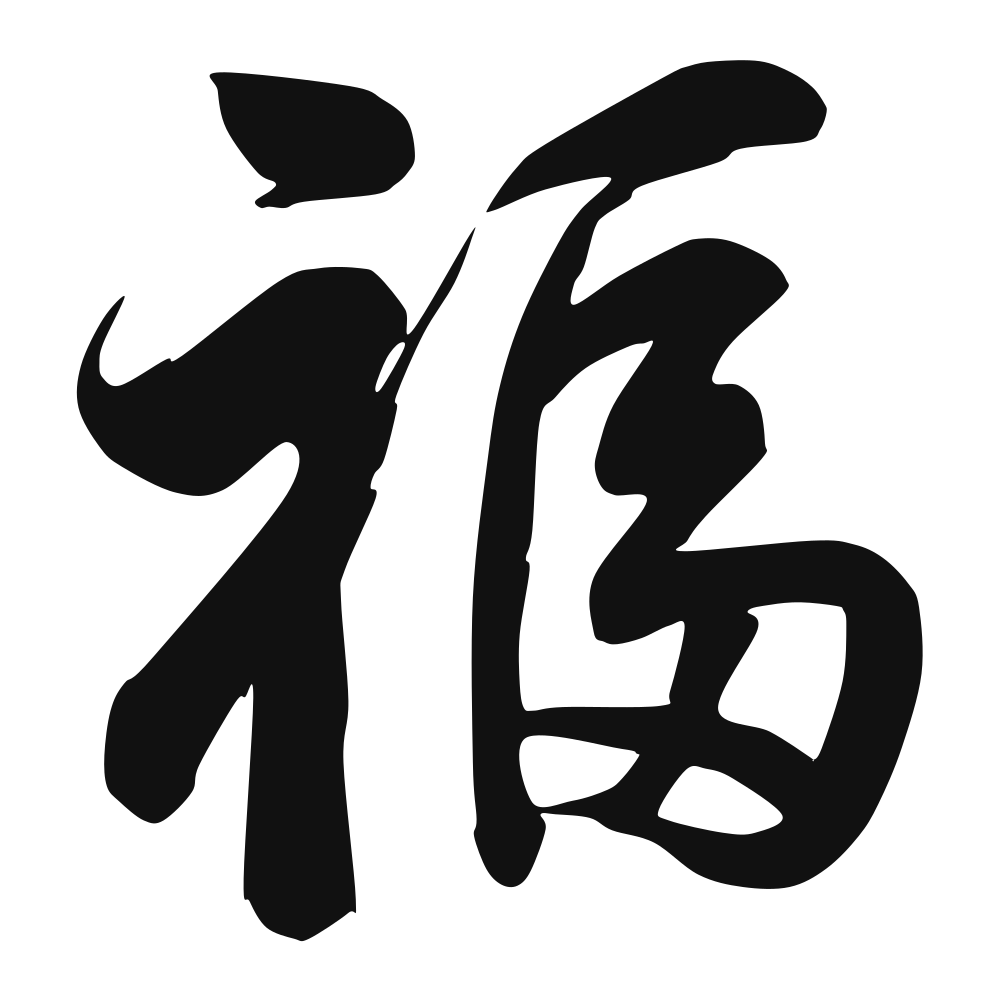
福
福 (fú) — fortune, blessing, happiness. Altar 示 + 畐 (full): the full vessel of the gods' blessing. Classical life: 福到了 — fortune has arrived (年画 upside-down 福); the top New Year char. Grammar: free morpheme — also: surname Fu; good fortune; happiness; luck
Closest English meanings
blessing·fortune·happiness·luck
The Calligrapher — Cuī Yuàn 崔瑗
Han pioneer of cursive script and author of an early cursive treatise.
Han calligrapher (77–142), master of cursive script/clerical cursive — known for 《贤女帖》. Han dynasty
Etymology & Meaning · 字义溯源
2 · The Character: 福 福 (fú, 2nd tone). The Shuowen: 福,祐也。从示畐聲 — 'divine help'; the altar-sign 示 stands beside 畐, a brimming vessel. It is a blessing conferred, not luck stumbled upon. The Yijing uses it as a verb: 謙·彖 鬼神害盈而福謙 — 'ghosts and spirits injure the full and bless the humble.' The Shangshu counts it out: 《洪範》五福:一曰壽,二曰富,三曰康寧,四曰攸好德,五曰考終命 — long life, wealth, health and peace, a love of virtue, and a completed end. Laozi 58 sets it in permanent tension: 禍兮福之所倚,福兮禍之所伏. The Zuozhuan warns 小信未孚,神弗福也, 'small good faith does not convince; the spirits will not bless it.' Kangxi: 14 strokes, 示部. Free morpheme — 福 stands alone. Honest disclosures: the fifth of the Five Blessings is a good death, so 福 is not a purely sunny word; and it is the most mass-produced character in Chinese decor, pasted upside-down on doors at New Year (福倒 = 福到), so a bare 福 can read as a lucky sticker rather than a vow.
Cultural Story
The oracle-bone form shows two hands lifting a wine jar toward the altar — offering fullness to the powers, and receiving blessing back. The Documents enumerate five 福: long life, wealth, health, virtue, and a good ending to a good life.
Where a Western reader can stand: Where a Western reader can stand: 福 is a full jar set before an altar (示 + 畐) — favour granted from above, not luck you stumbled into, since luck is 運. The Yijing attaches it firmly to humility: 鬼神害盈而福謙, the spirits injure the full and bless the modest. Cui Yuan's flowing draft-cursive, graded divine class in the Shu Duan, returns it to a literate, personal register. Honest caveats: the Five Blessings of the Hongfan close with 考終命, a good death, so 福 appears freely in funeral language such as 福壽全歸 and is not purely festive; and it is the most reproduced character in Chinese decoration, so a plain 福 risks reading as a doorway sticker unless the hand and the scale are serious.
Energy Reading
Water (水)
Comparative symbology, not fortune-telling.
Common words & phrases
- 幸福 happiness · blessed
- 福利 welfare · benefit
- 福气 good fortune · luck
- 祝福 blessing · wish well
- 造福 benefit · bring good to
Read the story behind the character
Every New Year the 福 sticker goes on the door — often upside down, so fortune “arrives.” Job offers advertise 福利, benefits; elders praise a child’s 福气, good luck; messages fly with 祝福, blessings; and a kind doctor is said to 造福, benefit, the whole town.
Why this character belongs on skin
There is a quiet joke the Chinese tell at New Year: hang the character upside-down, and fortune has no choice but to arrive — fu dao, blessing falls upon the threshold. We chase luck like a thing to be caught, but 福 was never about the windfall. It is the settled warmth of a house that holds, the long breath after trouble passes, the meal shared with no empty chair. To the Daoist mind, fortune is not seized but allowed — it flows to the person who stops grasping. Ink it, and you carry a small act of surrender: a wish turned inward, a door left open. It does not promise riches. It promises that you will notice the good when it comes, and that you will be home to receive it. Most of us spend our lives running toward what we already had. This mark is the opposite gesture — a stillness, a threshold, a blessing hanging, patiently, upside-down.
Own this character
Purchase delivers the original SVG of this glyph, brushed by Cuī Yuàn 崔瑗, ready to place on skin, paper, or screen.