
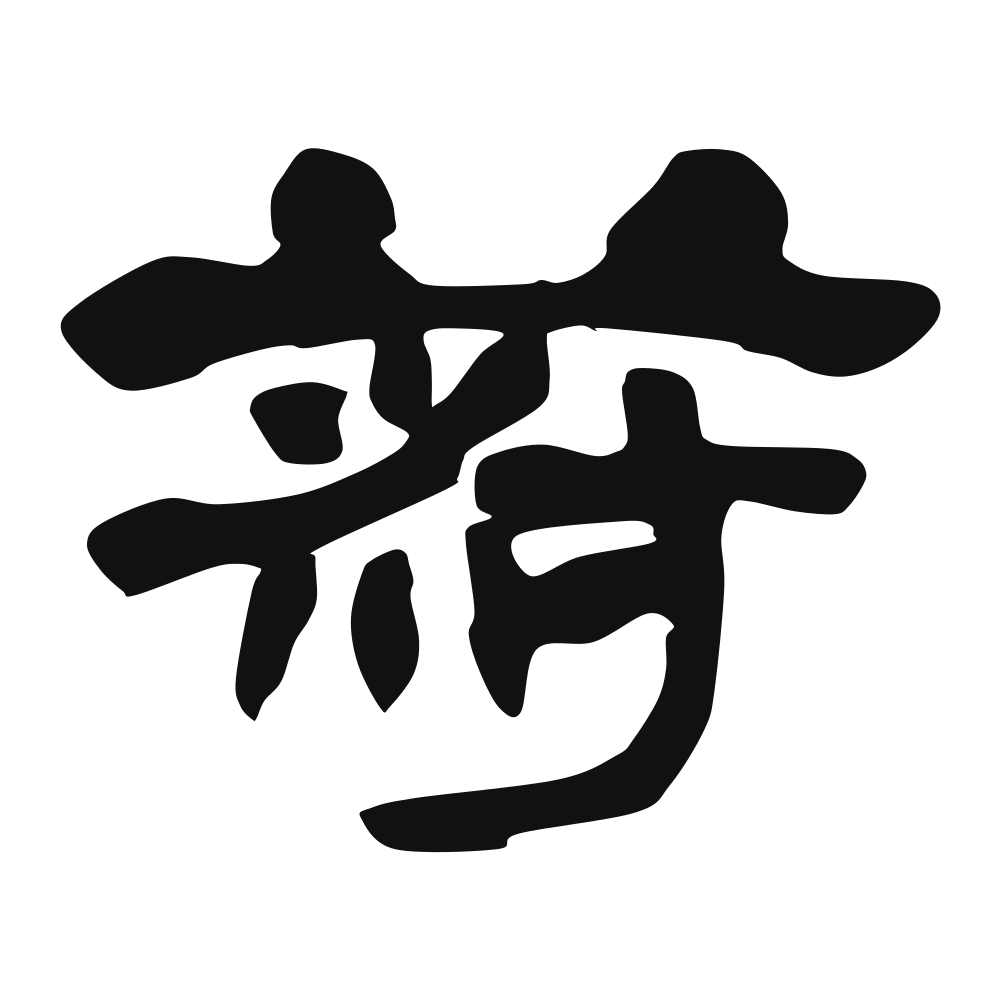
菽
legumes (peas and beans)
Closest English meanings
beans·pulses
The Calligrapher — Dèng Shírú 邓石如
Qing revivalist who restored seal and clerical script to prominence.
Qing calligrapher (), master of seal script/clerical script — Qing self-taught reviver of seal and clerical script, carved energy in every stroke. Qing dynasty
Cultural Story
菽 is the ancient word for beans, standing alongside rice, millet, wheat, and hemp as the five grains of early China. 稻菽 waves fed proverbs about the people's staple; 菽粟 meant plain subsistence itself. And idioms preserved the sting of ignorance: 不辨菽麦, 'cannot tell beans from wheat', the classical insult for someone too pampered to know his own food — a charge available to any era.
Common words & phrases
- 菽粟 grain and beans
- 稻菽 rice and beans
- 不辨菽麦 cannot tell beans from wheat · ignorant
Read the story behind the character
A city kid visiting grandpa's farm cannot tell 稻菽 apart at the field's edge, and the family deploys 不辨菽麦 with relish — the 2,500-year-old insult landing perfectly. The agricultural channel's documentary praises this year's 菽粟 yields on the northern plain. A bookstore's classics shelf prints the phrase on a bookmark: 'know your beans', the oldest literacy test still funny.
Why this character belongs on skin
Do not be fooled by how plain it looks. Shu—the bean—was half the bread of the ancient Chinese world; 'the common people eat the five grains, of which the bean is chief,' say the old texts. In the Book of Songs, farmers midsummer under the sun, binding the bean plants on the dry flats, and the rhythm of that work became the rhythm of the poems themselves. Confucius's disciples spoke of shu shui—beans for food, water for drink—meaning the noble life lived on almost nothing: joy without luxury, learning without silver. So the bean became the emblem of honest poverty and unbroken dignity. There is real sensuality in this: the earth smell of the pod, the small weight of harvest in the palm, supper after a long field. To wear shu is to declare your loyalty to what sustains rather than what impresses—to the humble crop that fed every dynasty, to the simple table, to the self that remains when everything ornamental is stripped away. Beans and water, a clear conscience, the long evening. That is wealth.
Own this character
Purchase delivers the original SVG of this glyph, brushed by Dèng Shírú 邓石如, ready to place on skin, paper, or screen.