
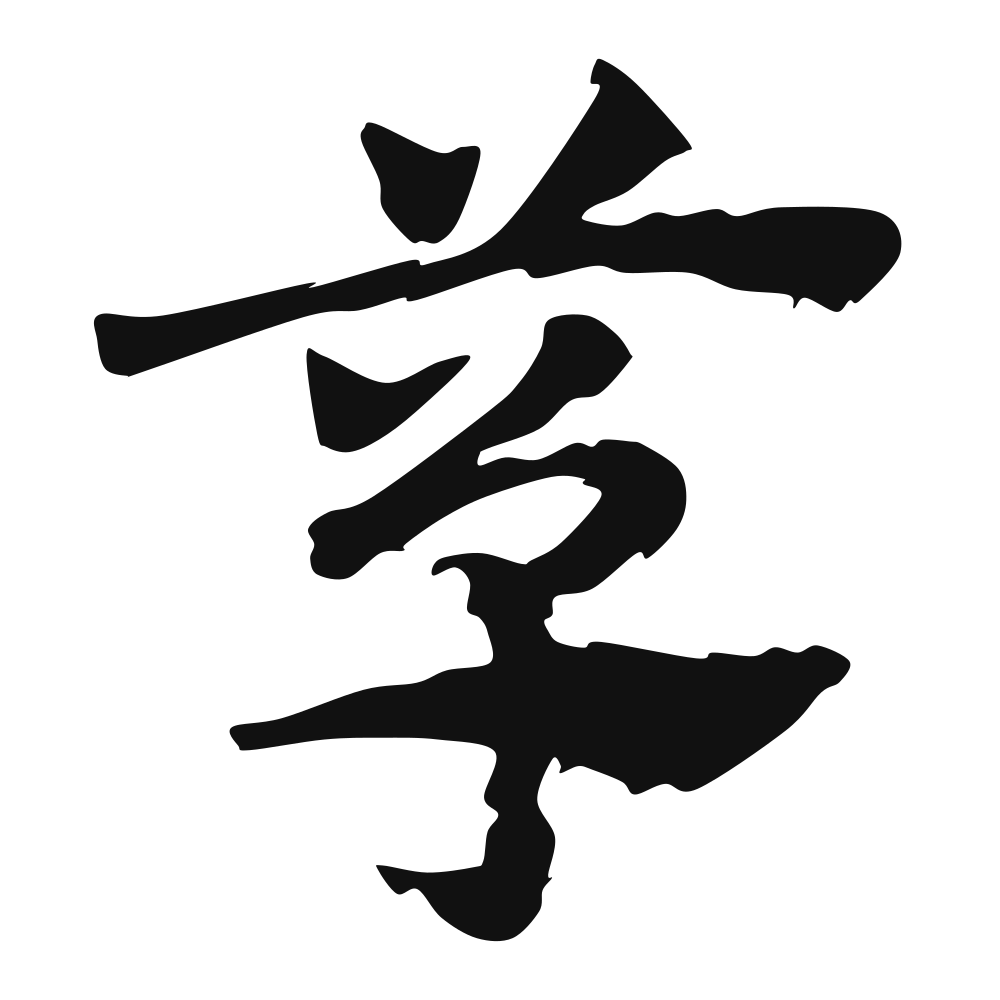
箪
round basket for cooked rice
Closest English meanings
bamboo food basket
The Calligrapher — Dèng Wényuán 邓文原
Yuan scholar-official calligrapher of classical regular script.
Yuan calligrapher (1258–1328), master of running script/cursive script — known for 《急就章》. Yuan dynasty
Cultural Story
箪 was a round bamboo food basket, humble but storied. The Analects honors Yan Hui: 一箪食,一瓢饮 — a basket of rice, a gourd of drink, in a mean lane, and no joy lost. Mencius pictures a liberated people bearing 箪食壶浆, baskets of food and jugs of drink, to welcome an army.
Common words & phrases
- 箪食壶浆 welcome with food and drink
- 箪食瓢饮 simple living · frugal life
- 箪笥 basket and case
Read the story behind the character
箪 lives in textbooks and idiom cards: middle schoolers recite 箪食瓢饮 (a basket of rice, a gourd of drink) when the essay topic turns to contentment, and calligraphy scrolls quote it for studio walls. Historians reach for 箪食壶浆 (food and drink to welcome troops) when describing a hero's return.
Why this character belongs on skin
Confucius's favorite student lived in a shabby lane with one bamboo basket for rice and one gourd ladle for water — poverty that would have broken anyone else's spirit, Yan Hui wore like a quiet joke. The basket, 箪, became his emblem. His master praised him by name for it, again and again: others could not have endured such want without their hearts failing, but Yan Hui did not allow his joy to change. It is not a praise of hunger. It is a praise of the man the hunger could not reach — the discovery that contentment is a thing you own outright, independent of rent, of income, of what the neighbors think. The phrase 箪食瓢饮 still means, in Chinese, a life stripped to essentials and somehow none the poorer. To wear 箪 is to claim that independence for yourself: the one-meal basket as a banner. Enough is a decision, and some people make it young.
Own this character
Purchase delivers the original SVG of this glyph, brushed by Dèng Wényuán 邓文原, ready to place on skin, paper, or screen.