
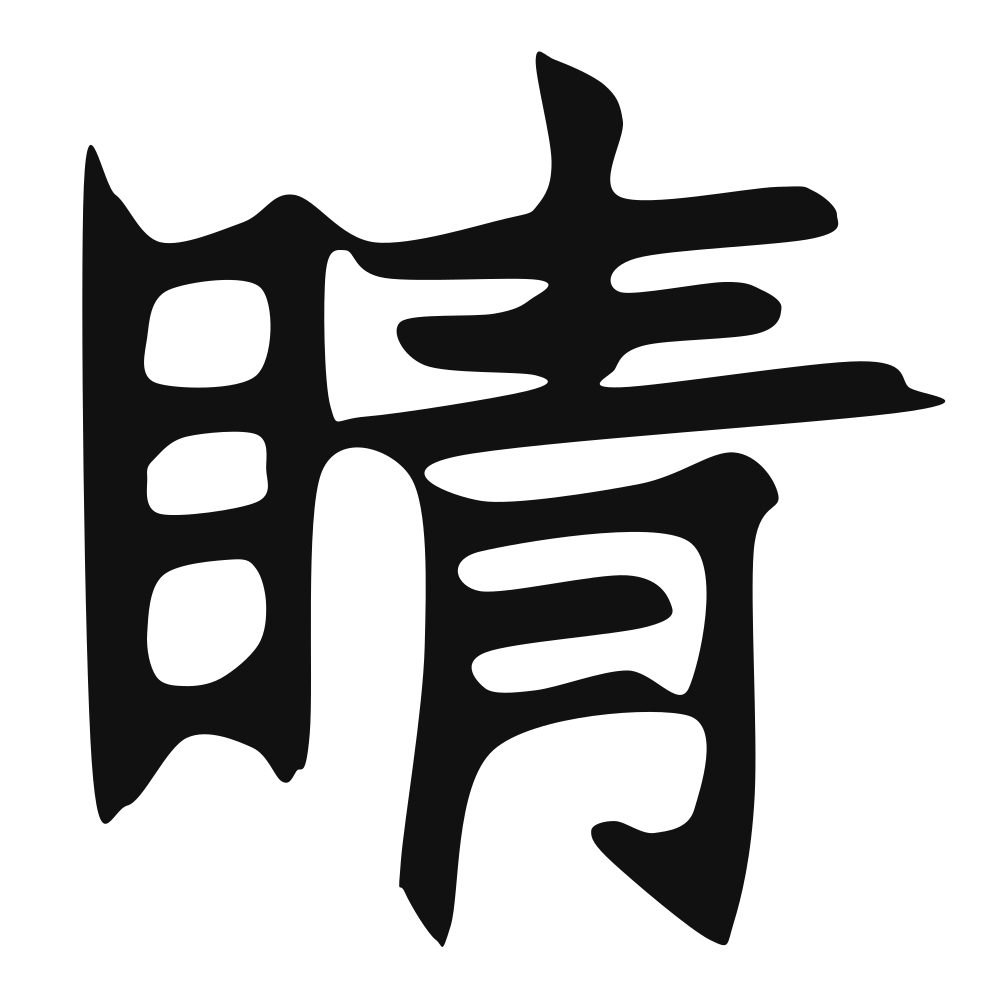
The Calligrapher — Dīng Dàohù 丁道护
Sui regular-script calligrapher of the Qifa Temple Stele, a precursor to Tang standard script.
Sui calligrapher (), master of regular script — known for 《启法寺碑》. Sui dynasty
Cultural Story
睛 is the pupil, the black well at the eye's center. Tang legend tells of the painter Zhang Sengyou dotting the dragons' 睛 on a temple wall — at the last stroke they burst through the plaster into cloud and flew away, giving Chinese its idiom for the finishing touch.
Common words & phrases
- 眼睛 eye
- 点睛 add the pupils (finish touch)
- 定睛 fix one's eyes on
- 画龙点睛 add the finishing touch
Read the story behind the character
睛 hides inside 眼睛, the everyday word for eye, but the idiom rules the room: essays praise the 画龙点睛 detail that makes an ad unforgettable, designers 定睛 study a rival's layout, and comment sections debate which touch truly 点睛 on the new product.
Why this character belongs on skin
Inside the eye radical, the character holds 精—essence, the distilled vitality of a life. 睛 is the eyeball itself: 眼睛, the eye; 点睛, to dot the pupil—the legend of the painter whose dragons, given only their eyes, shook off the wall and flew into the cloud. This is the whole philosophy in one story: everything else is groundwork until the eyes are alive. You know it from faces—the glance that undoes you, the look across a table that says everything the mouth won't. The eyes are where the inner weather shows. Wear 睛 small, near your own eye at the temple or the wrist you raise to look at the time. Let it be the finishing stroke, the dotted pupil—the ink that makes the rest of you lift off the wall and fly.
Own this character
Purchase delivers the original SVG of this glyph, brushed by Dīng Dàohù 丁道护, ready to place on skin, paper, or screen.