
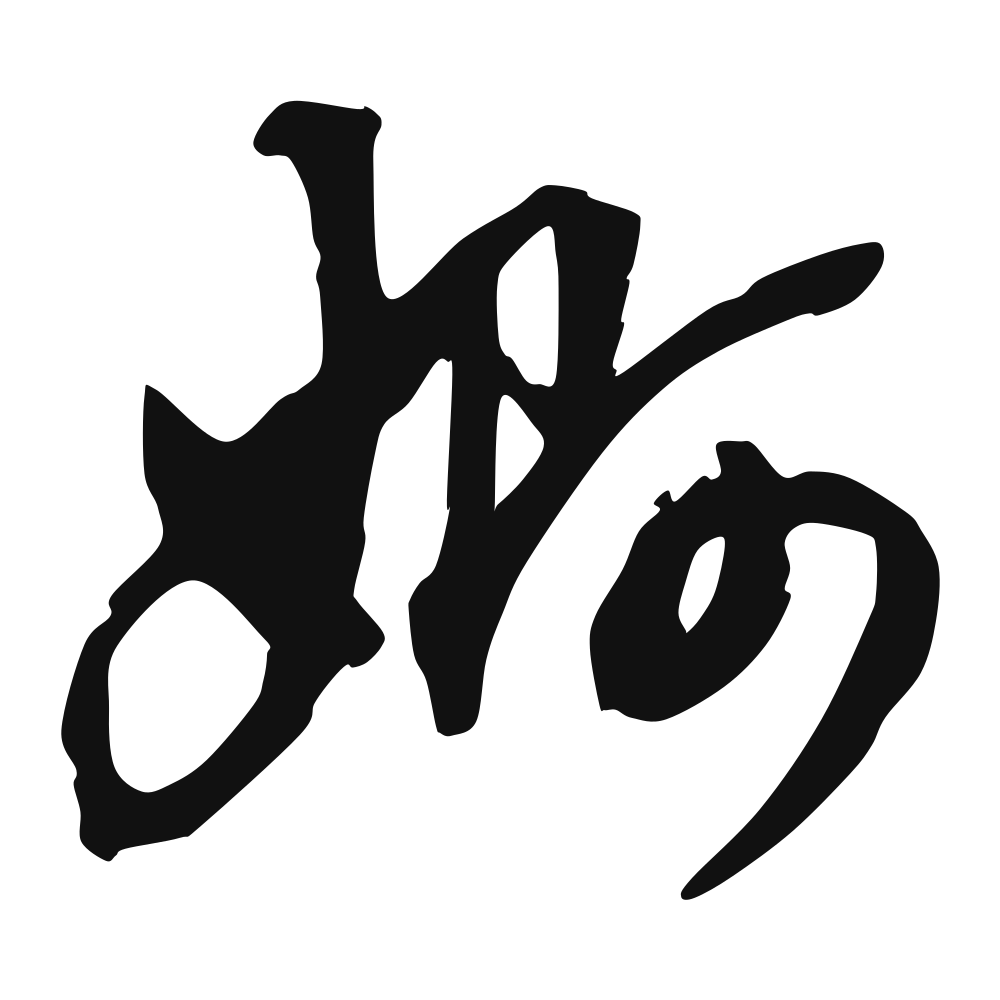
婀
graceful; willowy; unstable
Closest English meanings
graceful
The Calligrapher — Dǒng Qíchāng 董其昌
Late-Ming theorist and running-script master who shaped later taste.
Ming calligrapher (1555–1636), master of running script/regular script — late-Ming connoisseur-critic of understated, misty elegance. Ming dynasty
Cultural Story
In the classical tradition 婀 pairs with 娜 as 婀娜, a lithe, swaying grace praised by poets for women and willows alike. The character carries little independent history — it is a sound-character borrowed to render flowing movement, the eye's pleasure in a body or branch in motion.
Common words & phrases
- 婀娜 graceful · lithe
- 婀娜多姿 graceful and charming
Read the story behind the character
In the modern world 婀 lives in 婀娜, a compliment for a graceful walk or a dancing figure, and in the fuller 婀娜多姿, "graceful and charming" in every turn. A fitness coach praises a client's 婀娜 posture; a travel caption calls a riverside willow 婀娜. The word sells elegance in ads and captions alike.
Why this character belongs on skin
Willows do not resist the wind; they answer it, and that is why they survive the storm that snaps the oak. 婀 belongs to the phrase 婀娜 — a woman's figure moving with a willow's lithe obedience to her own music — and the character carries the female radical like a dancer carries her frame: invisibly, in every gesture. This is not frailty. Watch a dancer's back and you will see the engineering of it, the strength that makes weightlessness possible. The word appears in old poetry describing a walk through a garden, a sleeve lifted, a turn that makes the whole evening rearrange itself around one person. Ink 婀 as a private vow to move through the world like the willow — supple under pressure, beautiful precisely because nothing about the strength is announced. The hip or the side of the ribs, where the body curves, is the only honest place for it.
Own this character
Purchase delivers the original SVG of this glyph, brushed by Dǒng Qíchāng 董其昌, ready to place on skin, paper, or screen.