
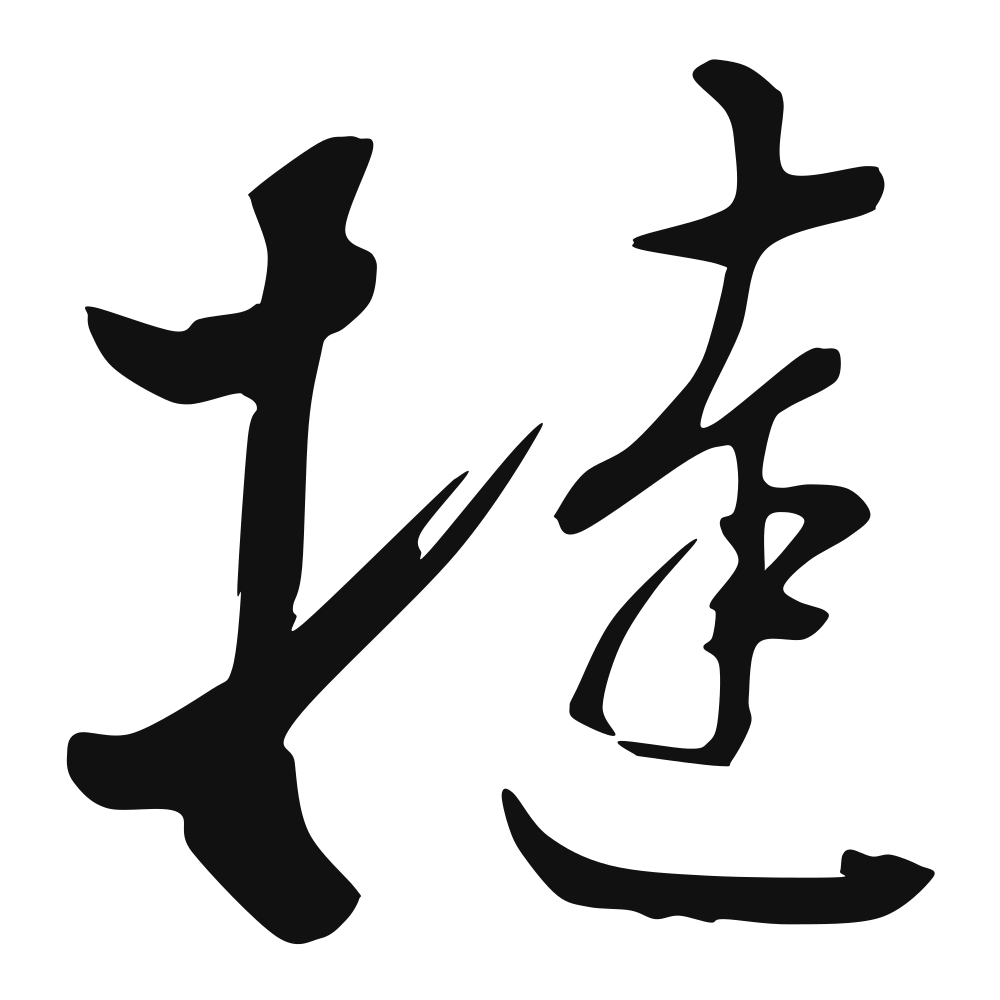
挞
(bound form) to whip; to flog; (loanword) (pastry) tart (colloquial pr. [ta3])
Closest English meanings
whip·flog·lash
The Calligrapher — Dǒng Qíchāng 董其昌
Late-Ming theorist and running-script master who shaped later taste.
Ming calligrapher (1555–1636), master of running script/regular script — late-Ming connoisseur-critic of understated, misty elegance. Ming dynasty
Cultural Story
The whip that 鞭撻s the back is the state's oldest argument and the parent's oldest error. 撻 names the lash in the documents and the odes alike; a ruler 撻伐s the disobedient state, the punitive campaign announced with a stroke. The bamboo and the banner were the same sentence, and the campaign was only the whip, lengthened across a border.
Common words & phrases
- 鞭挞 whip · lash · castigate
- 挞伐 punitive attack · attack
- 挞责 whip and scold
Read the story behind the character
A columnist 鞭撻s corruption; a general plans a 撻伐. The physical whip is mostly gone, survived by its verbal twin, the written flogging of the undeserving. The word kept the sting long after the leather rotted, doing its work in print instead of on skin, and the corrupt official feels the lash only as a headline.
Why this character belongs on skin
挞 is the lash — the character of the whip that falls, in punishment, in penance, in training. Monks of every tradition have understood what the soft world will not: that flesh sometimes learns by being struck. The soldier's drill ground, the ascetic's vigil, the boxer's roadwork — all of it is 挞 in the second person, discipline applied to oneself before the world applies it harder. This is not a character for the innocent. It is for the person who has been beaten by circumstance and chose, afterward, to keep the whip on their own side of the wall. Ink it and you take the instrument back from fate. What struck you now drives you. The sting becomes cadence. The cadence becomes stride.
Own this character
Purchase delivers the original SVG of this glyph, brushed by Dǒng Qíchāng 董其昌, ready to place on skin, paper, or screen.