
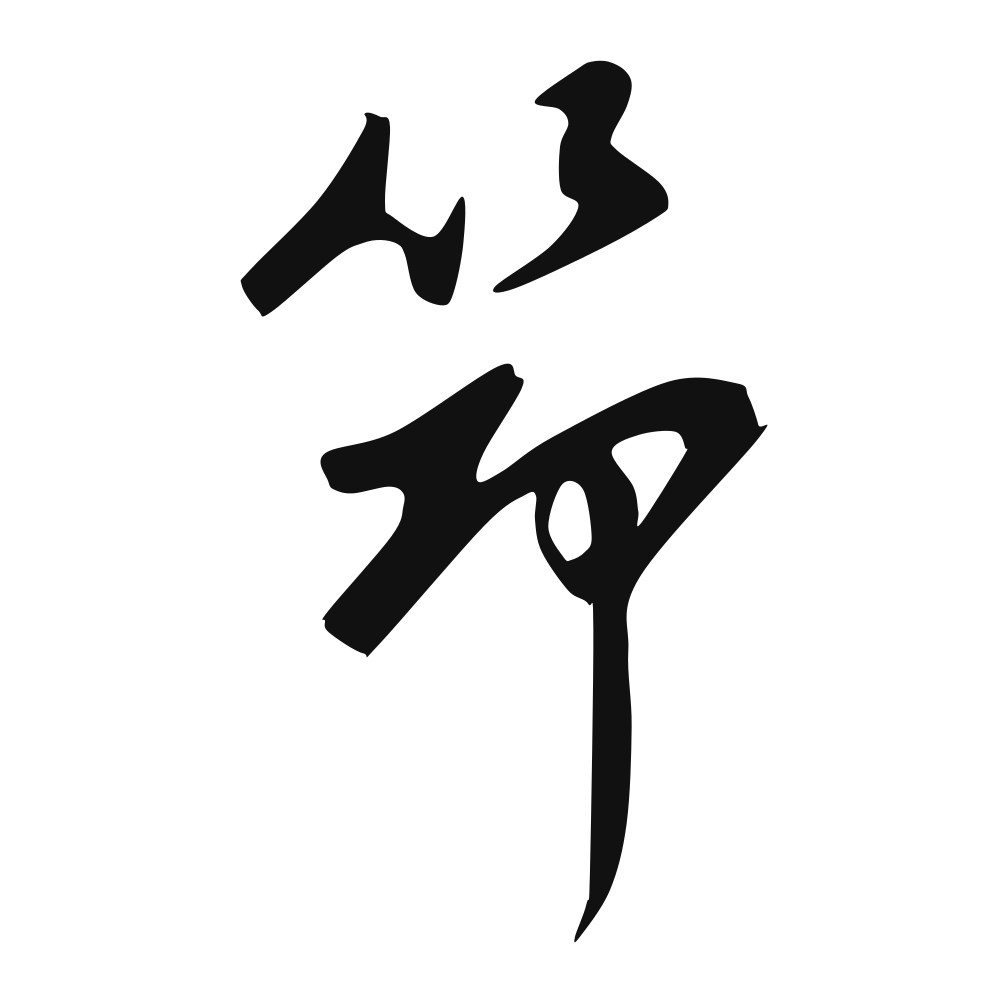
筇
(in ancient texts) type of bamboo sometimes used as a staff
Closest English meanings
walking stick·a kind of bamboo
The Calligrapher — Dǒng Qíchāng 董其昌
Late-Ming theorist and running-script master who shaped later taste.
Ming calligrapher (1555–1636), master of running script/regular script — late-Ming connoisseur-critic of understated, misty elegance. Ming dynasty
Cultural Story
筇 named a tough Sichuan bamboo prized for walking staves. When Han envoys found 邛竹杖 sold in distant Bactria, the Records of the Grand Historian took it as proof of a hidden trade route south of the mountains. Poets thereafter made the 筇杖 the scholar's companion on lonely paths.
Common words & phrases
- 筇竹 Qiong bamboo
- 孤筇 lone walking stick
- 筇杖 bamboo cane
Read the story behind the character
筇 is a connoisseur's word now: tea houses and garden shops advertise 筇竹 (a bamboo of Sichuan) canes as gifts for hikers and grandparents. Classical-style poets reach for 孤筇 (a lone walking staff) to signal solitary wandering, and the character mostly earns its keep at calligraphy exhibitions.
Why this character belongs on skin
A staff of dark bamboo from the southern hills, knuckled like an old man's spine, heavier than it looks — that is 筇. The poet's companion on long roads, tapping stone after stone, bearing weight no one else sees. Tao Yuanming leaned on such a staff past the eastern fence at dusk; the wanderer trusts it more than any map, because a map promises arrival and the staff only promises company. There is a hard-won dignity in needing one thing only: a length of hollow grass between you and the mountain, and the mountain does not mind. Hold the staff and the road holds you back, in both senses. Every journey worth taking begins with the first tap of bamboo on wet stone — and with the quiet courage to take the next step anyway.
Own this character
Purchase delivers the original SVG of this glyph, brushed by Dǒng Qíchāng 董其昌, ready to place on skin, paper, or screen.