
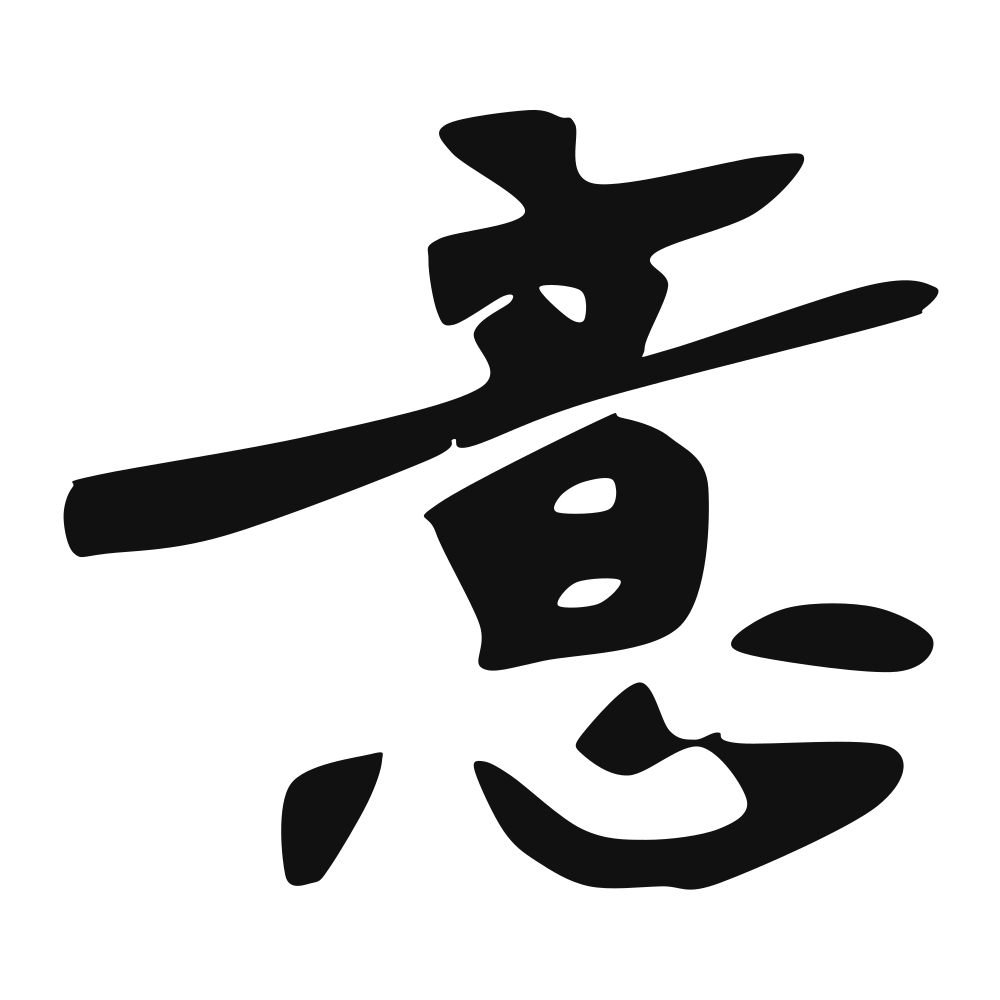
意
(bound form) idea; thought; meaning; sense; (bound form) intention; feeling; inclination; state of mind; (bound form) Italy (abbr. for 意大利[Yi4 da4 li4])
Closest English meanings
meaning·idea·intention
The Calligrapher — Féng Zǐzhèn 冯子振
Yuan poet and calligrapher of vigorous running script.
Yuan calligrapher (), master of running script — known for 《居庸赋》. Yuan dynasty
Etymology & Meaning · 字义溯源
2 · The Character: 意 Yì (4th tone). The Shuowen reads 「意,志也。从心察言而知意也。从心从音」 — 'aim / intent', understanding another's mind by listening to their words; heart (心) over sound (音). Duan Yucai glosses 志 as 识 (what the mind records). Classical range: 《礼记·大学》 「欲正其心者,先诚其意」 (make the intent sincere); 《论语》 「毋意毋必」 (do not surmise); 欧阳修《醉翁亭记》 「醉翁之意不在酒」 (the old man's intent is not in the wine). Grading: 意 alone reads as 'meaning / intention / mind' and is positive and self-sufficient (心意, 意念). Disclose the contrast with 音 (sound) — the graph means 'meaning felt through sound' — and that 意 can also mean 'to expect / guess' (不料). A clean standalone for 'intent' or 'meaning'.
Cultural Story
意 is meaning as something intended, not found. Zhuangzi said the fisherman gets the fish and forgets the trap, gets the meaning and forgets the words — 得意忘言. The heart with 音, sound, is sense aimed, a thought sent like an arrow. It is the inside purpose behind the outside act.
Where a Western reader can stand: Where a Western reader can stand: 意 is 'the meaning' — the Greek logos or Latin intentio, the aim of the mind — a heart standing over sound, meaning heard through speech. Honest caveat: it is a safe, self-sufficient standalone ('intent / meaning'), but note the graph's logic (heart over sound) and that 意 can also mean 'to expect' (出其不意); do not over-spiritualise it as 'the Soul'. Feng Zizhen's spontaneous Yuan cursive throws the still intent into motion — a resonance of his hand, not a documented fact.
Common words & phrases
- 意思 meaning · idea · opinion · interest
- 意见 opinion · view · suggestion
- 意义 meaning · significance · sense
- 注意 to pay attention · to take notice
- 意外 unexpected · accident · surprise
- 满意 satisfied · pleased
Read the story behind the character
意 is the daily mind: 意思 the point of the joke, 意见 the complaint filed, 满意 the meal that satisfied. 注意 is the teacher's command, 意外 the accident nobody planned. It does intent and significance at once, the thought and the significance, often before you have decided which.
Why this character belongs on skin
意 is the intention — the character for what stands inside a sound before it becomes a word. Its heart radical sits beneath a sound-word meaning full, and the old glosses say exactly that: 意 is what the heart is full of, the meaning gathered and held below speech. Calligraphy masters made it their secret doctrine — the brush must carry 意 before it moves; stroke without intention is dead ink. Poets aimed at 意境, the realm a poem opens beyond its literal words, the wine in the cup rather than the cup. And ordinary speech still leans on it: 意思, meaning; 意外, beyond expectation; 意中人, the person your heart has already chosen. To wear 意 is to claim the invisible half of everything you do — to move through the world like a brush loaded with deliberate ink, so that even your silences, correctly read, say exactly what you meant.
Own this character
Purchase delivers the original SVG of this glyph, brushed by Féng Zǐzhèn 冯子振, ready to place on skin, paper, or screen.