
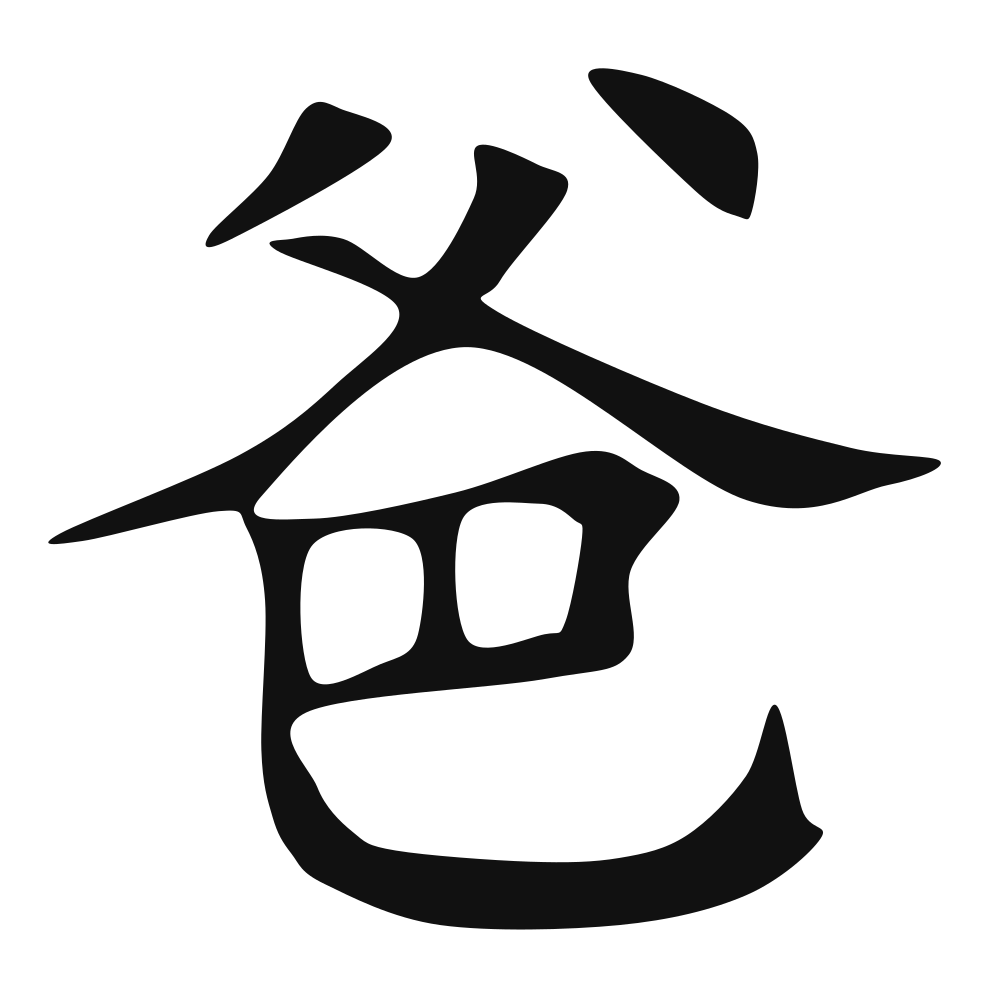
The Calligrapher — Guì Fù 桂馥
Qing scholar celebrated for clerical script and seal-script epigraphy.
Qing calligrapher (), master of clerical script/seal script — known for 《说文》学家. Qing dynasty
Cultural Story
爸 is the familiar 'dad,' built from 父 father with a phonetic that mimics the first babbled sound a child makes. Though 父 is older in writing, 爸 appears in Han colloquial texts as the everyday, tender call of a child. It is the spoken heart of fatherhood, less the stern clan-head, more the one who lifts you up and says 'come here' with a smile.
Common words & phrases
- 爸爸 dad · father
- 老爸 dad
- 爸妈 parents
Read the story behind the character
爸 is the word every toddler shouts: 爸爸 dad opens the door, 老爸 dad buys the snacks, and 爸妈 parents sign the school form. We text 老爸 'coming home late,' and a teen's '爸' ends a sheepish apology. On his birthday the 爸爸 gets a tie he'll never wear and a hug that says more than the word.
Why this character belongs on skin
The first word most of us ever reach for is the one for him — 爸, the father, the man who was there before language, before memory, before the self. Its sound is almost universal, the ba that babies shape with open mouths toward the one who feeds them. He is root and roof: the hand that steadied the bike, the silence after the argument, the blueprint you keep rebuilding from and rebelling against. To carry 爸 on your skin is to name a debt you can never repay and would not wish to. Whether he was gentle or absent, the character stays — the original bond, the first authority, the long shadow. Ink it as homage or as reckoning, but ink it true: every mark we make is, in some quiet way, a letter sent backward to the man who made us possible.
Own this character
Purchase delivers the original SVG of this glyph, brushed by Guì Fù 桂馥, ready to place on skin, paper, or screen.