
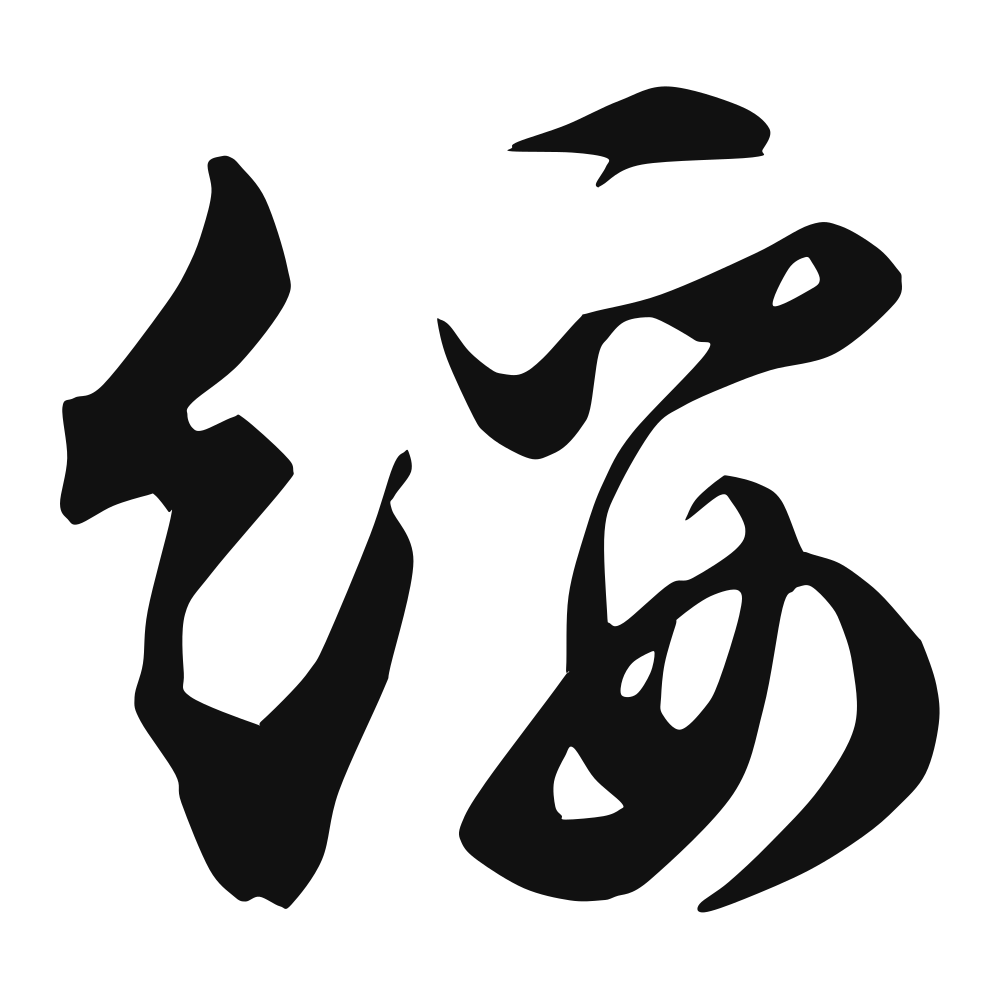
绥
to pacify; Taiwan pr. [sui1]
Closest English meanings
calm·peace·pacify·appease
The Calligrapher — Guō Zhōngshù 郭忠恕
Five Dynasties–early Song master renowned for his seal script.
五代宋初 calligrapher (), master of seal script — known for 《汗简》. Five Dynasties–early Song
Cultural Story
绥 had two lives: in ritual it was the hand-strap of the chariot, and the Analects notes Confucius would always stand square and 执绥, grip the strap, before mounting, courtesy in a handful of cord. In statecraft it meant to pacify: generals were sent to 绥, calm, restive borders, and later ages condemned 绥靖, appeasement, as the peace that purchases war.
Common words & phrases
- 绥靖 pacify · appease
- 绥和 calm · placate
Read the story behind the character
Suí now lives in history class and old maps. A teacher's lecture condemns the 绥靖政策, appeasement policy, of the 1930s, Munich drawn on the blackboard; diplomats speak of efforts to 绥和, ease, tensions, a softened modern usage. Travelers cross place names like 绥化 and 绥远, chariot-strap words fossilized into train stations and prefectures.
Why this character belongs on skin
The oldest form of 绥 shows a hand steadying something that wavers — and from that single image grew the word's whole career: to soothe, to pacify, to bring peace to what is trembling. It appears on bronze vessels from three thousand years ago, carved beside blessings for harmony that outlasted every dynasty that recited them. This is peace not as the absence of conflict but as a hand placed gently on a shaking shoulder; not a treaty, a touch. The Stoics and the Buddhists would have agreed on the character at once: equanimity is not indifference, it is the strength to be the steadying one while everything else trembles. 绥 belongs on the body's calmest point — the inside of the wrist, the hollow of the collarbone — where a lover's hand already goes without thinking, so that the ink and the instinct finally match.
Own this character
Purchase delivers the original SVG of this glyph, brushed by Guō Zhōngshù 郭忠恕, ready to place on skin, paper, or screen.