
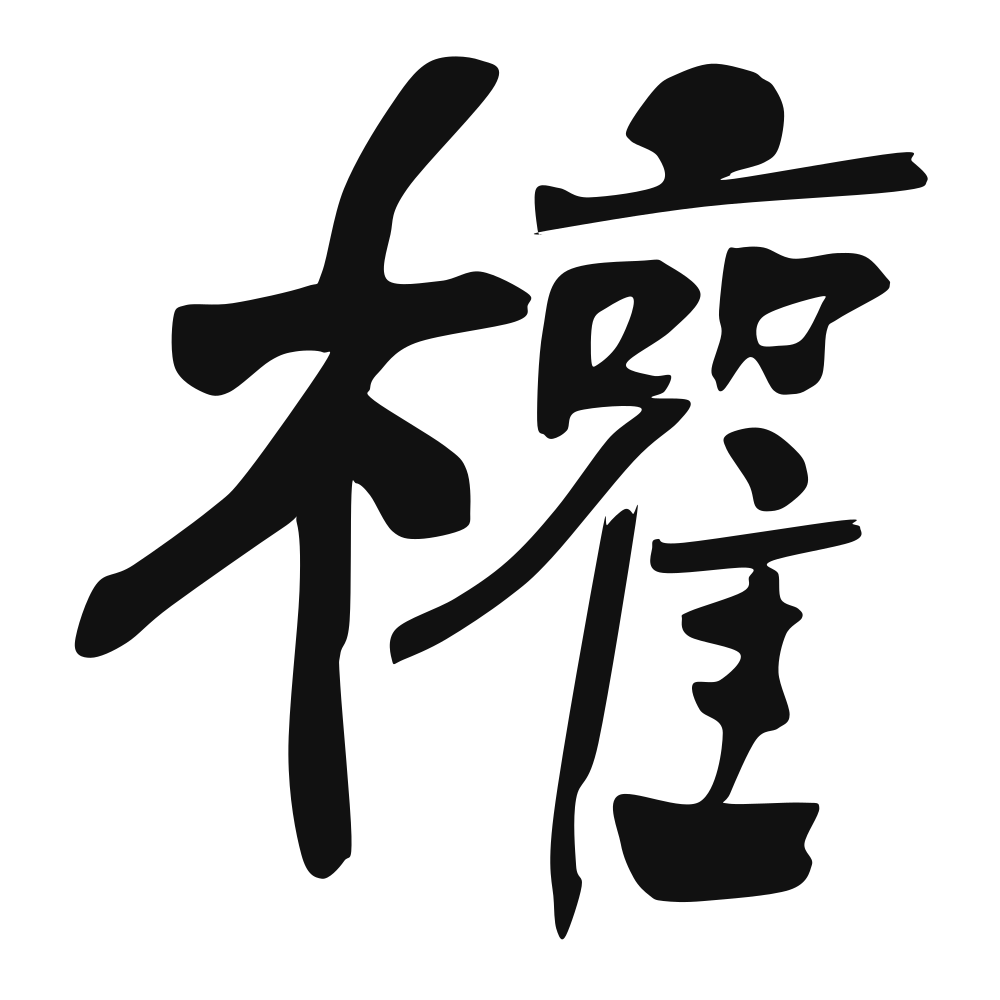
权
surname Quan; authority; power; right; (literary) to weigh; expedient; temporary
Closest English meanings
power·right·authority
The Calligrapher — Hé Shàojī 何绍基
Qing master blending stele strength into running script.
Qing calligrapher (), master of running script/regular script — Qing master who wrote cursive with a sideways-held brush, all stele flavor. Qing dynasty
Cultural Story
权 was a steelyard weight, the sliding counterpoise that fixed a true measure — the 孟子 uses it as the image of judgment that adapts. Only later did 权 become the power it weighed. The character moved from a brass weight in a merchant's hand to the seat of command in a palace, from the scale to the throne.
Common words & phrases
- 权力 power
- 权利 right
- 权威 authority
- 政权 regime
- 人权 human rights
Read the story behind the character
权 splits into two modern lives: 权力, the authority a boss or state holds, and 权利, the claim a citizen can make — a distinction lawyers live by. 人权 is the word on a protest sign; 政权 the one in a cable news ticker. The character still balances, now between those who command and those who may answer.
Why this character belongs on skin
Power is heavier than it looks. 权 is the authority to act, the right that cannot be taken without a fight — rooted in the word for the steelyard, the balance a merchant uses to weigh truth against gold. To hold 权 is to hold the scale itself, the power to decide what counts. The Confucians spoke of it as the flexible weight that keeps justice even; the emperors feared it in the hands of rivals. To carry this mark is to claim your own measure, the quiet authority no one granted you but you keep anyway. It is not domination — it is the right to be the one who weighs. On the skin it sits like a small, certain counterweight, a reminder that you are the hand on the beam, and the world tips the way you let it.
Own this character
Purchase delivers the original SVG of this glyph, brushed by Hé Shàojī 何绍基, ready to place on skin, paper, or screen.