
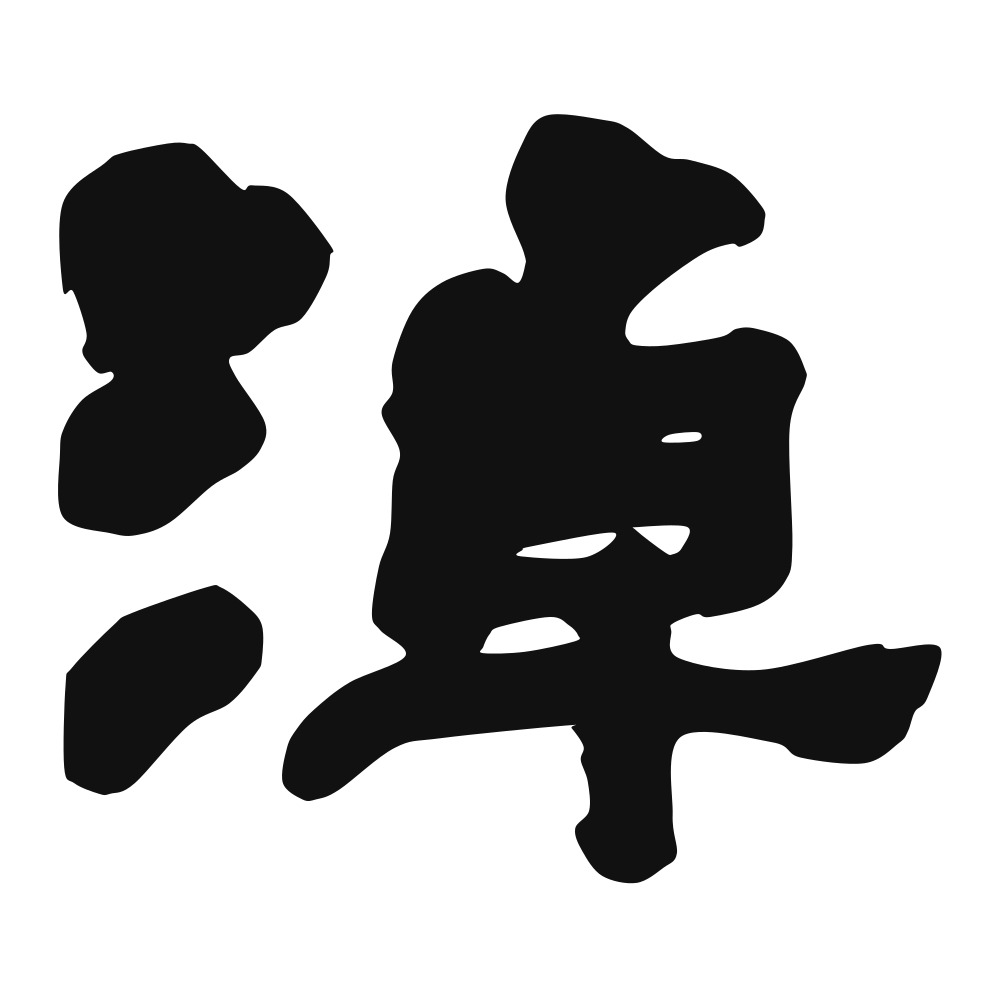
淖
surname Nao; slush; mud
Closest English meanings
mud·slough·swamp
The Calligrapher — Hé Shàojī 何绍基
Qing master blending stele strength into running script.
Qing calligrapher (), master of running script/regular script — Qing master who wrote cursive with a sideways-held brush, all stele flavor. Qing dynasty
Cultural Story
淖 joins water with a sense of softness; Zhuangzi used 淖 to picture things slippery and formless like mud, the Dao flowing without resistance. In the north, Mongolian place-names ending 淖尔 mark shallow lakes on the steppe. Travelers feared the 泥淖, the deep mire that swallowed carts on rainy roads.
Common words & phrases
- 泥淖 mire · mud
- 淖尔 lake · Mongolian loanword
Read the story behind the character
Driving the grassland highway you skirt a white 淖尔 (lake) shimmering under clouds, while your tires spin in the 泥淖 (mire) after rain. Hikers warn that the wetland 淖 hides ankle-deep mud. The nomad's phone photo shows sheep drinking at the 淖尔 as dusk turns the water silver and still.
Why this character belongs on skin
There is a sweetness in the stroke at this character's heart, hidden inside its mud — the old texts admit it: dark earth that is also, somehow, lustrous. Standing water gone thick, ground that takes your boot and does not give it back. Every life wades through its own 淖, the season when everything resists you, when the path you chose softens and swallows. Buddhism has a name for this: the mire where the lotus roots itself. The flower does not apologize for the mud; it drinks it. Its whiteness is bought, petal by petal, from the blackness below. So this ink is not a warning. It is a record of every place you sank and did not stay sunk. The mud remembers your shape. The lotus remembers the mud. Ink both.
Own this character
Purchase delivers the original SVG of this glyph, brushed by Hé Shàojī 何绍基, ready to place on skin, paper, or screen.