
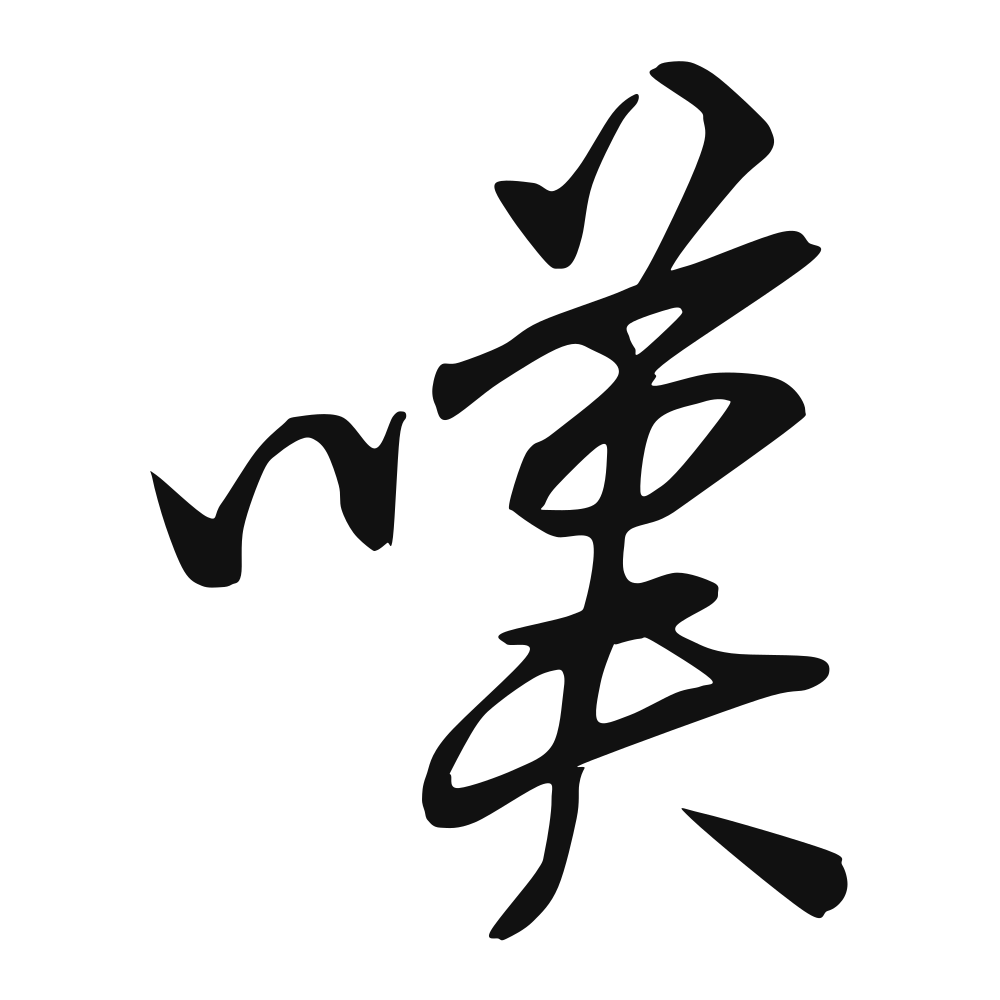
叹
to sigh; to exclaim
Closest English meanings
to sigh·to praise·to lament
The Calligrapher — Huáng Bósī 黄伯思
Song calligrapher and theorist renowned for his seal and clerical script.
Song calligrapher (), master of seal script/clerical script — known for 《东观余论》. Song dynasty
Cultural Story
叹 was to sigh and to praise. Qu Yuan, in the Li Sao, "longed with a deep sigh and wiped his tears" -- 长太息 -- at the straitened age. Later poets 感叹 at the vanished capital; admirers 赞叹 a line. The word carried the breath drawn at loss and at wonder both, the same exhalation turned toward grief or toward awe.
Common words & phrases
- 叹息 to sigh · sigh
- 感叹 to sigh with feeling · to lament
- 叹气 to sigh · sigh
- 赞叹 to praise · to admire
- 惊叹 to wonder at · to marvel
Read the story behind the character
A worker 叹气 at the late invoice; a visitor 赞叹 the view from the bridge. The crowd 惊叹 at the last-second goal. The word does the day's breathing -- the sigh of trouble, the praise of beauty, the marvel at a feat. It names the drawn breath that means something, from the desk to the stadium, grief and admiration sharing one exhalation.
Why this character belongs on skin
The breath leaves before the words do. 叹 is the sigh — the long exhalation when the thing is too large or too tired to be spoken. It is grief and relief at once, the sound a person makes at the end of a hard year, at a beautiful ruin, at a child asleep. The character is a mouth and a breath, the body confessing what the mind won't. To wear 叹 is to make peace with the unspoken — to carry the quiet acknowledgment that life is heavier and finer than language. It is not sadness. It is the respect you pay to things too big for speech. It is depth, the mark of a person who feels the full weight and lets it out as air. Ink it where you can press a hand when words fail. The sigh is the most honest sentence we own.
Own this character
Purchase delivers the original SVG of this glyph, brushed by Huáng Bósī 黄伯思, ready to place on skin, paper, or screen.