
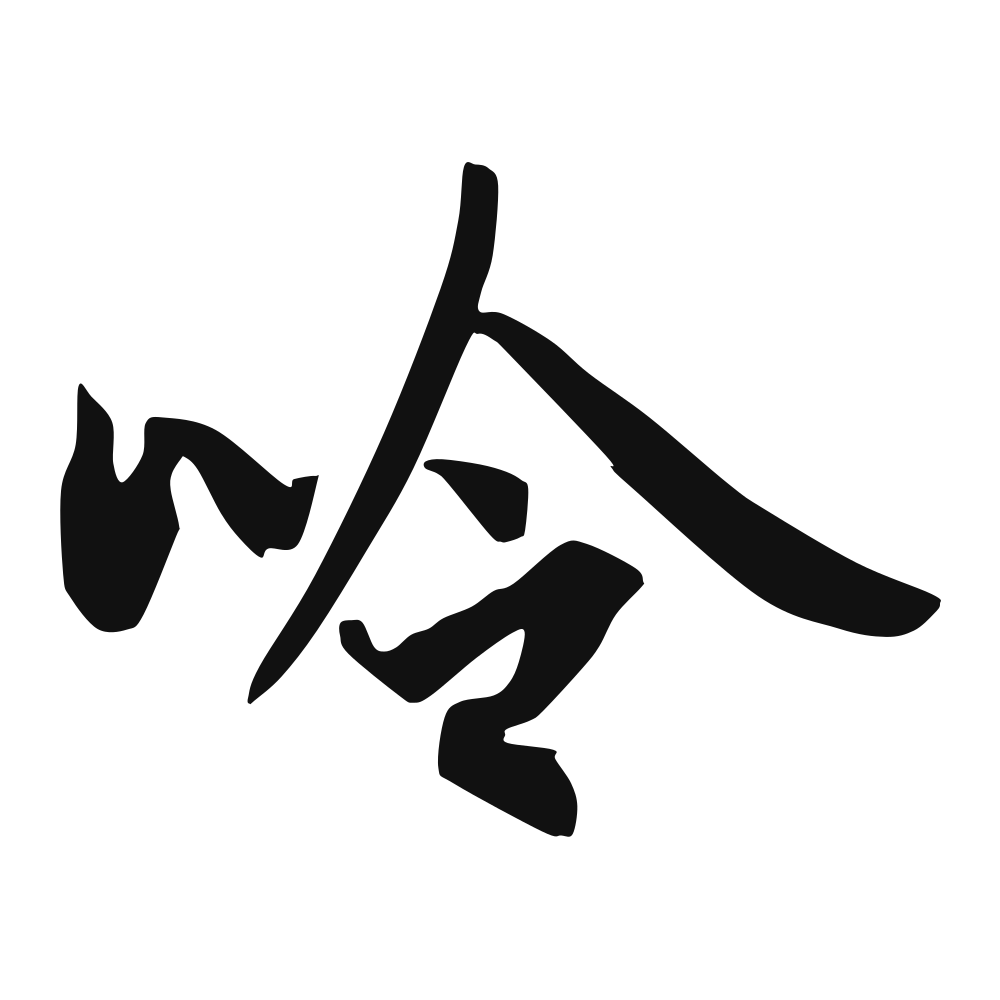
吟
to chant; to recite; verse; song (often used in titles of classical poems); (literary) to lament; to groan; (bound form) (in poetry) the cry of certain animals and insects; (music) rapid vibrato (technique for playing the guqin 古琴[gu3 qin2]) (cf. 猱[nao2], wide vibrato)
Closest English meanings
recite·hum·chant
The Calligrapher — Huáng Bósī 黄伯思
Song calligrapher and theorist renowned for his seal and clerical script.
Song calligrapher (), master of seal script/clerical script — known for 《东观余论》. Song dynasty
Cultural Story
吟 pairs 口 (mouth) with 今 (now), "to croon in the present moment." It is the low, musical voicing of verse. 屈原 in 楚辭 吟唱 his exile, and 詩經 singers 吟咏 the fields. 李白 would 吟诗 alone under the moon, turning wine and loneliness into sound. 呻吟 originally meant not only to groan but to hum in pain or song. In the scholar's garden, 吟 was the breath of poetry long before printing spread it.
Common words & phrases
- 吟诗 recite poetry
- 吟唱 sing · chant
- 吟咏 recite with intonation
- 呻吟 moan · groan
Read the story behind the character
On a talent show a contestant 吟唱 (sings/chants) a folk ballad, and a teacher asks students to 吟咏 (recite with intonation) an old poem aloud. At the park an old man 吟诗 (recites poetry) to himself at dawn, while a sick child 呻吟 (moans) in the night until medicine soothes her. From karaoke rooms to hospital corridors, the character keeps its old link between the mouth and feeling voiced—whether joy, art, or pain.
Why this character belongs on skin
Not speech, not song—the low hum between them, where the self talks to itself in meter. 吟 is the chant, the recited line, the groan of pleasure and the murmur of verse in one breath. 口 over 今, the present moment, as if to say: voice the now. The wandering poets of old 吟'd their loneliness into the mountains and called it company. The West knows it as the blues, the psalm, the monk's plainchant—sound made to carry weight the prose can't. To wear 吟 is to keep a song inside you that asks no audience. It is the private recitation, the hum under the breath on a hard day, the verse that holds the grief so the hands stay free. The mark is for the inward singer. Carry it where only you can feel it pulse—the throat, the inner wrist—a tattoo that is also a tune, played silently, for the rest of your life.
Own this character
Purchase delivers the original SVG of this glyph, brushed by Huáng Bósī 黄伯思, ready to place on skin, paper, or screen.